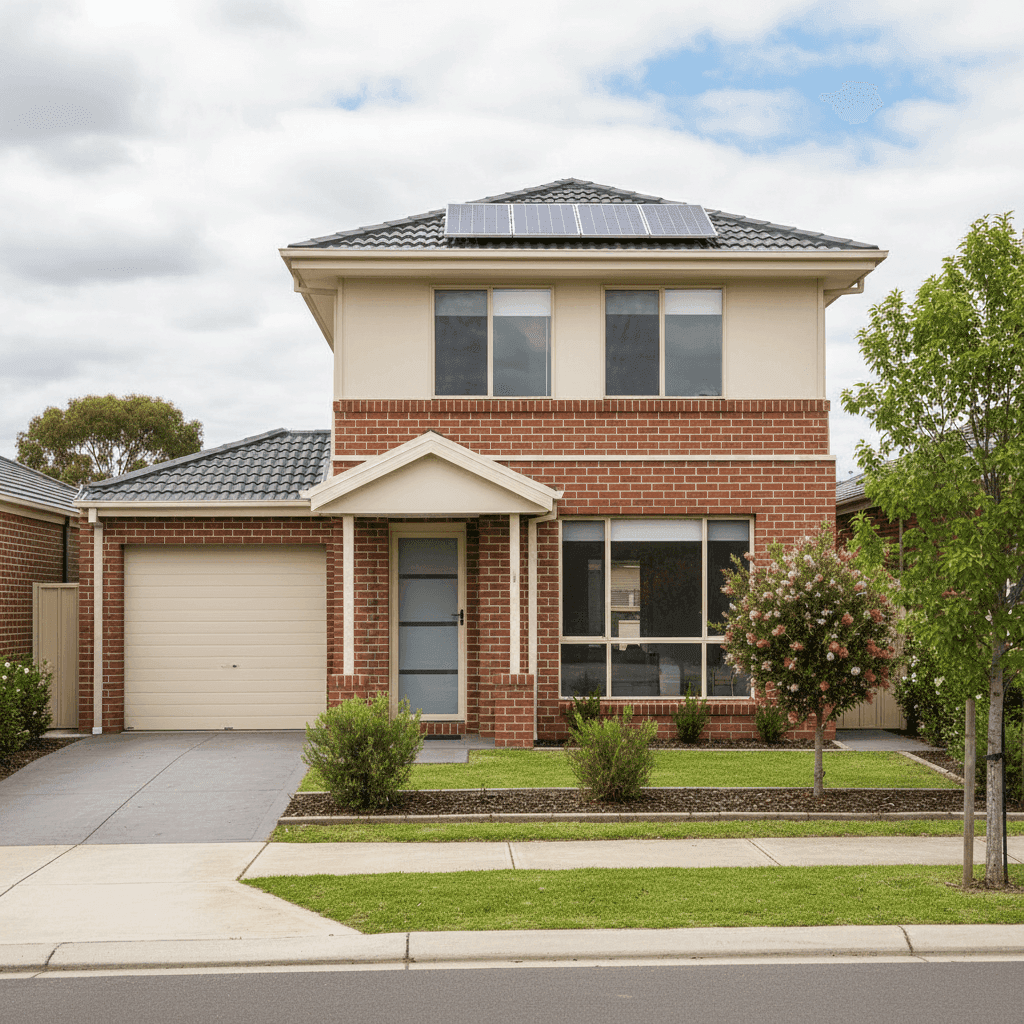
Point Cook, nestled in Melbourne's rapidly growing south-western corridor, has become one of Victoria's most popular family suburbs — and with that growth comes an increasing number of homeowners asking the same question: am I paying a fair price for my home insurance? This article breaks down a real building insurance quote for a 3-bedroom, 2-bathroom townhouse in Point Cook (VIC 3030), comparing it against local, state, and national benchmarks to help you understand exactly where you stand.
---
Is This Quote Fair?
The quote in question comes in at $1,572 per year (or roughly $154 per month) for building-only cover on a 153 sqm brick veneer townhouse, with a sum insured of $596,000 and a $1,000 building excess.
Our price rating for this quote is FAIR — Around Average, and the numbers back that up. Based on 143 quotes collected for Point Cook (3030):
- The suburb average is $1,991/yr
- The suburb median is $1,850/yr
- The 25th percentile sits at $1,493/yr
- The 75th percentile reaches $2,242/yr
At $1,572/yr, this quote falls comfortably below both the suburb average and median, and sits just above the 25th percentile. In plain terms: roughly three-quarters of Point Cook homeowners are paying more. That's a reasonably competitive result — not a bargain, but certainly not overpriced either.
It's worth noting that "fair" doesn't mean you can't do better. Premiums vary significantly between insurers even for identical properties, so there's always value in comparing.
---
How Point Cook Compares to the Rest of Victoria and Australia
One of the most telling insights from this data is just how affordable Point Cook is relative to broader benchmarks.
| Benchmark | Average Premium | Median Premium |
|---|---|---|
| Point Cook (3030) | $1,991/yr | $1,850/yr |
| Wyndham LGA | $1,591/yr | — |
| Victoria | $3,000/yr | $2,718/yr |
| National | $5,347/yr | $2,764/yr |
Compared to the Victorian state average of $3,000/yr, Point Cook homeowners are paying around 34% less on average — a meaningful saving that reflects the suburb's relatively low-risk profile. Flood and bushfire exposure in this part of Melbourne's west is comparatively limited, and the suburb's modern housing stock tends to attract more competitive premiums.
The national average of $5,347/yr is dramatically higher, largely driven by high-risk regions in Queensland and Western Australia where cyclone, flood, and storm damage claims push premiums skyward. Point Cook sits well outside those risk zones, which is reflected in its much more modest insurance costs.
At the LGA level, the Wyndham average of $1,591/yr is very close to this particular quote — suggesting the pricing is well-aligned with what local homeowners are generally experiencing.
---
Property Features That Affect Your Premium
Every property is different, and insurers weigh up a range of physical characteristics when calculating your premium. Here's how the features of this particular townhouse are likely influencing the quote:
Brick Veneer Walls & Tile Roof Brick veneer is one of the most common — and insurer-friendly — construction types in Australia. It's durable, fire-resistant, and relatively straightforward to repair or rebuild. Combined with a tile roof, this property sits in a construction category that typically attracts standard or competitive pricing. Insurers generally view this combination favourably compared to, say, timber weatherboard or flat membrane roofs.
Concrete Slab Foundation A slab foundation is standard for townhouses built in this era and region. It's structurally sound and doesn't carry the additional subsidence or termite-ingress risks associated with older raised timber floors. This is a neutral-to-positive factor for insurers.
Built in 2005 At around 20 years old, this property is neither brand new nor ageing enough to attract concerns about dated wiring, plumbing, or roofing. Properties in this age bracket often sit in a sweet spot for insurers — modern enough to meet current building codes, but past the point where any construction defects would have already surfaced.
Solar Panels The presence of rooftop solar panels adds a modest layer of complexity to a building insurance policy. Panels are typically covered under building insurance, but their replacement cost can be significant. Homeowners should confirm with their insurer that solar panels — including inverters and mounting hardware — are explicitly included in the sum insured.
Ducted Climate Control Ducted heating and cooling systems are a fixed building feature and should be factored into your sum insured. These systems can cost $5,000–$15,000 or more to replace, so it's important they're accounted for in your $596,000 coverage figure.
No Pool, Carpet Flooring, Standard Fittings The absence of a pool removes a common source of liability and maintenance-related claims. Standard fittings and carpet flooring are straightforward to value and replace, keeping the overall risk profile clean and predictable.
---
Tips for Homeowners in Point Cook
Whether you're reviewing an existing policy or shopping for the first time, here are four practical steps to make sure you're getting the best value on your home insurance.
1. Check Your Sum Insured Annually Construction costs have risen sharply in recent years. A sum insured of $596,000 may have been accurate when the policy was first taken out, but rebuilding costs can shift significantly. Use a building cost calculator or speak with a quantity surveyor to make sure you're not underinsured — especially with solar panels and ducted systems to account for.
2. Compare at Least Three Quotes The spread between the 25th and 75th percentile in Point Cook is nearly $750/yr — that's a significant range for what could be very similar coverage. Shopping around is the single most effective way to ensure you're not overpaying. Get a quote through CoverClub to see how your current premium stacks up.
3. Review Your Excess Settings A $1,000 excess is fairly standard, but increasing your excess can meaningfully reduce your annual premium. If you have a healthy emergency fund and are unlikely to make small claims, opting for a higher excess (say, $1,500 or $2,000) could save you money each year.
4. Keep Records of Improvements If you've upgraded your kitchen, added a deck, or installed new flooring since the policy was written, your sum insured may no longer reflect the true rebuild cost. Keep a record of any significant home improvements and update your insurer accordingly to avoid a nasty shortfall at claim time.
---
Ready to See What You Could Be Paying?
Whether your quote looks fair or you suspect you're overpaying, the best way to know for certain is to compare. CoverClub makes it easy to benchmark your premium against real data from homeowners in your suburb and across Australia. Start comparing home insurance quotes today — it takes just a few minutes and could save you hundreds of dollars a year.
For more data on insurance costs in your area, explore the Point Cook suburb stats, the Victoria state overview, or the national home insurance benchmarks.