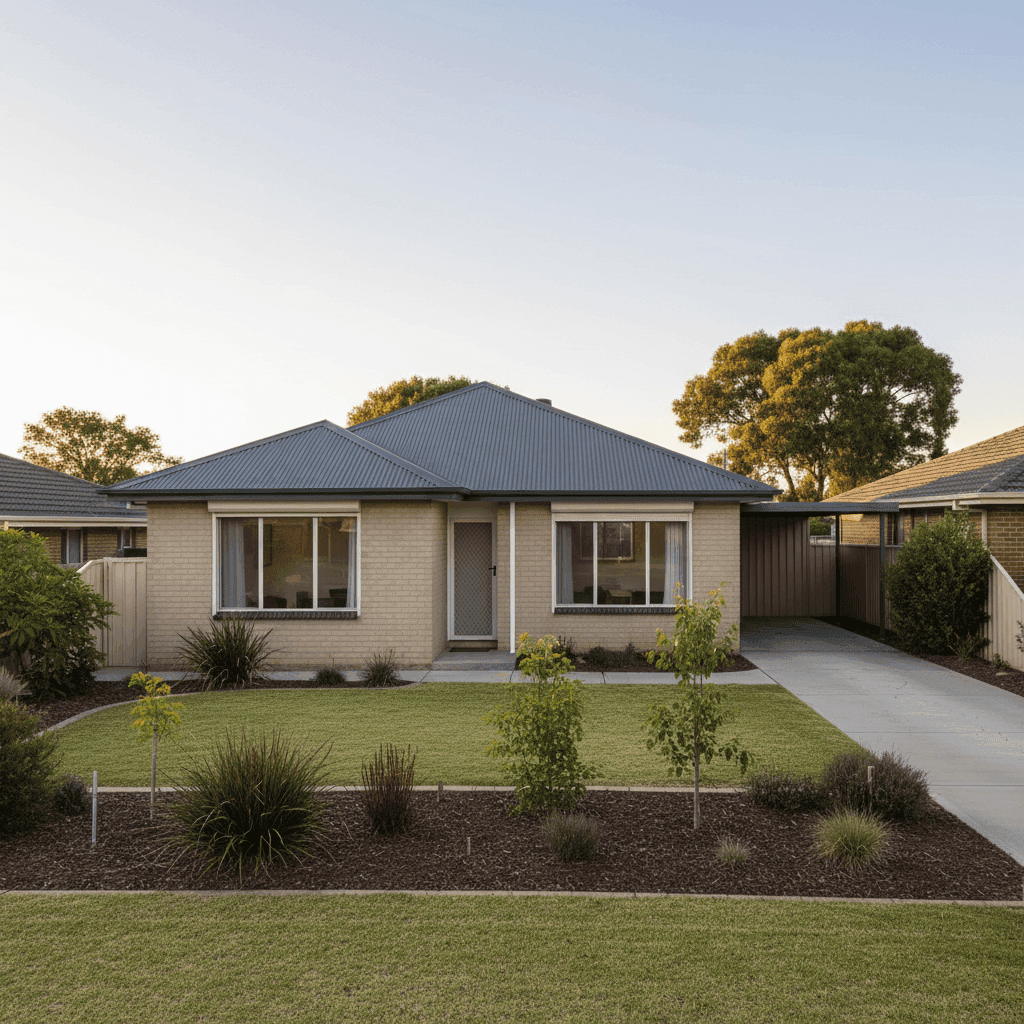
If you own a free standing home in Port Lincoln, SA 5606, you might be wondering whether you're paying a fair price for your building insurance — or leaving money on the table. Port Lincoln, nestled on the tip of the Eyre Peninsula, is a regional coastal city known for its fishing industry and relaxed lifestyle. It's also a place where home insurance premiums can vary quite significantly depending on your property's characteristics and the insurer you choose.
This article breaks down a real building-only insurance quote for a 3-bedroom, 1-bathroom free standing home in Port Lincoln and compares it against local, state, and national benchmarks to help you understand what good value looks like.
---
Is This Quote Fair?
The quote in question comes in at $1,053 per year (or roughly $103 per month) for building-only cover on a home insured for $889,000. Our price rating for this quote is CHEAP — below the suburb average — which is great news for the homeowner.
To put that in context: the suburb average for Port Lincoln sits at $2,135 per year, and the median is $1,841 per year. This quote lands well below even the 25th percentile of $1,360 per year, meaning it's cheaper than at least 75% of comparable quotes in the area. That's a genuinely strong result.
For a property of this size and age, scoring a premium this far below the local average suggests the insurer has assessed the risk favourably — likely influenced by the construction type, the lack of high-risk features, and the property's location within Port Lincoln's lower-risk zones.
---
How Port Lincoln Compares
When you zoom out to the broader market, the value of this quote becomes even clearer. Here's how Port Lincoln stacks up:
| Benchmark | Annual Premium |
|---|---|
| This Quote | $1,053 |
| Port Lincoln suburb average | $2,135 |
| Port Lincoln suburb median | $1,841 |
| SA state average | $1,933 |
| SA state median | $1,787 |
| National average | $2,965 |
| National median | $2,716 |
You can explore full suburb-level data on our Port Lincoln insurance stats page, or compare against the broader South Australian market and national averages.
The gap between this quote and the national average is striking — at $1,053, this homeowner is paying $1,912 less per year than the national average. Even compared to the SA state average of $1,933, the saving is close to $880 annually. Across a decade, that's a meaningful difference.
It's worth noting that Port Lincoln premiums (suburb average $2,135) actually run slightly above the SA state average ($1,933), which is somewhat expected for a coastal regional town. Proximity to the coast, older housing stock, and regional supply chain costs for repairs can all push premiums higher. The fact that this particular quote bucks that trend speaks to the strength of the result.
---
Property Features That Affect Your Premium
Several characteristics of this property likely contribute to its competitive premium:
Double Brick Construction Double brick is one of the most favoured wall materials among insurers in Australia. It's durable, fire-resistant, and less prone to structural damage than timber or clad alternatives. For a home built in 1965, double brick construction is a strong indicator of solid, long-lasting build quality — and insurers tend to price this favourably.
Steel/Colorbond Roof A Colorbond steel roof is another tick in the box. Modern Colorbond roofing is lightweight, corrosion-resistant, and performs well in the coastal conditions common around the Eyre Peninsula. Unlike older tile roofs, it's less susceptible to cracking, moss build-up, or storm damage from dislodged tiles.
Slab Foundation Concrete slab foundations are considered low-risk by most insurers. They're stable, resistant to pest ingress, and don't carry the underfloor moisture or subsidence risks sometimes associated with older pier-and-beam setups.
No Pool, Solar Panels, or Ducted Climate Control Each of these features can add complexity — and cost — to a policy. Pools introduce liability and maintenance risk, solar panels add replacement value and potential electrical hazards, and ducted systems increase the mechanical components that could fail or cause damage. The absence of all three keeps this risk profile clean and straightforward.
Age of the Property At 60 years old, this home is solidly mid-century. While older homes can sometimes attract higher premiums due to ageing plumbing, wiring, or roofing, the combination of double brick construction and a newer Colorbond roof suggests this property has been well-maintained or partially updated — helping to offset the age factor.
Building Size and Sum Insured At 130 sqm with a sum insured of $889,000, the insured value per square metre is on the higher side. This reflects current rebuild costs in regional SA, where labour and materials can be more expensive than in metropolitan areas. Ensuring your sum insured accurately reflects true rebuild costs — not just market value — is essential to avoiding underinsurance.
---
Tips for Homeowners in Port Lincoln
1. Don't anchor to market value when setting your sum insured Property prices in Port Lincoln have moved considerably in recent years, but your building insurance should reflect the cost to rebuild, not what you could sell the home for. These figures can differ substantially. Consider using a quantity surveyor or your insurer's building calculator to set an accurate sum insured.
2. Shop around — the spread is wide With a 25th-to-75th percentile range of $1,360 to $2,339 in Port Lincoln, there's nearly $1,000 of difference between a budget quote and a pricier one for similar properties. Loyalty to one insurer rarely pays off. Comparing multiple quotes annually through a platform like CoverClub can uncover significant savings.
3. Review your excess settings This policy carries a $2,000 building excess. Opting for a higher excess is one of the most effective ways to reduce your annual premium — but make sure you could comfortably cover that amount out of pocket if a claim arose. If cash flow is tight, a lower excess with a slightly higher premium may be the smarter trade-off.
4. Keep records of any renovations or improvements If you've updated the kitchen, added a deck, or replaced the roof since the home was built, your sum insured should reflect those improvements. Underinsurance is a common and costly mistake — particularly after a major loss event when rebuild costs are scrutinised carefully.
---
Compare Your Own Quote
Whether you're renewing your policy or shopping for the first time, it pays to see what the market has to offer. CoverClub makes it easy to compare home insurance quotes across multiple insurers in one place — so you can see exactly where your premium sits relative to your neighbours. Get a quote today at CoverClub and find out if you're getting the deal you deserve.