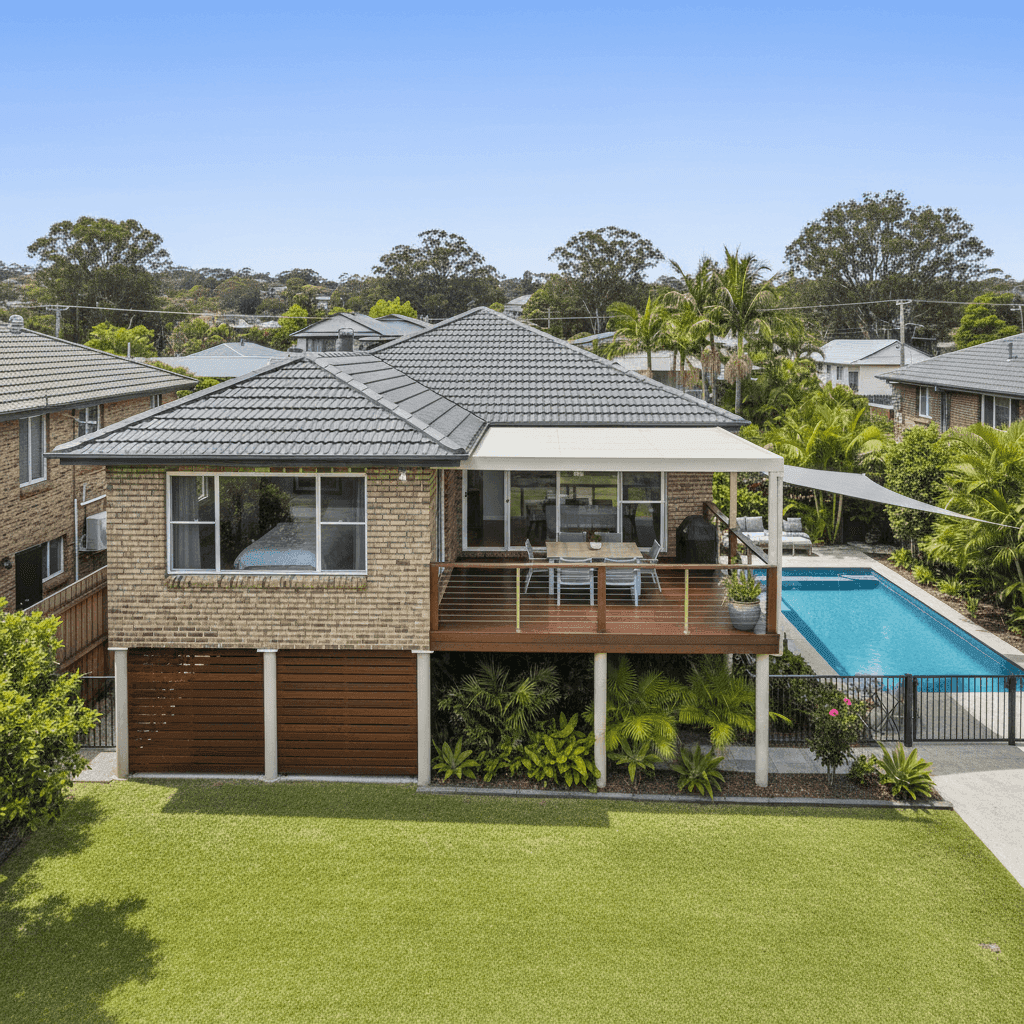
Port Macquarie is one of the Mid North Coast's most sought-after places to call home — and with that lifestyle appeal comes the very real responsibility of protecting your property. This article breaks down a recent home and contents insurance quote for a four-bedroom, free-standing home in Port Macquarie NSW 2444, and puts the numbers into context so you can make a more informed decision about your own cover.
---
Is This Quote Fair?
The quote in question comes in at $5,756 per year (or $552 per month) for a combined home and contents policy. The building is insured for $1,069,000 and contents for $249,000, with a $1,000 excess applying to both. Our price rating for this quote is Expensive — above average for the area.
That said, "expensive" is relative, and the full picture is more nuanced than a single label suggests. Based on 219 quotes collected for Port Macquarie (2444), the suburb median sits at just $2,646 per year, meaning this quote is roughly 2.2 times the local median. The suburb's 75th percentile — meaning three-quarters of quotes are below this figure — is $3,876 per year, so this quote sits well above that threshold too.
However, the suburb average of $8,890 per year tells a different story. Averages in insurance are often pulled upward by a smaller number of very high-risk or very high-value properties. At $5,756, this quote is actually below the suburb average, which is a meaningful silver lining. It suggests there are properties in Port Macquarie attracting significantly higher premiums, likely due to flood exposure, higher rebuild costs, or elevated contents values.
The bottom line: while this quote is above the median, it reflects a property with a substantial insured value ($1,069,000 for the building alone) and several features that influence pricing — which we'll explore below.
---
How Port Macquarie Compares
Understanding where Port Macquarie sits relative to broader benchmarks helps frame whether local pricing is genuinely elevated or simply in line with regional trends.
| Benchmark | Average Premium | Median Premium |
|---|---|---|
| Port Macquarie (2444) | $8,890/yr | $2,646/yr |
| Port Macquarie-Hastings LGA | $7,001/yr | — |
| New South Wales | $9,528/yr | $3,770/yr |
| National | $5,347/yr | $2,764/yr |
A few things stand out here. First, NSW as a state has one of the highest average premiums in the country at $9,528 per year — well above the national average of $5,347. This reflects the diverse risk profile across the state, from flood-prone river towns to bushfire-affected hinterlands and coastal storm zones.
Port Macquarie's suburb average of $8,890 is high even by NSW standards, though the median of $2,646 suggests the majority of homeowners are paying more modest amounts. The Port Macquarie-Hastings LGA average of $7,001 sits between these two figures, which is consistent with a region that has pockets of elevated risk alongside lower-risk residential streets.
The quote analysed here — $5,756 — falls below both the suburb and LGA averages, and is very close to the national average. For a property of this size and insured value, that's a reasonably competitive outcome.
---
Property Features That Affect Your Premium
Several characteristics of this property have a direct bearing on what insurers charge. Here's how they stack up:
Brick veneer construction and tiled roof are generally viewed favourably by insurers. Brick veneer is durable, fire-resistant, and widely used in Australian homes built from the 1980s onward. Tiled roofs similarly offer good longevity and weather resistance compared to metal or older fibrous cement alternatives. Together, these construction materials typically attract lower premiums than timber-framed or older homes.
Elevated on stumps is a notable feature. Homes raised at least one metre off the ground — sometimes called high-set or Queenslander-style — can actually benefit from improved flood resilience, as water may pass beneath the structure rather than inundating the floor level. However, insurers also consider that elevated homes can face greater wind uplift risk, and the subfloor space may require additional consideration in claims. The net effect on premium varies by insurer.
Built in 1999, this home is relatively modern, which generally works in the owner's favour. Newer builds are more likely to comply with updated building codes, have sound structural integrity, and use materials that are straightforward to repair or replace.
Swimming pool adds a modest layer of liability and maintenance consideration to a policy. Most standard home and contents policies cover the pool structure as part of the building, but it's worth confirming exactly what's included — particularly around pool equipment, fencing obligations, and any accidental damage provisions.
Ducted climate control is a higher-value fixed installation that contributes to the building's insured value. At 235 square metres across four bedrooms and three bathrooms with standard fittings, a $1,069,000 sum insured is broadly consistent with current construction costs in regional NSW, where rebuilding costs have risen sharply in recent years.
No cyclone risk is a meaningful factor. Port Macquarie sits outside Australia's designated cyclone risk zones, which removes one of the more significant premium loading factors that affect properties further north along the Queensland coast.
---
Tips for Homeowners in Port Macquarie
1. Review your sum insured regularly Construction costs in regional NSW have increased considerably since the pandemic-era supply chain disruptions. If your building sum insured hasn't been updated recently, you may be underinsured — or conversely, over-insured and paying more than necessary. Use a building cost calculator or speak to a local builder to get a realistic estimate.
2. Understand your flood and storm exposure Port Macquarie sits at the mouth of the Hastings River, and parts of the area have known flood risk. Even if your specific property isn't in a high-risk zone, it's worth checking your insurer's flood definition and confirming whether flood cover is included or excluded from your policy. Many standard policies treat flood and storm differently.
3. Compare quotes before renewing Loyalty doesn't always pay in insurance. Insurers frequently offer better rates to new customers than to existing ones. If your renewal notice arrives and the premium has jumped, it's worth running a fresh comparison at CoverClub before automatically accepting the increase.
4. Check your contents estimate $249,000 in contents cover is a substantial figure — make sure it accurately reflects what you own. Many Australians underestimate the replacement value of their belongings, particularly when accounting for electronics, furniture, appliances, clothing, and outdoor items like pool equipment. An up-to-date home inventory can help you get this right.
---
Find a Better Deal on CoverClub
Whether you're a Port Macquarie local or just researching what home insurance should cost in the area, CoverClub makes it easy to see real quotes side by side. Our platform aggregates data from across the market so you can benchmark your premium against what others are actually paying — not just what insurers advertise.
Get a home insurance quote today at CoverClub and find out if you're getting a fair deal on your home and contents cover.