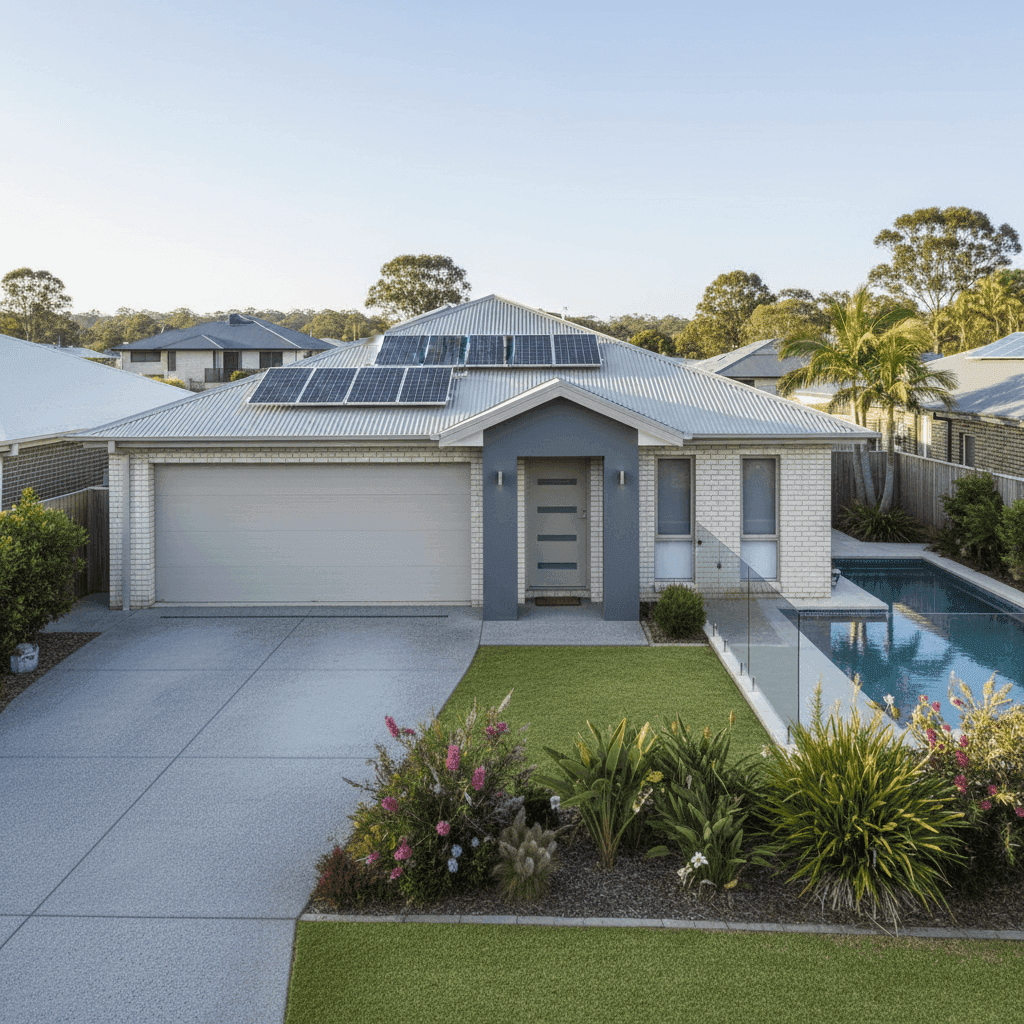
Port Macquarie is one of the mid-North Coast's most sought-after places to live — and if you own a four-bedroom free standing home here, you already know the lifestyle is hard to beat. But with great coastal living comes the responsibility of protecting your property properly. This article breaks down a real home and contents insurance quote for a brick veneer home in Port Macquarie (postcode 2444), examines how it stacks up against local, state, and national benchmarks, and offers practical tips to help you get the best value on your cover.
---
Is This Quote Fair?
The quote in question comes in at $3,096 per year (or $303/month) for combined home and contents cover, with a building sum insured of $1,100,000 and contents valued at $111,000. The building excess is $2,000 and the contents excess is $600.
Based on data from 207 quotes collected for the Port Macquarie 2444 area, this premium has been rated FAIR — around average. Here's what that means in context:
- Suburb median: $3,272/yr
- Suburb average: $5,395/yr
- Suburb 25th percentile: $1,916/yr
- Suburb 75th percentile: $6,631/yr
At $3,096, this quote sits just below the suburb median — meaning roughly half of Port Macquarie homeowners are paying more, and half are paying less. It's comfortably within the middle band of the market, and well clear of the upper quartile where premiums can exceed $6,600 per year.
The wide gap between the suburb's 25th and 75th percentile ($1,916 vs $6,631) tells an important story: insurance pricing in Port Macquarie varies enormously depending on individual property characteristics, sum insured levels, and the insurer's own risk appetite. A "fair" rating here is genuinely a reasonable outcome — this isn't a case of being stuck with a mediocre deal.
---
How Port Macquarie Compares
Zooming out to a broader picture, this quote also holds up well against NSW state benchmarks and national figures:
| Benchmark | Average | Median |
|---|---|---|
| Port Macquarie (2444) | $5,395/yr | $3,272/yr |
| LGA (Port Macquarie-Hastings) | $5,055/yr | — |
| NSW State | $3,801/yr | $3,410/yr |
| National | $2,965/yr | $2,716/yr |
A few things stand out here. First, Port Macquarie's suburb average of $5,395 is notably higher than both the NSW state average ($3,801) and the national average ($2,965). This reflects the elevated risk profile of coastal mid-North Coast properties — a combination of weather exposure, bushfire proximity in surrounding areas, and the higher rebuild costs typical of regional NSW.
Second, the LGA average of $5,055 for the Port Macquarie-Hastings council area confirms this isn't just a postcode-level quirk — the broader region commands above-average premiums.
Against this backdrop, a quote of $3,096 — sitting below both the suburb and state medians — represents solid value. The homeowner is paying less than the typical Port Macquarie resident while maintaining meaningful cover levels.
---
Property Features That Affect Your Premium
Several characteristics of this property influence how insurers price the risk. Understanding these factors can help you have more informed conversations with insurers.
Brick Veneer Walls & Colorbond Roof This combination is generally viewed favourably by insurers. Brick veneer is durable and fire-resistant, while Colorbond steel roofing is lightweight, long-lasting, and performs well in high-wind conditions. Compared to timber weatherboard or older terracotta tile roofs, this pairing typically attracts more competitive premiums.
Slab Foundation A concrete slab foundation is considered a stable and low-risk base by most insurers. It eliminates the underfloor moisture and pest risks associated with older raised timber stumps, which can be a pricing factor in older homes.
Construction Year: 1986 At nearly 40 years old, the property sits in a mid-age bracket. It's old enough that some components (electrical wiring, plumbing) may be approaching the end of their useful life, but it predates many of the more problematic construction eras. Insurers may factor in the age of the building when assessing risk.
Timber & Laminate Flooring Timber and laminate floors can be more susceptible to water damage than tiles, which may have a marginal upward influence on contents and building claims risk. However, they're also among the most common flooring types in Australian homes, so this is rarely a significant pricing driver on its own.
Swimming Pool A pool adds liability exposure and can increase the likelihood of certain claims (water damage, accidental injury). Most insurers will factor this into the premium calculation, particularly for liability components of the policy.
Solar Panels Solar panels are increasingly common on Australian homes, and most insurers now include them as part of the building sum insured. It's worth confirming with your insurer that your panels and inverter are explicitly covered — and that the $1,100,000 building sum insured accounts for their replacement value.
Building Size: 235 sqm At 235 square metres, this is a comfortably sized family home. The building sum insured of $1,100,000 equates to roughly $4,680 per square metre — broadly in line with current rebuild cost estimates for regional NSW, though it's worth reviewing this annually as construction costs continue to rise.
---
Tips for Homeowners in Port Macquarie
1. Review Your Building Sum Insured Every Year Construction costs in regional NSW have risen sharply in recent years. A sum insured that was accurate two years ago may now leave you underinsured. Use a building cost calculator or ask your insurer to reassess the replacement value — particularly given the solar panels and pool, which add to rebuild complexity.
2. Confirm Your Pool and Solar Panels Are Explicitly Covered Not all policies automatically extend cover to solar panel systems or pool equipment. Check your Product Disclosure Statement (PDS) carefully to ensure these are included, and that your liability cover extends to pool-related incidents.
3. Consider a Higher Excess to Reduce Your Premium With a $2,000 building excess and $600 contents excess, there may be room to adjust. Opting for a higher voluntary excess — particularly on the building side — can meaningfully reduce your annual premium. Just ensure you could comfortably cover the excess amount in the event of a claim.
4. Compare Quotes Annually — Don't Auto-Renew The Port Macquarie market shows a wide spread between the cheapest and most expensive quotes (from under $1,916 to over $6,631). Loyalty doesn't always pay with home insurance. Shopping around at renewal time is one of the simplest ways to avoid paying more than you need to.
---
Compare Your Own Quote
Whether you're renewing an existing policy or insuring a new property, it pays to see where your premium sits relative to the market. CoverClub aggregates real quote data from across Australia so you can benchmark your own insurance costs with confidence.
Get a home insurance quote and compare your options at CoverClub →
For more Port Macquarie-specific data, including premium trends and insurer breakdowns, visit the Port Macquarie suburb stats page. You can also explore NSW state-wide home insurance data or the national home insurance overview to see how your situation compares at every level.