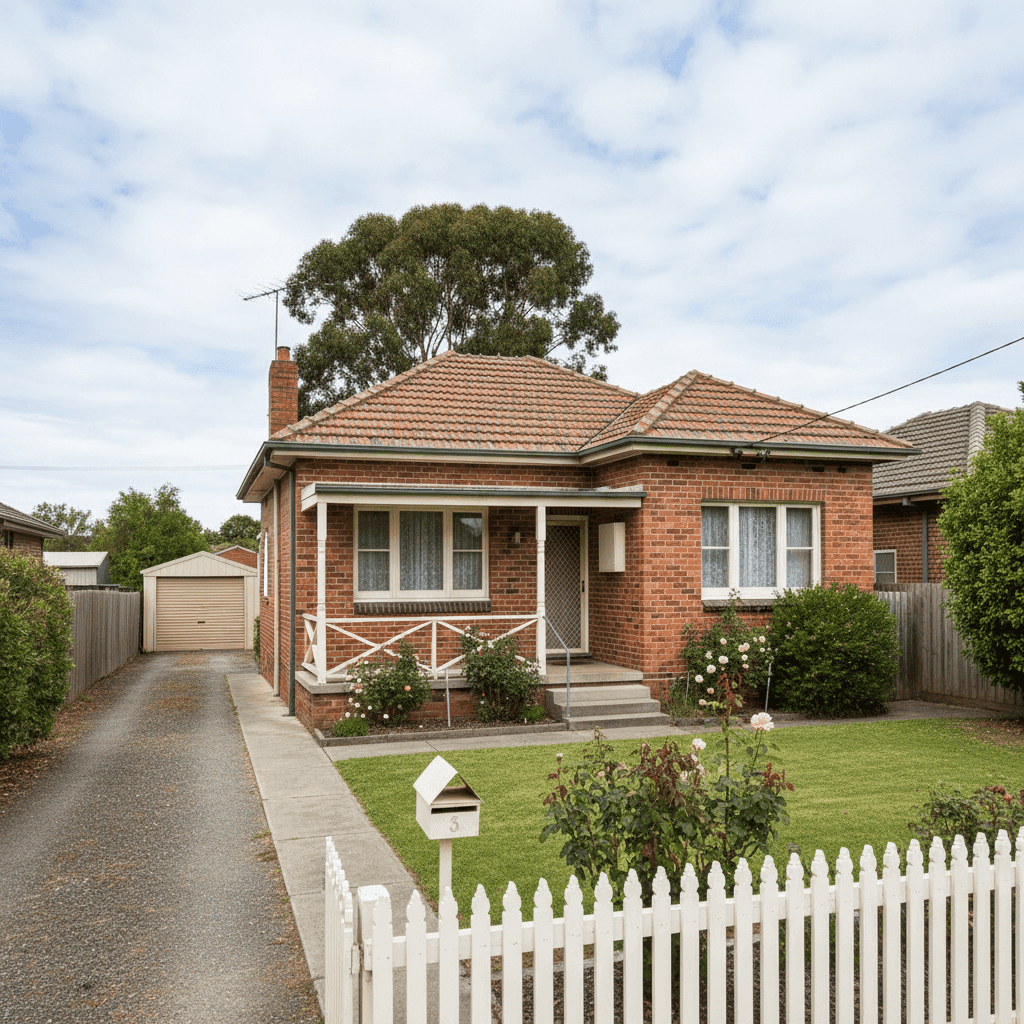
If you own a free standing home in Portland, VIC 3305, you've probably wondered whether you're paying a fair price for home and contents insurance — or whether you could be doing better. Portland is a coastal town on Victoria's south-west coast, known for its port, rugged Bass Strait scenery, and a mix of older and newer residential properties. The housing stock here often reflects the town's history, with many homes built in the mid-twentieth century featuring classic construction materials like brick veneer and terracotta tiles.
This article breaks down a recent home and contents insurance quote for a 3-bedroom, 2-bathroom free standing home in Portland, comparing it against local, state, and national benchmarks to help you understand what's driving the cost — and what you can do about it.
---
Is This Quote Fair?
The quote in question comes in at $2,896 per year (or $278 per month) for combined home and contents cover, with a $606,000 building sum insured and $50,000 in contents cover. Both the building and contents excess are set at $1,000.
Our price rating for this quote is FAIR — Around Average. That assessment holds up when you look at the numbers in context. Based on 40 quotes collected for Portland (3305), the suburb average sits at $2,316 per year, with a median of $1,919. This quote lands above both of those figures, but it's well within the suburb's 75th percentile of $3,114 — meaning roughly three-quarters of quotes in the area come in cheaper, but a significant portion are more expensive.
In short, this isn't a bargain, but it's not an outlier either. For a home of this age, size, and construction type, a premium in this range is broadly in line with what the market is producing.
---
How Portland Compares to the Rest of Victoria and Australia
It's worth zooming out to put Portland's insurance costs in a broader context.
| Benchmark | Average Premium | Median Premium |
|---|---|---|
| Portland (3305) | $2,316/yr | $1,919/yr |
| Glenelg LGA | $2,641/yr | — |
| Victoria | $3,000/yr | $2,718/yr |
| National | $5,347/yr | $2,764/yr |
Compared to the Victorian state average of $3,000 per year, Portland homeowners are generally paying less — a meaningful difference that reflects the region's relatively lower risk profile compared to flood-prone inland areas or high-value metropolitan suburbs. The quote we're analysing, at $2,896, sits just below the state average, which is consistent with its "Fair" rating.
When you look at national figures, the contrast is even more striking. The national average premium of $5,347 is nearly double what Portland homeowners typically pay. This is largely driven by high-premium states like Queensland and New South Wales, where cyclone, flood, and bushfire risks push costs significantly higher. Portland, by comparison, benefits from a more moderate risk environment — no cyclone rating applies here, and coastal exposure is a factor but not to the same degree as in northern Australia.
The Glenelg LGA average of $2,641 sits between the Portland suburb average and the state average, which makes sense given the LGA encompasses a range of properties across different risk profiles.
---
Property Features That Affect Your Premium
Several characteristics of this particular property have a direct bearing on what insurers charge. Understanding them helps you see why the premium lands where it does.
Age of construction (1960): Homes built in the 1960s are now over 60 years old. Insurers view older properties with some caution — ageing wiring, plumbing, and structural components can increase the likelihood of a claim. This is one factor that can push premiums above the suburb median.
Brick veneer walls and tiled roof: These are generally viewed favourably by insurers. Brick veneer is durable and fire-resistant, and tiled roofs offer solid weather protection. Compared to weatherboard or Colorbond alternatives, this construction combination typically attracts more competitive premiums.
Stump foundation with timber/laminate flooring: Homes on stumps are common in older Victorian towns and can be perfectly sound, but insurers do consider the foundation type. Elevated homes on stumps may be more susceptible to subfloor moisture issues, and timber flooring adds replacement cost considerations to a contents or building claim.
Elevated by less than 1 metre: The slight elevation is noted but doesn't significantly alter the risk profile here. It may offer a minor advantage in terms of surface water drainage, but it's not enough to move the needle substantially on premium pricing.
Ducted climate control: The presence of ducted heating or cooling adds to the insured building value and contributes to a higher replacement cost estimate, which in turn supports the $606,000 building sum insured. This is reflected in the premium.
No pool, no solar panels: The absence of a pool removes a common liability risk factor. No solar panels means no additional complexity around replacement costs or electrical risk. Both are modest premium-positive factors.
---
Tips for Homeowners in Portland
Whether you're reviewing your existing policy or shopping around for the first time, here are some practical steps Portland homeowners can take to manage their insurance costs.
1. Review your building sum insured carefully. At $606,000 for a 130 sqm home, the sum insured works out to roughly $4,660 per square metre — on the higher end for a standard-quality home in a regional area. It's worth using a building cost calculator to verify this figure is accurate. Being over-insured means you're paying more than necessary; being under-insured can leave you exposed after a major claim.
2. Consider raising your excess. A $1,000 excess is fairly standard, but increasing it — say, to $1,500 or $2,000 — can reduce your annual premium. If you have a solid emergency fund and your home is in good condition, a higher excess may be a sensible trade-off.
3. Get the home inspected and maintained. For a 1960s home on stumps, proactive maintenance matters. Insurers look more favourably on well-maintained properties, and keeping your wiring, plumbing, and subfloor in good order can help you avoid claims altogether — which protects your no-claims history and keeps future premiums lower.
4. Compare quotes annually. The insurance market shifts, and loyalty doesn't always pay. Using a comparison tool like CoverClub to benchmark your renewal quote each year is one of the simplest ways to ensure you're not overpaying. Even a "Fair" rating means there's room to potentially find a better deal.
---
Ready to Compare?
Whether you're a first-time buyer or a long-term Portland local, getting a second opinion on your home insurance is always worthwhile. At CoverClub, you can explore real quote data for Portland and the surrounding region, compare it against Victorian and national benchmarks, and get a personalised quote in minutes. A few minutes of comparison could save you hundreds of dollars a year.