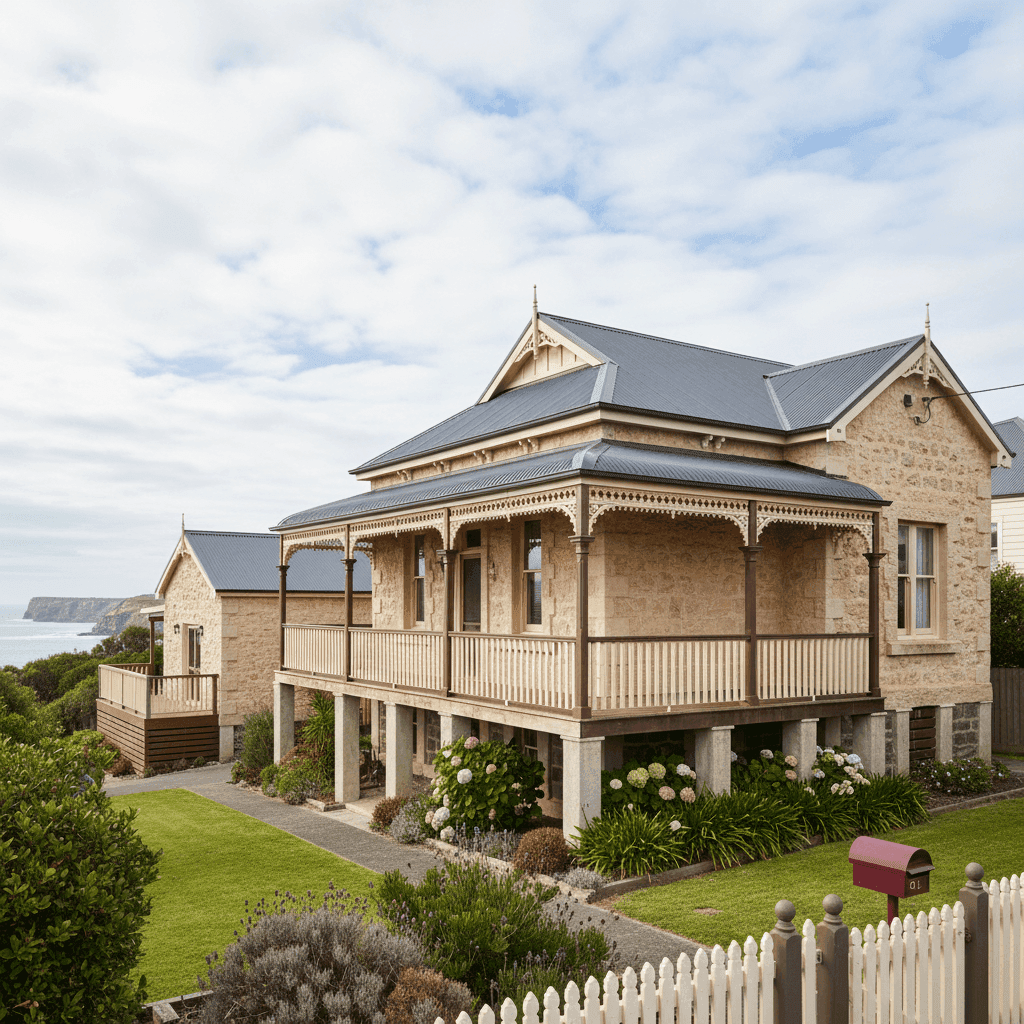
Portland, VIC 3305 is a coastal town on Victoria's far south-west coast — known for its deep-water port, rugged coastline, and a rich collection of Victorian-era architecture. If you own a four-bedroom free-standing home here, particularly one with heritage character, you're likely navigating a more complex insurance landscape than the average Australian homeowner. This article breaks down a real building-only insurance quote for a property of this type in Portland, benchmarks it against local, state, and national data, and offers practical guidance for keeping your cover both adequate and affordable.
---
Is This Quote Fair?
The quote in question sits at $2,356 per year (or $226/month) for building-only cover, with a sum insured of $550,000 and a building excess of $2,000.
Our price rating for this quote is EXPENSIVE — Above Average, and the data backs that up. The suburb median for Portland (3305) sits at $1,933/yr, meaning this quote comes in roughly $423 above the midpoint of what other Portland homeowners are paying. It also exceeds the suburb average of $2,091/yr by about $265.
That said, "expensive" doesn't necessarily mean "wrong." Several features of this particular property — discussed in detail below — justify a higher-than-average premium. The key question is whether the loading is proportionate to the risk.
---
How Portland Compares
To put this quote in proper context, it helps to look at how Portland stacks up against the broader market.
| Benchmark | Premium |
|---|---|
| Portland (3305) median | $1,933/yr |
| Portland (3305) average | $2,091/yr |
| Portland 75th percentile | $2,297/yr |
| This quote | $2,356/yr |
| Glenelg LGA average | $2,791/yr |
| VIC state average | $2,921/yr |
| National average | $2,965/yr |
Interestingly, while this quote is above the suburb median and average, it still sits below the Glenelg LGA average ($2,791/yr) and well below both the Victorian state average ($2,921/yr) and the national average ($2,965/yr). From that broader perspective, the quote isn't outlandish — it's the local Portland market that tends to price lower, partly because the region doesn't carry the same extreme weather risk premiums seen in cyclone-prone or flood-heavy areas of Australia.
The suburb sample of 53 quotes gives us reasonable confidence in these local benchmarks. This quote lands just above the 75th percentile ($2,297/yr), meaning roughly three-quarters of comparable Portland properties are insured for less. That's worth noting when you shop around.
---
Property Features That Affect Your Premium
Several characteristics of this property are likely pushing the premium above the suburb median. Here's what insurers are factoring in:
Heritage Overlay
This is arguably the most significant premium driver. Properties under a Heritage Overlay are subject to strict planning controls that require restoration work to use period-appropriate materials and techniques — both of which are considerably more expensive than standard modern construction. If the home were damaged, rebuilding or repairing it to heritage compliance standards could substantially exceed typical costs, which is reflected in the sum insured and the premium.
Construction Age (1873)
At over 150 years old, this is an exceptionally old dwelling. Older homes carry higher risk of electrical faults, plumbing failures, and structural issues simply due to age and the evolution of building standards over time. Insurers apply age-based loadings that reflect the increased probability and potential cost of a claim.
Stumped Foundation
Homes on stump foundations — common in older Victorian-era properties — can be more susceptible to movement, subsidence, and moisture-related damage than slab-on-ground construction. This adds a layer of risk that modern homes on concrete slabs don't carry.
Timber/Laminate Flooring
Timber floors, especially in heritage homes, are both valuable and vulnerable. They're costly to repair or replace to a matching standard, and they're more susceptible to water damage than tiled or concrete alternatives.
Granny Flat
The presence of a granny flat on the property increases the overall replacement cost and complexity of a claim. Even under building-only cover, the additional structure needs to be factored into the sum insured.
Ducted Climate Control
A ducted HVAC system is a significant fixed asset within the building. Its inclusion in the sum insured adds to the overall replacement cost, and any system failure or damage can be expensive to remediate.
"Other" External Walls
The wall construction material is listed as "other," which often refers to non-standard materials like stone, rendered masonry, or heritage-specific cladding. Non-standard materials are typically more expensive to source and repair, contributing to a higher premium.
---
Tips for Homeowners in Portland
1. Make Sure Your Sum Insured Reflects Heritage Rebuild Costs
Standard online calculators often underestimate the true cost of rebuilding a heritage property. Consider engaging a quantity surveyor or heritage building specialist to provide an accurate replacement cost estimate. Being underinsured on a heritage home can leave you significantly out of pocket after a major claim.
2. Review Your Excess to Manage Your Premium
This quote carries a $2,000 building excess. If you have the financial buffer to absorb a higher out-of-pocket cost in the event of a claim, opting for a higher excess is one of the most straightforward ways to reduce your annual premium. Conversely, if cash flow is tight, a lower excess with a slightly higher premium may be more manageable.
3. Ask About Heritage-Specific Policies
Not all insurers are equally equipped to handle heritage property claims. Some specialist insurers offer policies tailored to heritage homes that include provisions for like-for-like restoration, heritage architect fees, and compliance with council requirements. These policies may cost more upfront but can save considerable stress and money at claim time.
4. Compare Quotes Annually
The Portland insurance market has 53 data points in our sample, and premiums vary significantly — from $1,512/yr at the 25th percentile to $2,297/yr at the 75th percentile. That's a spread of nearly $800/yr for broadly similar properties. Shopping around at renewal time is one of the most effective ways to avoid paying more than you need to.
---
Compare Your Options at CoverClub
Whether you're renewing your existing policy or insuring a Portland property for the first time, it pays to see the full picture before you commit. CoverClub makes it easy to compare building insurance quotes side by side, with suburb-level benchmarking so you always know where your quote stands. Get a quote today and find out if you're paying a fair price for your home.