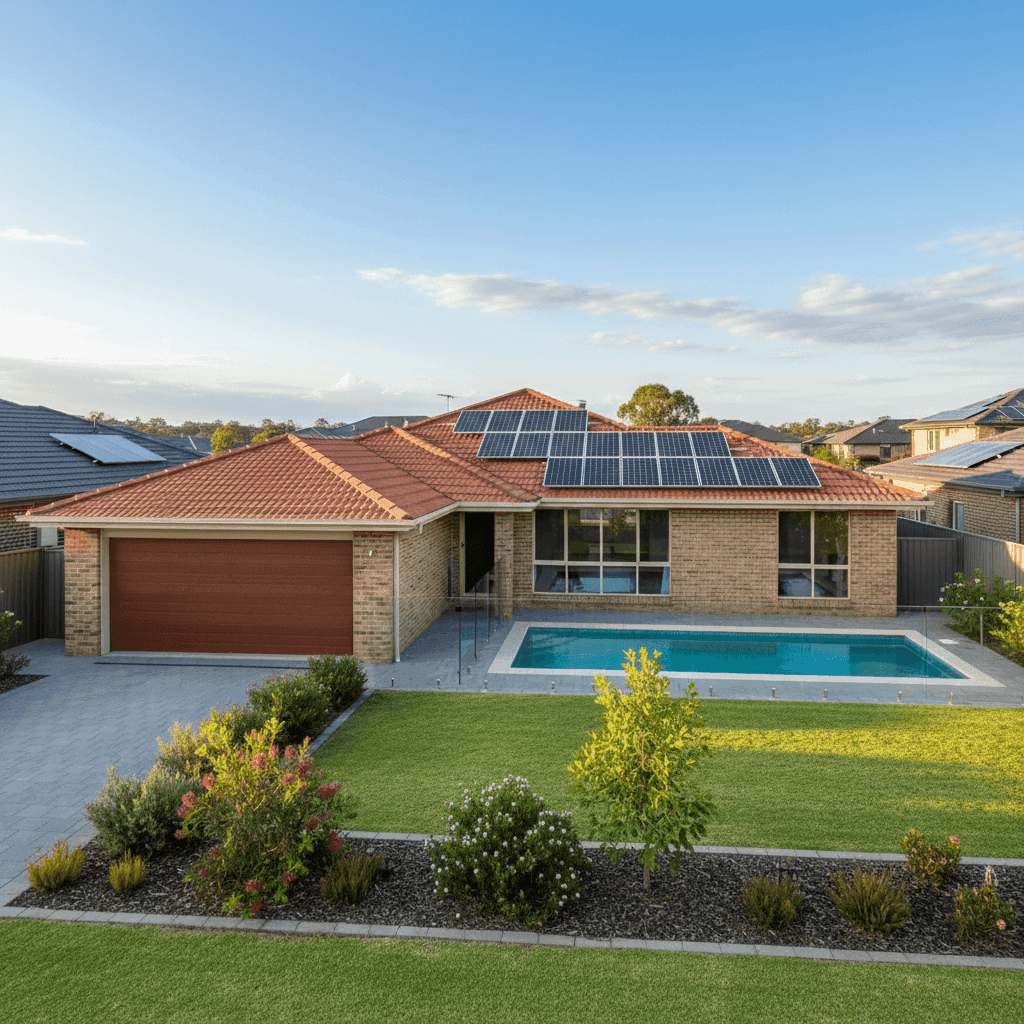
Pottsville is a relaxed coastal town tucked into the far north of New South Wales, sitting just south of the Queensland border. It's a sought-after spot for families and sea-changers alike — and with that desirability comes the very real responsibility of protecting your home. This article takes a close look at a real home and contents insurance quote for a four-bedroom, free-standing home in Pottsville (postcode 2489), breaking down whether the price stacks up and what's driving the premium.
---
Is This Quote Fair?
The quote in question comes in at $2,497 per year (or $245/month) for combined home and contents cover, with a building sum insured of $850,000 and contents valued at $200,000. The building excess is set at $3,000, with a separate $1,000 excess applying to contents claims.
Our price rating for this quote is FAIR — Around Average, and the data backs that up.
Compared to the suburb average for Pottsville of $2,924/year, this quote is sitting roughly $427 below the local average — a meaningful saving without straying into suspiciously cheap territory. The suburb median sits at $2,953/year, so this quote is comfortably below the midpoint of what Pottsville homeowners are typically paying.
It's worth noting the spread of premiums across the suburb is quite wide. The 25th percentile sits at $1,491/year, while the 75th percentile reaches $4,066/year — a range of nearly $2,600. This tells us that property characteristics, insurer choice, and coverage levels vary considerably across the postcode. At $2,497, this quote lands in the lower half of the distribution, which is a solid position to be in.
---
How Pottsville Compares
Zooming out beyond the suburb gives some useful context.
| Benchmark | Average Premium |
|---|---|
| Pottsville (suburb) | $2,924/yr |
| NSW (state) | $3,801/yr |
| National | $2,965/yr |
The NSW state average of $3,801/year is significantly higher than what Pottsville homeowners are typically paying, which is a pleasant surprise for locals. NSW as a whole carries elevated risk profiles in many areas — from bushfire-prone regions in the west to flood-affected river towns — which pushes the state figure up considerably.
Against the national average of $2,965/year, Pottsville's suburb average is actually slightly cheaper, suggesting the area isn't priced as a high-risk postcode by most insurers — at least for standard perils. The quote analysed here beats both the national average and the suburb average, making it a competitive outcome.
One figure worth flagging: the LGA average for the Tweed region is an eye-watering $26,089/year. This is almost certainly skewed by a small number of very high-value or high-risk properties — waterfront estates, flood-affected land, or commercial-adjacent holdings — and shouldn't be read as representative of a typical Pottsville home.
---
Property Features That Affect Your Premium
Several characteristics of this property will be influencing the premium, both positively and negatively.
Brick veneer construction with a tiled roof is generally viewed favourably by insurers. Brick veneer offers solid fire resistance and structural integrity, while tiles are more durable than metal or fibrous cement alternatives in most weather conditions. This combination typically attracts lower premiums compared to timber-framed or Colorbond-roofed homes.
Slab foundation is standard for a home built in 2014 and poses no particular risk flags. Newer builds tend to comply with modern building codes, which can work in your favour when insurers assess structural risk.
Timber and laminate flooring is worth keeping in mind for contents and building claims. These materials can be more susceptible to water damage than tiles, so it's important your policy adequately covers internal water damage events.
The swimming pool adds a liability dimension to your cover. Most home insurance policies include legal liability protection, but it's worth confirming your policy explicitly covers incidents involving the pool — particularly if you have young children or regularly host guests.
Solar panels are an increasingly common feature and can be a grey area in insurance. Some policies cover panels as part of the building, others treat them separately. Confirm with your insurer that your $850,000 building sum insured accounts for the replacement cost of your solar system.
Ducted climate control is a high-value fixed asset that forms part of the building sum insured. Given its replacement cost can run into the tens of thousands, it's important this is factored into your building valuation to avoid being underinsured.
The property is not in a designated cyclone risk area, which keeps premiums lower than comparable homes in far north Queensland or parts of Western Australia where cyclone loading can dramatically inflate costs.
---
Tips for Homeowners in Pottsville
1. Review your building sum insured annually With a 214 sqm home featuring quality fixtures like ducted air conditioning and solar panels, construction costs can escalate quickly. The $850,000 sum insured should reflect full replacement cost — not market value. Use a building cost calculator or speak with a quantity surveyor to ensure you're not underinsured.
2. Clarify solar panel and pool coverage Ask your insurer explicitly how solar panels are covered (building vs. specified item) and whether your pool and its equipment are included. These are common gaps that only become apparent at claim time.
3. Consider your excess strategically The $3,000 building excess on this policy is on the higher side. A higher excess generally lowers your premium, but it means more out-of-pocket cost when you do claim. If a $3,000 outlay would be a financial strain, it may be worth comparing quotes with a lower excess to find the right balance.
4. Compare quotes at renewal — every year Insurance loyalty rarely pays off in Australia. Insurers frequently offer better rates to new customers than to those who simply auto-renew. With 45 quotes sampled in the Pottsville postcode alone, there's clearly a competitive market worth exploring. Check what others are paying in your suburb before your next renewal.
---
Ready to Compare?
Whether you're reviewing your current policy or shopping for the first time, it pays to see what's available. CoverClub makes it easy to compare home and contents insurance quotes tailored to your property and location. Get a quote today at CoverClub and find out if you're getting a fair deal — or if there's a better one waiting.