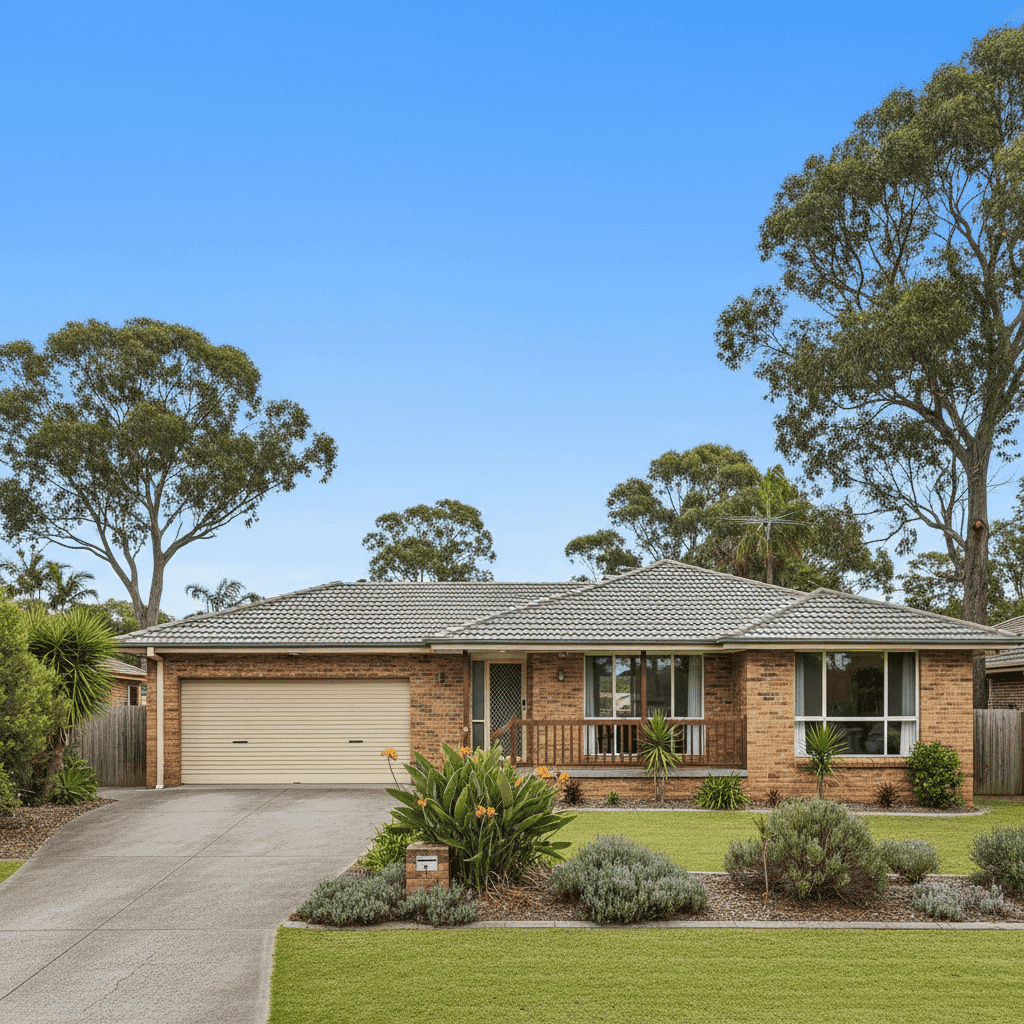
Pottsville is a relaxed coastal town tucked into the Northern Rivers region of New South Wales, sitting just south of the Queensland border. It's a popular choice for families and sea-changers drawn to its beaches, laid-back lifestyle, and relative affordability compared to nearby Byron Bay. But like any coastal property market, home insurance here comes with its own set of considerations. This article breaks down a recent home and contents insurance quote for a four-bedroom free standing home in Pottsville, and puts the numbers into context so you can judge whether you're getting a fair deal.
---
Is This Quote Fair?
The quote in question comes in at $3,563 per year (or $341 per month) for combined home and contents cover, with a building sum insured of $669,000 and contents valued at $128,000. Both the building and contents excess are set at $1,000.
Our pricing engine has rated this quote as Fair — Around Average, and when you dig into the data, that assessment holds up. The premium sits modestly above the suburb average of $3,135 per year and the suburb median of $2,936 per year, but it remains well within the normal range for this postcode. In fact, 75% of quotes in the Pottsville area come in at or below $4,000 per year, meaning this quote lands comfortably in the middle of the pack rather than at the expensive end.
It's worth noting that "fair" doesn't necessarily mean "the best available." There may be room to sharpen the price — particularly if you shop around — but you're not being gouged, and the coverage level reflects a well-specified property with a healthy sum insured.
---
How Pottsville Compares
To put this quote in proper perspective, it helps to look at Pottsville's suburb-level insurance data alongside broader benchmarks.
| Benchmark | Premium |
|---|---|
| This quote | $3,563/yr |
| Pottsville suburb average | $3,135/yr |
| Pottsville suburb median | $2,936/yr |
| Pottsville 25th percentile | $2,227/yr |
| Pottsville 75th percentile | $4,000/yr |
| NSW state median | $3,770/yr |
| NSW state average | $9,528/yr |
| National median | $2,764/yr |
| National average | $5,347/yr |
A few things stand out here. First, the NSW state average of $9,528 per year is dramatically higher than this quote — but that figure is heavily skewed by high-risk postcodes across the state, particularly flood-prone inland areas and cyclone-exposed coastal zones further north. The state median of $3,770 is a much more useful comparison, and this quote actually comes in below that figure.
At the national level, the average of $5,347 similarly reflects the influence of high-premium regions like Far North Queensland and parts of Western Australia. The national median of $2,764 is lower than this quote, which is consistent with Pottsville being a coastal suburb — coastal properties typically attract slightly higher premiums than inland equivalents due to weather exposure and elevated rebuild costs.
One number worth flagging is the Tweed LGA average of $26,089 per year. This is an extreme outlier and is almost certainly driven by a small number of very high-value properties or specialist policies within the broader LGA dataset. It should not be taken as representative of typical Pottsville premiums.
Based on a sample of 27 quotes from this postcode, the Pottsville data is reasonably reliable, and the conclusion is clear: this quote is broadly in line with what local homeowners are paying.
---
Property Features That Affect Your Premium
Several characteristics of this property influence how insurers price the risk.
Brick veneer construction with a tiled roof is generally viewed favourably by insurers. Brick veneer offers good fire resistance and structural durability, while tiled roofs are considered more resilient than metal or fibreglass alternatives in many weather conditions. Together, these features typically attract more competitive premiums compared to timber-framed or Colorbond-roofed homes.
Slab foundation is another positive from an insurer's perspective. Slab homes tend to have lower subsidence and pest-related risk than homes on stumps or piers, which can reduce the likelihood of certain structural claims.
Vinyl flooring is worth mentioning in the context of contents and internal damage claims. Vinyl is water-resistant and relatively easy to replace, which can limit the cost of water damage events compared to hardwood or carpet.
Ducted climate control adds meaningful value to the building sum insured. Ducted systems are expensive to repair or replace, and their inclusion in the $669,000 building cover is appropriate. Homeowners should ensure their sum insured accounts for this when reviewing their policy annually.
No pool and no solar panels simplifies the risk profile slightly. Both features can add complexity to claims (pool fencing liability, solar inverter damage, etc.), so their absence keeps things straightforward.
The property was built in 1996, which places it in a generation of homes that generally meets modern building standards without the age-related concerns that can affect pre-1980s construction. At 214 square metres, it's a well-sized family home, and the $669,000 building sum insured translates to roughly $3,126 per square metre — a reasonable figure for a brick veneer home in coastal NSW.
---
Tips for Homeowners in Pottsville
1. Review your sum insured annually. Building costs in coastal NSW have risen significantly in recent years. The cost to rebuild your home — not its market value — should determine your sum insured. Underinsurance is one of the most common and costly mistakes homeowners make. Use a building cost calculator or speak to a local builder to sense-check your figure each year.
2. Compare quotes before renewing. Insurers don't always reward loyalty. Premiums can shift significantly between providers for the same level of cover. CoverClub makes it easy to compare quotes for your address and see where your current policy sits relative to the market.
3. Consider your excess carefully. Both the building and contents excess on this policy are set at $1,000. Opting for a higher excess (say, $2,000) can reduce your annual premium, but only makes sense if you're unlikely to make small claims and can comfortably cover the excess out of pocket. Conversely, a lower excess may be worth paying for if your property has specific vulnerabilities.
4. Check what's included in your contents cover. At $128,000, the contents value is substantial. Make sure your policy includes portable valuables cover if you own items like jewellery, cameras, or laptops that leave the home regularly — standard contents policies often cap or exclude these. Also confirm whether your policy covers accidental damage, as this isn't always included by default.
---
Ready to Compare?
Whether you're happy with your current policy or wondering if you can do better, it's always worth running the numbers. CoverClub aggregates real quote data from Australian homeowners so you can see exactly how your premium stacks up. Get a quote for your property and find out whether you're paying a fair price — or whether there's a better deal waiting for you.