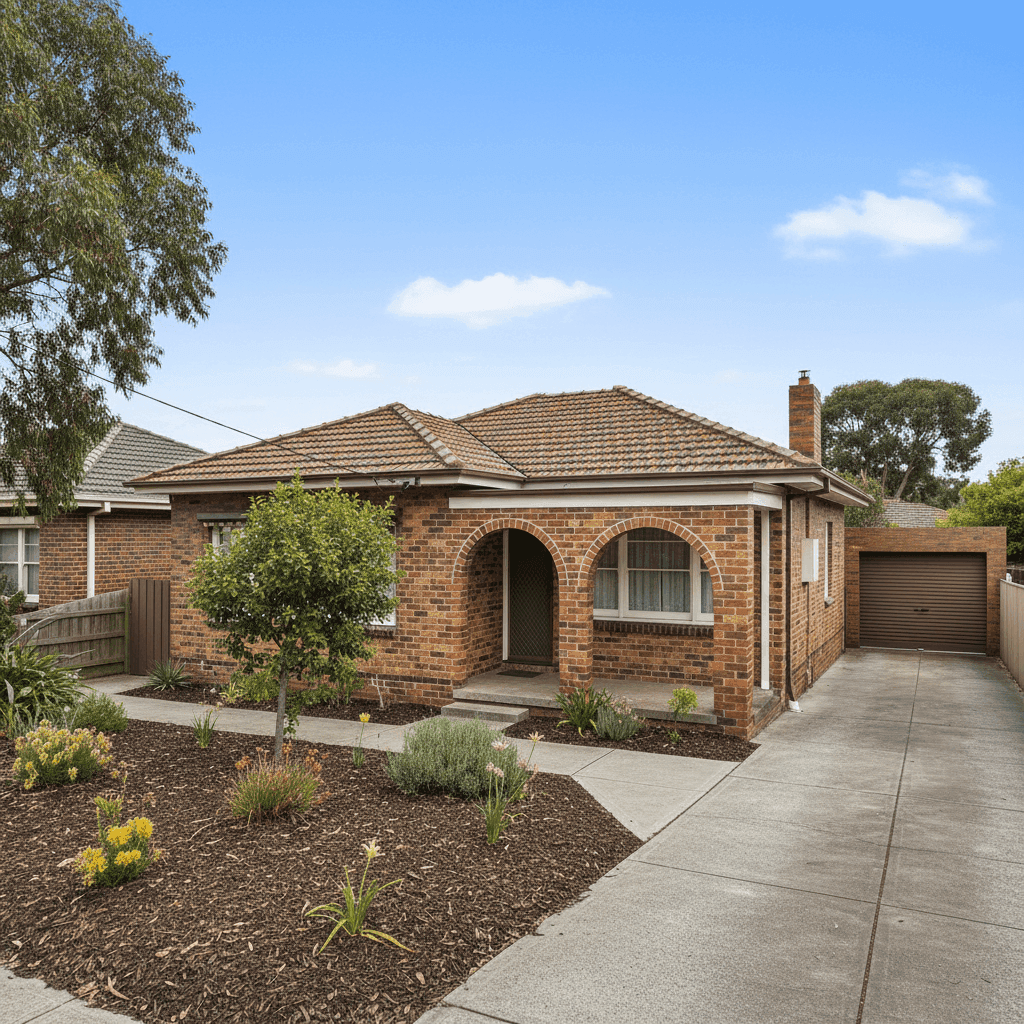
If you own a free standing home in Preston, VIC 3072, you're probably curious about whether you're paying a fair price for home insurance — or leaving money on the table. Preston is a well-established inner-northern Melbourne suburb, popular for its character homes, tree-lined streets, and proximity to the city. It's also a suburb where many homes date back several decades, which can have a real impact on what insurers charge.
In this article, we break down a real home and contents insurance quote for a 3-bedroom, 1-bathroom brick veneer home in Preston, comparing it against local, state, and national benchmarks to help you understand what's driving the cost — and what you can do about it.
---
Is This Quote Fair?
The annual premium for this property came in at $1,388 per year (or $133/month), covering both building (sum insured: $420,000) and contents ($10,000), each with a $500 excess.
Our price rating for this quote is FAIR — Around Average.
Based on 48 quotes collected for Preston (3072), the suburb average sits at $1,310/yr and the median at $1,278/yr. This quote lands just above both figures, placing it comfortably within the middle of the market — above the 25th percentile of $1,071/yr but well below the 75th percentile of $1,561/yr.
In short, this isn't a bargain-basement price, but it's not excessive either. Homeowners paying significantly more than $1,561/yr for a comparable property in Preston should almost certainly be shopping around.
---
How Preston Compares to Victoria and Australia
One of the most striking things about Preston's insurance costs is how favourably they compare to broader benchmarks.
| Benchmark | Average Premium | Median Premium |
|---|---|---|
| Preston (3072) | $1,310/yr | $1,278/yr |
| Darebin LGA | $1,622/yr | — |
| Victoria | $3,000/yr | $2,718/yr |
| National | $5,347/yr | $2,764/yr |
Preston homeowners are paying, on average, less than half the Victorian state average — and a fraction of the national average. This reflects the suburb's relatively low exposure to catastrophic weather events such as floods, bushfires, and cyclones, which drive premiums sky-high in many other parts of Australia.
Interestingly, Preston sits notably below the broader Darebin LGA average of $1,622/yr, suggesting that some neighbouring suburbs within the same local government area carry higher risk profiles or different property characteristics.
When you zoom out to the national picture, the contrast is even starker. The national average of $5,347/yr is heavily influenced by high-risk regions in Queensland, Western Australia, and northern NSW — areas exposed to cyclones, flooding, and severe storms. Melbourne's inner north is, by comparison, a relatively benign environment for insurers.
You can explore the full breakdown of Victoria's home insurance statistics here.
---
Property Features That Affect Your Premium
Several characteristics of this particular property influence what insurers are willing to charge. Here's how they stack up:
Construction Era (1972)
Homes built in the early 1970s are well past the 50-year mark, which can give some insurers pause. Older properties may have ageing plumbing, electrical wiring, and roofing materials that increase the likelihood of claims. That said, a well-maintained 1970s home in Melbourne's inner north is generally still a sound risk — and many insurers price accordingly.
Brick Veneer Walls
Brick veneer is one of the most common external wall types in Australian suburban homes, and insurers generally view it favourably. It offers good fire resistance and structural durability compared to weatherboard or fibre cement, which can help keep premiums competitive.
Tiled Roof
A tiled roof is considered a relatively low-risk roofing material by most insurers. Tiles are durable, fire-resistant, and widely understood by assessors. This is a positive factor for the premium.
Stump Foundation
Homes on stumps (also known as pier or post foundations) are common in older Melbourne properties and can be a double-edged sword. On one hand, they allow for good underfloor ventilation; on the other, stumps can deteriorate over time and may require replacement — a factor some insurers weigh when assessing structural risk.
Timber and Laminate Flooring
Timber and laminate floors are susceptible to water damage, which can be a consideration for contents and building claims. Ensuring your policy adequately covers water-related damage (including escape of liquid) is worth checking.
Ducted Climate Control
The presence of ducted heating and cooling adds to the replacement value of the building, which is reflected in the $420,000 sum insured. It's important to ensure this figure accurately captures the full cost of rebuilding — including all fixed systems — to avoid being underinsured.
No Pool, No Solar Panels
The absence of a swimming pool and solar panels simplifies the risk profile. Pools add liability considerations, and solar panels introduce potential complications around roof damage and electrical systems. Neither applies here, which keeps things straightforward.
---
Tips for Homeowners in Preston
1. Review Your Sum Insured Regularly
Building costs in Melbourne have risen significantly over the past few years. A sum insured of $420,000 for a 130 sqm home may be appropriate today, but it's worth reassessing annually. Underinsurance is one of the most common — and costly — mistakes homeowners make.
2. Consider Increasing Your Excess to Lower Your Premium
Both the building and contents excess on this policy sit at $500. If you're financially comfortable absorbing a higher out-of-pocket cost in the event of a claim, raising your excess to $1,000 or more can meaningfully reduce your annual premium.
3. Don't Overlook Contents Coverage
At $10,000, the contents sum insured is relatively modest. Take the time to do a proper home inventory — furniture, appliances, clothing, electronics, and valuables can add up quickly. If your contents are worth more than $10,000, you may be underinsured without realising it.
4. Compare Quotes Before Renewal
Insurance loyalty rarely pays off. Insurers frequently offer better rates to new customers than to existing policyholders. Given that this quote sits around the suburb average, there's a reasonable chance a competing insurer could offer a lower price for equivalent cover. It costs nothing to check.
---
Ready to Compare?
Whether you're renewing your policy or buying cover for the first time, it pays to see what the market looks like before committing. CoverClub makes it easy to compare home and contents insurance quotes tailored to your property. Get a quote today at CoverClub and make sure you're not paying more than you need to for the protection your home deserves.