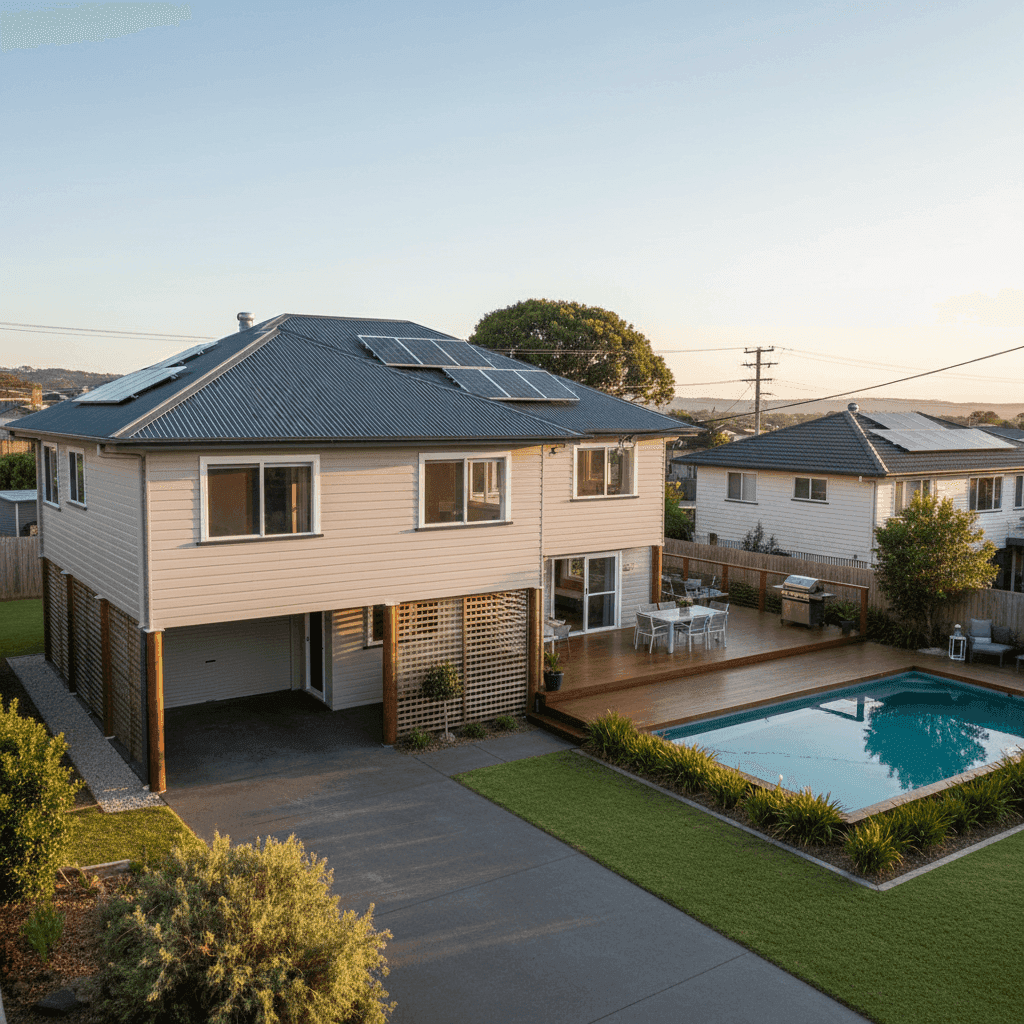
Primbee is a quiet lakeside suburb nestled on the shores of Lake Illawarra, just south of Wollongong in New South Wales. It's a sought-after pocket of the Illawarra region, known for its relaxed lifestyle and proximity to the coast. But owning a free standing home here — especially one with a pool, solar panels, and ducted climate control — comes with insurance considerations that are worth unpacking carefully.
This article breaks down a recent home and contents insurance quote for a four-bedroom, three-bathroom free standing home in Primbee, comparing it against local, state, and national benchmarks to help you understand whether you're getting a fair deal.
---
Is This Quote Fair?
The quote in question sits at $4,325 per year (or $422/month) for combined home and contents cover, with a building sum insured of $730,000 and contents valued at $100,000. Both the building and contents excess are set at $1,000.
Our pricing analysis rates this quote as Expensive — above average for the area.
To put that in perspective: the suburb average for Primbee sits at just $2,473 per year, with a median of $2,111. This quote comes in at roughly 75% above the suburb average and more than double the suburb median — a significant gap that warrants a closer look.
That said, "expensive" doesn't automatically mean "wrong." A higher-than-average premium can be entirely justified depending on the property's characteristics, the level of cover, and the insurer's specific risk assessment. In this case, several property features are likely pushing the premium upward (more on those below).
---
How Primbee Compares
Understanding where Primbee sits in the broader insurance landscape is useful context for any homeowner in the area.
| Benchmark | Average Premium | Median Premium |
|---|---|---|
| Primbee (suburb) | $2,473/yr | $2,111/yr |
| Wollongong LGA | $2,751/yr | — |
| NSW (state) | $9,528/yr | $3,770/yr |
| National | $5,347/yr | $2,764/yr |
Based on a sample of 16 quotes in the Primbee suburb dataset.
A few things stand out here. First, Primbee is actually a relatively affordable suburb to insure compared to both state and national averages — the suburb median of $2,111 is well below the NSW state median of $3,770 and the national median of $2,764. This suggests that for a typical home in Primbee, insurance costs are quite manageable.
Second, the NSW state average of $9,528 is heavily skewed by high-risk coastal and flood-prone properties elsewhere in the state — so the average can be misleading. The median is generally a more reliable benchmark for "typical" costs.
Given this context, the $4,325 quote is above the suburb norm but still comfortably below both the NSW and national averages. For a well-appointed home with a higher rebuild value and several additional features, it's not an outlier on a state or national scale — but there may still be room to find a more competitive rate.
---
Property Features That Affect Your Premium
Several characteristics of this particular property are likely influencing the premium calculation. Here's what insurers tend to weigh up:
Building Size and Sum Insured
At 214 square metres with a building sum insured of $730,000, this is a substantial home. A higher sum insured means greater exposure for the insurer, which directly translates to a higher premium. It's important that the sum insured accurately reflects the cost to rebuild — not the market value — but over-insuring can unnecessarily inflate your annual cost.
Hardiplank / Hardiflex External Walls
Fibre cement cladding such as Hardiplank and Hardiflex is generally viewed favourably by insurers due to its durability, fire resistance, and low maintenance. This material is unlikely to be a negative rating factor and may actually work in the homeowner's favour compared to older weatherboard or timber-clad homes.
Steel / Colorbond Roof
Colorbond roofing is considered a premium, durable material in the Australian market. Insurers typically regard it positively — it's resistant to fire, pests, and harsh weather conditions — so this is unlikely to be a premium driver.
Stump Foundation and Timber/Laminate Flooring
Homes on stumps (raised foundations) can attract higher premiums depending on the insurer, as the underfloor space introduces additional risks such as moisture damage, pest access, and structural movement. Combined with timber and laminate flooring, which can be more susceptible to water damage than tiles or concrete, this may be contributing to a slightly elevated risk profile.
Swimming Pool
A pool adds both value and liability to a property. From an insurance standpoint, it increases the replacement cost of the home and may introduce additional liability considerations, both of which can nudge premiums upward.
Solar Panels
Solar panel systems represent a significant asset on the roof. Insurers factor in the cost of replacing panels after storm, hail, or fire damage. With solar uptake rising across Australia, more insurers are pricing this in explicitly.
Ducted Climate Control
Ducted air conditioning systems are expensive to repair or replace and are typically included in the building sum insured. Their presence signals a higher-specification home, which can influence the overall premium calculation.
---
Tips for Homeowners in Primbee
If you're looking to get better value on your home insurance, here are some practical steps worth considering:
- Review your sum insured regularly. Building costs fluctuate, and an outdated sum insured — whether too high or too low — can cost you money. Use a building cost calculator or speak with a quantity surveyor to ensure your $730,000 figure accurately reflects current rebuild costs in the Illawarra region.
- Compare quotes across multiple insurers. The gap between the cheapest and most expensive quotes in Primbee is significant — the 25th percentile sits at $1,433 versus $3,283 at the 75th percentile. Shopping around could save you hundreds of dollars a year for equivalent cover.
- Consider your excess settings. A $1,000 excess is fairly standard, but opting for a higher voluntary excess (say, $2,000 or $2,500) can meaningfully reduce your annual premium — provided you're comfortable covering that amount out of pocket in the event of a claim.
- Ask about discounts for security and safety features. Some insurers offer reduced premiums for homes with monitored alarm systems, deadbolts, or smoke detectors. It's worth asking each insurer directly what discounts apply to your property.
---
Find a Better Deal with CoverClub
Whether this quote represents good value for your specific circumstances depends on the fine print — the inclusions, exclusions, and claim limits matter just as much as the headline price. The best way to know if you're paying too much is to compare.
Run your own quote at CoverClub to see how your home stacks up against the market — it only takes a few minutes and could put real money back in your pocket.