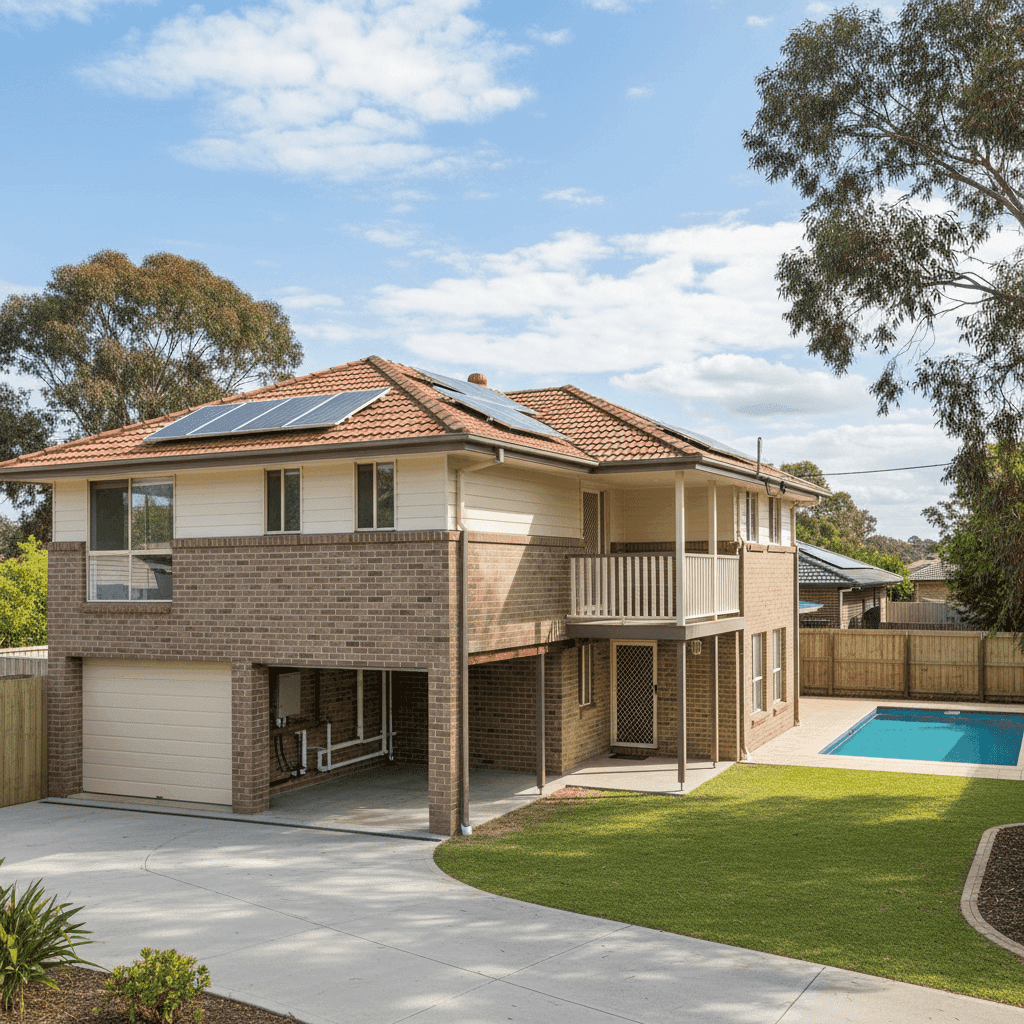
If you own a four-bedroom free standing home in Prospect, NSW 2148, you're probably curious whether you're paying a fair price for home and contents insurance. We've analysed a recent quote for a property in this suburb and compared it against local, state, and national benchmarks to give you a clear picture of where things stand.
---
Is This Quote Fair?
The quote in question comes in at $1,708 per year (or roughly $167 per month) for combined home and contents cover, with a building sum insured of $700,000 and contents valued at $120,000. The building excess is set at $2,000 and the contents excess at $600.
Our price rating for this quote is FAIR — around average. That's not a bad result. It means the premium is competitive without being an outlier in either direction. For a property of this size and age — a 244 sqm brick veneer home built in 1985, elevated on stumps with timber and laminate flooring — the insurer is pricing in a range of risk factors that we'll unpack below.
Being rated "fair" means you're not overpaying significantly, but there may still be room to do better depending on your circumstances. It's always worth shopping around.
---
How Prospect Compares
To put this quote in context, here's how the $1,708 annual premium stacks up against Prospect suburb averages, as well as broader benchmarks:
| Benchmark | Premium |
|---|---|
| This Quote | $1,708/yr |
| Prospect Suburb Average | $1,788/yr |
| Prospect Suburb Median | $1,561/yr |
| Prospect 25th Percentile | $1,286/yr |
| Prospect 75th Percentile | $2,165/yr |
| Cumberland LGA Average | $1,792/yr |
| NSW State Average | $3,801/yr |
| NSW State Median | $3,410/yr |
| National Average | $2,965/yr |
| National Median | $2,716/yr |
A few things stand out immediately. This quote sits just below the Prospect suburb average of $1,788 and the Cumberland LGA average of $1,792 — a solid result. It's above the suburb median of $1,561, which tells us there are cheaper quotes out there in the area, but those may reflect lower sums insured, fewer features, or higher excesses.
What's most striking is how much lower Prospect premiums are compared to the rest of New South Wales. The state average of $3,801 is more than double this quote — a significant gap. Similarly, the national average of $2,965 dwarfs what Prospect homeowners are typically paying. This reflects the suburb's relatively low exposure to the extreme weather events — such as cyclones, major flooding, and bushfires — that push premiums sky-high in other parts of the country.
It's worth noting the sample size for Prospect is 13 quotes, so while the data is directionally useful, a larger dataset would give even greater confidence in these figures.
---
Property Features That Affect Your Premium
Several characteristics of this property directly influence what insurers charge. Understanding them helps you see why your premium lands where it does.
Brick Veneer Construction & Tiled Roof Brick veneer walls are generally viewed favourably by insurers — they're durable, fire-resistant, and less prone to weather damage than timber or weatherboard alternatives. Combined with a tiled roof, this property sits in a construction category that typically attracts moderate to lower risk ratings. Tiles are long-lasting but can be more costly to repair or replace than Colorbond, which can push premiums slightly higher than metal roofing alternatives.
Elevated on Stumps The home is elevated by at least one metre on stumps — a construction style common in older Australian homes. Elevation can be a double-edged sword for insurance. On the positive side, it can reduce flood damage to the main living areas. On the other hand, the subfloor space and the stumps themselves introduce additional structural considerations, and the timber flooring beneath can be vulnerable to moisture and pest damage over time.
Age of Construction (1985) A home built in 1985 is approaching 40 years old. Insurers factor in the age of a property when assessing the likelihood of claims related to ageing infrastructure — think plumbing, wiring, and roofing materials. Older homes can cost more to insure, though the brick veneer construction here helps offset some of that risk.
Swimming Pool The presence of a pool adds to the replacement cost of the property and introduces liability considerations. Pools are a common feature in Western Sydney suburbs and are generally factored into the building sum insured.
Solar Panels Solar panels are now a standard inclusion on many Australian homes, but they do add to the insured value of the building. Damage to panels — whether from hail, storms, or falling debris — can be a costly claim, so it's important to confirm your policy explicitly covers them.
Ducted Climate Control Ducted air conditioning is a significant fixed asset within the home. It's typically covered under building insurance, and its inclusion in the sum insured helps justify a higher building value of $700,000.
No Cyclone Risk Prospect is not classified as a cyclone risk area, which is a meaningful premium advantage. Cyclone-prone regions in Queensland and Western Australia can see premiums two to three times higher for equivalent properties.
---
Tips for Homeowners in Prospect
1. Review your building sum insured regularly Construction costs have risen sharply across Australia in recent years. A $700,000 sum insured may have been accurate when you took out the policy, but it's worth checking whether it still reflects current rebuild costs — especially for a 244 sqm home with ducted air conditioning, solar panels, and a pool. Underinsurance is one of the most common issues Australian homeowners face at claim time.
2. Consider your excess settings carefully This quote carries a $2,000 building excess. A higher excess generally reduces your premium, but it means you'll pay more out of pocket when you do need to claim. If your financial buffer allows it, keeping a higher excess can be a sensible way to lower ongoing costs — just make sure it's an amount you could genuinely afford at short notice.
3. Bundle home and contents — but check the value This policy covers both building and contents, which is often more cost-effective than holding two separate policies. However, make sure your contents value of $120,000 accurately reflects what you own. Contents are frequently undervalued, particularly when you account for electronics, furniture, clothing, and appliances.
4. Shop around at renewal time Even a "fair" rating means there may be better deals available. Insurers regularly adjust their pricing models, and loyalty doesn't always pay. Use platforms like CoverClub to compare multiple quotes before your renewal date each year.
---
Compare Your Own Quote
Whether you're a first-time buyer or a long-time Prospect resident, it pays to know what the market looks like. CoverClub makes it easy to compare home and contents insurance quotes side by side, so you can be confident you're getting value for money.
Get a quote today at CoverClub and see how your premium stacks up — it only takes a few minutes and could save you hundreds each year.