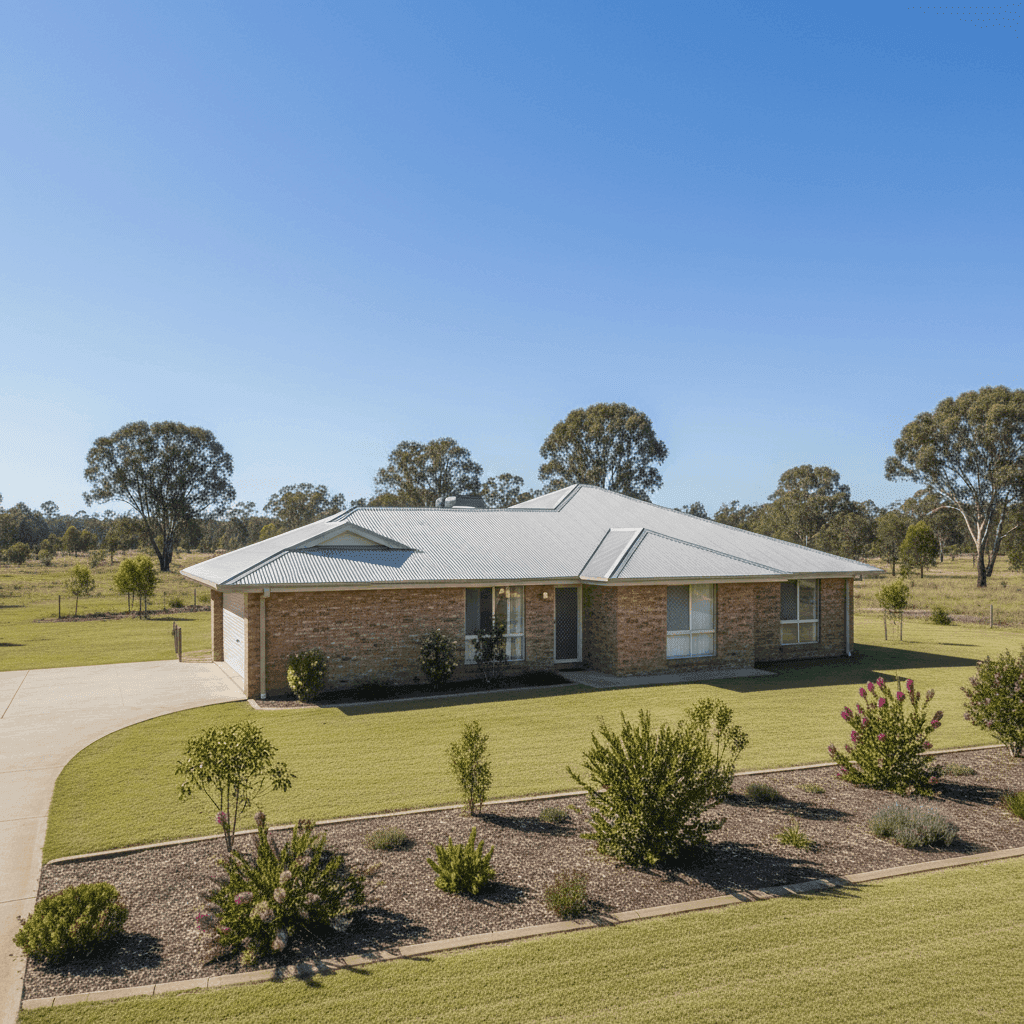
If you own a free standing home in Proston, QLD 4613, you may be wondering whether you're paying a fair price for home and contents insurance — or whether there's a better deal waiting to be found. We've analysed a recent quote for a 3-bedroom, 2-bathroom brick veneer home in this South Burnett community to give you a clear picture of where it sits in the market. Whether you're a long-time local or new to the area, understanding what drives your premium is the first step to making a confident decision.
---
Is This Quote Fair?
The quote in question comes in at $1,528 per year (or roughly $151 per month) for combined home and contents cover, with a building sum insured of $250,000 and contents valued at $25,000. The building excess is set at $3,000 and the contents excess at $1,000.
Our rating for this quote is FAIR — Around Average.
That might sound underwhelming, but in the context of Proston and Queensland more broadly, landing near the average is actually a reasonably solid outcome. The suburb's 25th percentile sits at $1,470 per year, meaning this quote is just slightly above the cheapest quarter of quotes we've seen for the area. It's well below the suburb average of $3,093 and the median of $2,219, which suggests the policyholder is doing better than most Proston homeowners — without necessarily having secured the absolute lowest price available.
In short: this isn't a standout bargain, but it's a competitive result that beats the majority of comparable quotes in the suburb.
---
How Proston Compares
To put this quote in proper context, it helps to look at the broader pricing landscape. Here's how Proston stacks up:
| Benchmark | Annual Premium |
|---|---|
| This Quote | $1,528 |
| Proston 25th Percentile | $1,470 |
| Proston Median | $2,219 |
| Proston Average | $3,093 |
| Proston 75th Percentile | $3,049 |
| South Burnett LGA Average | $3,467 |
| QLD State Average | $4,547 |
| QLD State Median | $3,931 |
| National Average | $2,965 |
| National Median | $2,716 |
The numbers tell a striking story. Queensland consistently ranks among the most expensive states for home insurance in Australia, driven largely by the elevated risk of severe weather events — storms, flooding, and hail — that affect much of the state. The QLD state average of $4,547 per year is nearly 53% above the national average of $2,965, which underscores just how much geography influences what Queenslanders pay.
Proston itself, however, sits in a relatively lower-risk inland pocket of Queensland. The suburb's median premium of $2,219 is well below the state median of $3,931, reflecting the area's distance from the coast and its classification outside cyclone risk zones. For homeowners in Proston, this is genuinely good news — the local risk profile works in your favour compared to many other parts of the state.
It's worth noting that the South Burnett LGA average of $3,467 is somewhat higher than Proston's own suburb average, which may reflect variability across the wider local government area. Comparing at the suburb level gives you the most relevant benchmark.
---
Property Features That Affect Your Premium
Every insurer weighs up a range of property characteristics when calculating a premium. Here's how the features of this particular home are likely to influence the price:
Brick Veneer Walls Brick veneer is generally viewed favourably by insurers. It offers solid fire resistance and durability compared to timber or weatherboard cladding, which can translate to lower rebuild risk and, in turn, more competitive premiums.
Steel / Colorbond Roof A Colorbond steel roof is a popular choice across regional Queensland for good reason — it's durable, low-maintenance, and performs well in both heat and rain. Insurers typically regard steel roofing as a lower-risk material than older alternatives like terracotta tiles or fibrous cement sheeting.
Concrete Slab Foundation Slab-on-ground construction is standard for homes built in the 2000s and is generally considered stable and straightforward to insure. It avoids some of the underfloor moisture and pest vulnerabilities associated with older raised foundations.
Tile Flooring Tiled floors are resilient and relatively inexpensive to repair or replace compared to hardwood or engineered timber, which may slightly reduce the contents and building claim risk in the eyes of an insurer.
Construction Year: 2006 A home built in 2006 benefits from building codes introduced in the early 2000s, which incorporated improved structural standards. It's young enough to avoid the premium loading sometimes applied to older homes, yet old enough that its condition will vary depending on maintenance history.
No Pool, Solar Panels, or Ducted Climate Control The absence of these features simplifies the risk profile. Pools, solar arrays, and ducted systems all add to the sum insured and can introduce additional liability or mechanical breakdown considerations. Without them, the premium stays leaner.
130 sqm Building Size At 130 square metres, this is a modest-sized home, and the $250,000 building sum insured reflects a reasonable rebuild cost estimate for a property of this size and construction type in regional Queensland.
---
Tips for Homeowners in Proston
1. Review your sum insured regularly Building costs in regional Queensland have risen sharply in recent years due to labour shortages and material price increases. A sum insured set a few years ago may no longer reflect today's rebuild cost. Use an online building calculator or speak with a local builder to make sure you're not underinsured.
2. Consider your excess carefully This policy carries a $3,000 building excess — on the higher side. A higher excess typically lowers your premium, but it also means more out-of-pocket cost when you need to make a claim. Think about whether you'd comfortably cover that amount in an emergency, and compare quotes with different excess options.
3. Don't overlook contents coverage At $25,000, the contents sum insured is relatively modest. Take a room-by-room inventory of your belongings — furniture, appliances, clothing, tools, and electronics — to make sure this figure genuinely reflects what you own. Underinsuring your contents is a common and costly mistake.
4. Shop around at renewal time Loyalty doesn't always pay in insurance. Insurers frequently offer more competitive pricing to new customers than to existing policyholders. When your renewal notice arrives, take 10 minutes to compare quotes — you may find meaningful savings without sacrificing cover quality.
---
Compare Your Home Insurance Today
Whether you're reviewing an existing policy or shopping for cover on a new property, it pays to see the full market. At CoverClub, we make it easy to compare home and contents insurance quotes from a range of Australian insurers — all in one place. Get a quote today and find out whether your premium is truly competitive for Proston and the South Burnett region.