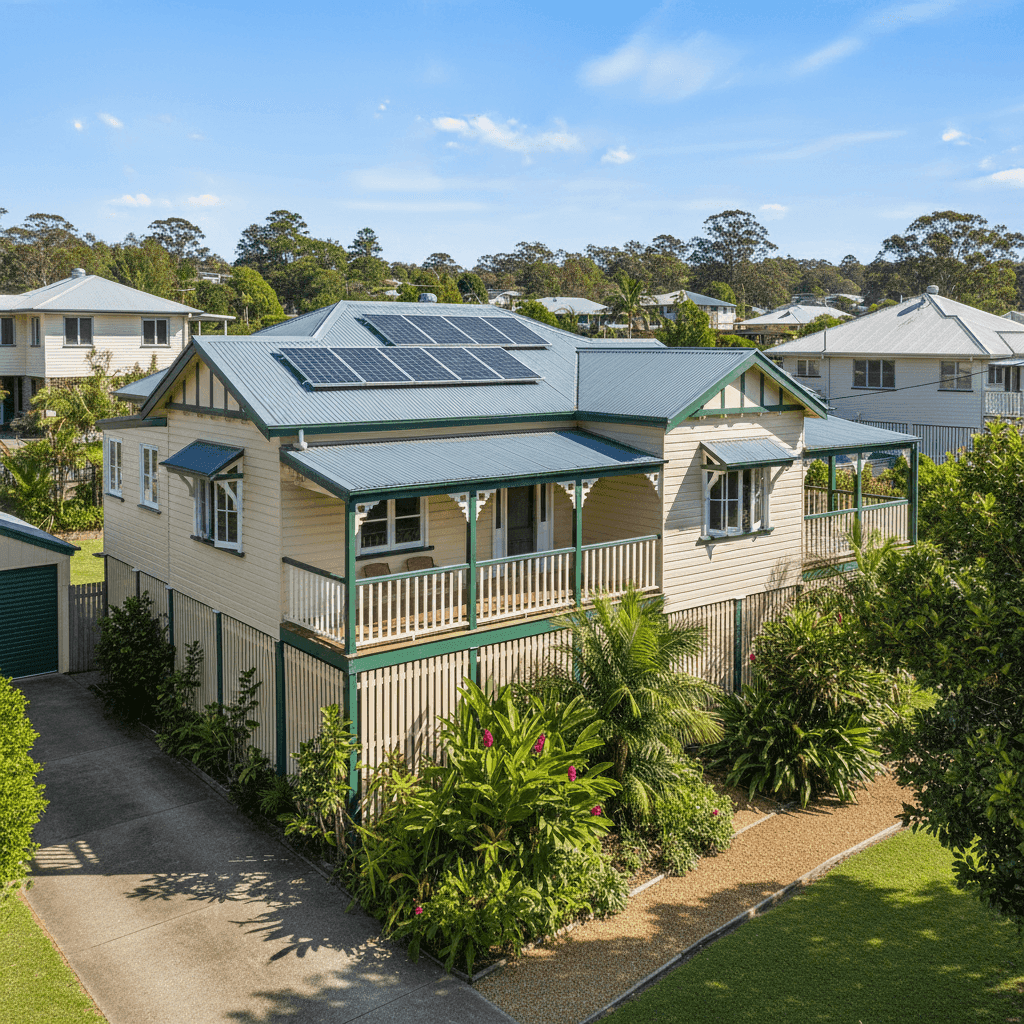
Pullenvale is one of Brisbane's most sought-after semi-rural suburbs — a leafy pocket of acreage living just 15 kilometres from the CBD. Properties here tend to be substantial, character-filled homes that reflect the area's heritage and lifestyle appeal. This article breaks down a real building insurance quote for a five-bedroom, three-bathroom free-standing home in Pullenvale (postcode 4069), helping you understand what's driving the premium and whether the price stacks up.
---
Is This Quote Fair?
The quote in question comes in at $5,453 per year (or $516/month) for building-only cover, with a $1,000 excess and a sum insured of $1,896,000. Our rating for this quote is FAIR — around average.
That "fair" rating isn't a consolation prize — it's actually a meaningful signal. It means this premium sits comfortably within the expected range for comparable properties in the area, neither suspiciously cheap nor noticeably inflated. Given the size, age, and construction of this home, a premium in this territory is broadly what you'd expect from a competitive insurer.
That said, "fair" doesn't mean you can't do better. There's always value in shopping around, particularly when the gap between the 25th and 75th percentile premiums in Pullenvale spans more than $2,400 per year (from $4,269 to $6,690). That's a significant range, and it underscores just how much insurers can differ in their risk assessments for the same suburb.
---
How Pullenvale Compares
To put this quote in proper context, let's look at how it sits against local, state, and national benchmarks. You can explore the full data on the Pullenvale suburb stats page, the Queensland state overview, and the national insurance statistics hub.
| Benchmark | Average Premium | Median Premium |
|---|---|---|
| Pullenvale (suburb) | $5,606/yr | $5,302/yr |
| Queensland (state) | $9,129/yr | $3,903/yr |
| Australia (national) | $5,347/yr | $2,764/yr |
| Brisbane LGA | $16,277/yr | — |
A few things stand out here.
This quote is below the suburb average. At $5,453, it comes in $153 under the Pullenvale average of $5,606 and sits between the suburb's median ($5,302) and average — a solid position.
Queensland's state average looks alarming at $9,129, but that figure is heavily skewed by high-risk regional areas — think cyclone-prone Far North Queensland and flood-affected communities in the state's south-east. The median of $3,903 is a far better representation of what typical Queenslanders pay, and this quote is above that — largely explained by the property's size, construction type, and high sum insured.
The Brisbane LGA average of $16,277 is extraordinarily high, likely driven by a concentration of flood-affected properties and high-value homes in the dataset. Pullenvale's own averages are considerably more grounded, which reflects its relatively lower-risk profile compared to many Brisbane suburbs closer to waterways.
Nationally, this quote sits just above the average of $5,347 — a reasonable outcome for a large, above-average-quality home with a substantial rebuild value.
---
Property Features That Affect Your Premium
Several characteristics of this property have a direct bearing on what insurers charge. Understanding them helps you anticipate costs — and potentially identify ways to reduce them.
Weatherboard Timber Walls
Timber weatherboard is a classic Queensland construction material, beloved for its charm and thermal properties. However, insurers view it as higher risk than brick veneer or full brick, primarily due to susceptibility to fire, rot, and pest damage. Expect this to be a premium-lifting factor compared to masonry alternatives.
Steel/Colorbond Roof
On the upside, a Colorbond steel roof is generally viewed favourably by insurers. It's durable, low-maintenance, and performs well in storms — a significant consideration in South-East Queensland where severe weather events are not uncommon. This likely offsets some of the timber wall risk.
Stump Foundation (Elevated)
This home sits on stumps and is elevated by less than one metre — a quintessentially Queensland design. While elevated homes can offer some protection from minor flooding, the stump foundation itself requires ongoing maintenance (timber stumps can deteriorate), and the elevation adds complexity to rebuilding costs. Insurers factor this into their calculations.
Timber and Laminate Flooring
Timber floors are a feature in homes of this era and quality level, but they can be costly to repair or replace following water damage or movement. Combined with the above-average fittings quality, this contributes to the high sum insured of $1,896,000 — which is the single biggest driver of the premium.
Solar Panels
The property has solar panels installed. While solar adds value and reduces energy costs, it also adds to the insurable rebuild cost and can complicate roof repairs after storm or hail damage. Most standard building policies cover solar panels as part of the structure, but it's worth confirming this with your insurer.
Ducted Climate Control
Ducted air conditioning is a significant fixed asset. It's built into the sum insured and represents a meaningful replacement cost if the system is damaged — another contributor to the premium at this level.
No Pool, No Cyclone Risk Zone
The absence of a pool removes one common source of liability and maintenance-related claims. And while Queensland is synonymous with cyclone risk in many people's minds, Pullenvale sits outside designated cyclone risk areas — a meaningful premium saving compared to properties in North Queensland.
---
Tips for Homeowners in Pullenvale
1. Review Your Sum Insured Carefully
At $1,896,000, this is a high rebuild value — and rightly so for a 334 sqm, above-average-quality home on stumps with premium fittings. But it's worth getting a professional building valuation periodically to ensure you're neither underinsured (a serious risk) nor overinsured (paying more than necessary). Many insurers offer online calculators, but a qualified quantity surveyor gives you the most accurate figure.
2. Shop Around — the Range Is Wide
With a 25th-to-75th percentile spread of over $2,400 in Pullenvale alone, different insurers are pricing this suburb very differently. Get a quote through CoverClub to compare multiple insurers side by side and see whether you can improve on the current premium without sacrificing cover quality.
3. Maintain Your Stumps and Subfloor
Timber stump foundations require regular inspection and maintenance. Insurers may reduce or deny claims if damage is found to result from gradual deterioration or lack of maintenance. Schedule annual checks with a licensed builder or pest inspector to keep your subfloor in good condition and your policy valid.
4. Confirm Solar Panel Coverage
Not all policies treat solar panels identically. Some cover them as part of the building structure; others require a specific endorsement. Before your next renewal, confirm with your insurer exactly how your panels are covered — particularly for storm, hail, and accidental damage scenarios, which are all realistic risks in South-East Queensland.
---
Compare Your Home Insurance with CoverClub
Whether you're reviewing an existing policy or shopping for the first time, CoverClub makes it easy to compare home insurance quotes from leading Australian insurers. Our suburb-level data means you'll always know how your quote stacks up against your neighbours. Start comparing quotes for your Pullenvale home today — it takes just a few minutes and could save you hundreds every year.