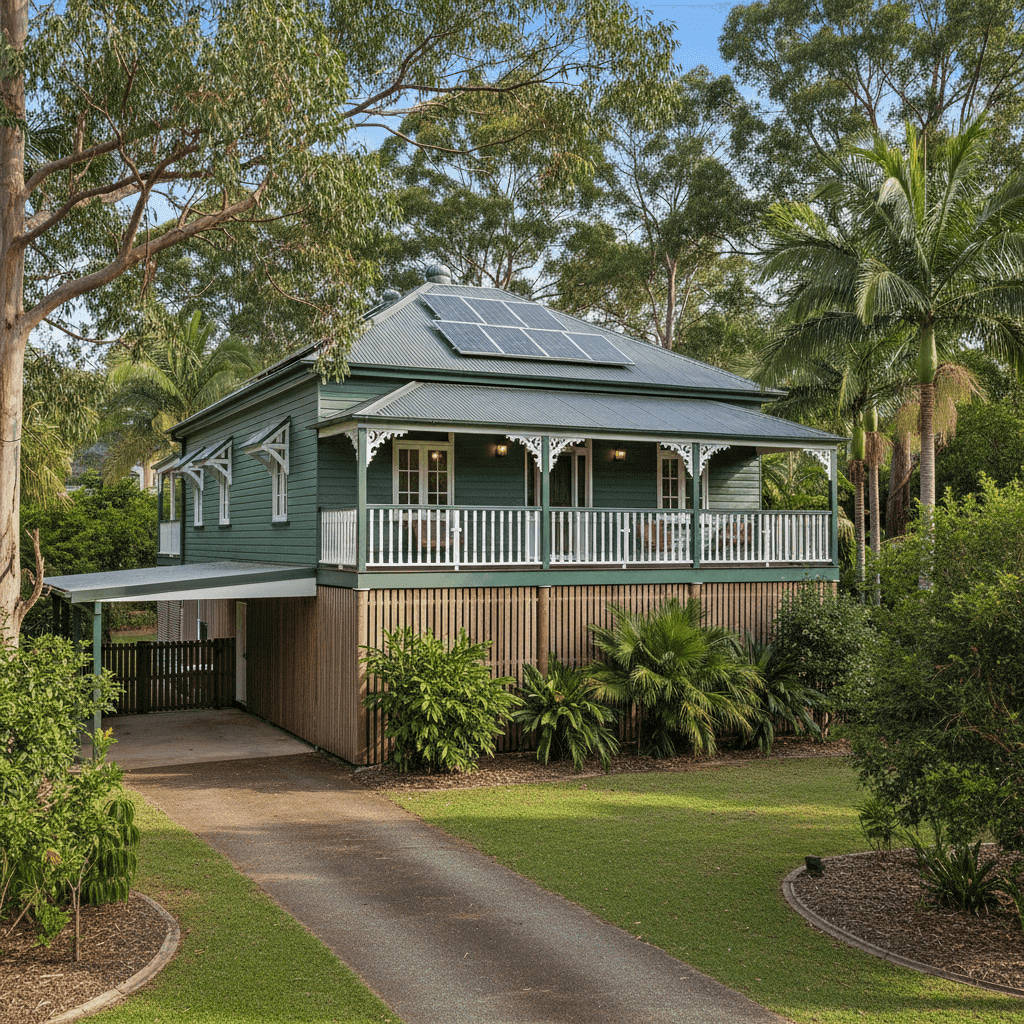
Pullenvale is one of Brisbane's most sought-after semi-rural suburbs — a leafy pocket of acreage living just 16 kilometres west of the CBD. With large blocks, heritage character homes, and a relaxed bushland atmosphere, it's easy to see why families are drawn here. But owning a substantial property in this area comes with equally substantial insurance considerations. This article breaks down a recent building insurance quote for a five-bedroom free-standing home in Pullenvale (postcode 4069), examining whether the premium is competitive and what factors are driving the cost.
---
Is This Quote Fair?
The quote in question sits at $5,453 per year (or $516 per month) for building-only cover on a five-bedroom, three-bathroom weatherboard home with a sum insured of $1,608,000 and a $1,000 building excess.
CoverClub's pricing engine has rated this quote as FAIR — around average. That's a reasonable result, but it's worth unpacking what "average" actually means in this context.
Compared to the suburb average of $5,606/yr for Pullenvale, this quote comes in $153 below the local benchmark — a modest but meaningful saving. It also sits comfortably above the suburb's 25th percentile of $4,269/yr, which tells us there are cheaper options available in the market, and below the 75th percentile of $6,690/yr, confirming it's not at the expensive end of the range either.
The suburb median of $5,302/yr is slightly lower than this quote, which suggests roughly half of comparable Pullenvale properties are being insured for less. That's worth keeping in mind when shopping around — there may be room to improve on this price without sacrificing meaningful cover.
---
How Pullenvale Compares
Context is everything when evaluating an insurance premium. Here's how this quote stacks up across different geographic benchmarks:
| Benchmark | Average Premium | Median Premium |
|---|---|---|
| Pullenvale (4069) | $5,606/yr | $5,302/yr |
| Queensland | $9,129/yr | $3,903/yr |
| National | $5,347/yr | $2,764/yr |
| Brisbane LGA | $16,277/yr | — |
A few things stand out immediately. The Queensland state average of $9,129/yr is dramatically higher than Pullenvale's local average — a gap largely explained by the extreme premiums faced by cyclone-prone coastal and far-north Queensland communities. The state median of just $3,903/yr, however, tells a more nuanced story: most Queensland properties are actually insured for less than this quote, with a smaller number of very high-risk properties pulling the average upward.
The national average of $5,347/yr is almost identical to this quote, suggesting it's well in line with what Australian homeowners are paying broadly. The national median of $2,764/yr is again much lower, reflecting the large proportion of smaller or lower-value homes across the country.
Perhaps most striking is the Brisbane LGA average of $16,277/yr — nearly three times the Pullenvale suburb average. This figure is heavily skewed by flood-affected and high-risk inner-Brisbane properties, and serves as a reminder that postcode-level data is far more meaningful than broad LGA statistics when assessing your own premium.
Based on 51 quotes collected for the Pullenvale area, this quote is competitive but not exceptional. A "Fair" rating is a solid starting point, though homeowners with this profile should still consider comparing alternatives.
---
Property Features That Affect Your Premium
Several characteristics of this property have a direct bearing on the premium calculated. Understanding them helps you make smarter decisions about cover and risk mitigation.
Age and Construction (Built 1890, Weatherboard Walls) At over 130 years old, this is a heritage-era home — and insurers price that accordingly. Older weatherboard timber homes are more expensive to repair or rebuild to modern standards, and sourcing period-appropriate materials can be costly. Weatherboard is also more susceptible to damage from moisture, pests, and fire compared to brick or rendered masonry, which typically attracts a higher premium.
Colorbond Steel Roof The steel/Colorbond roof is a positive factor. It's durable, low-maintenance, and performs well in storms — a meaningful consideration in South East Queensland's severe weather season. This likely offsets some of the premium loading from the weatherboard walls.
Stumps Foundation and Elevated Design Built on stumps and elevated by less than one metre, this home has the classic Queenslander profile. Stump foundations can be a risk factor if they deteriorate (particularly older timber stumps), but the elevated design also provides some flood resilience for ground-level water ingress — a genuine benefit in Brisbane's storm season.
Timber and Laminate Flooring Timber floors in an older home can be expensive to repair or replace, particularly if they're original hardwood boards. This contributes to the above-average fittings quality rating and supports the high sum insured of $1,608,000.
Above-Average Fittings Quality High-quality fittings — think stone benchtops, premium joinery, quality fixtures — increase rebuild costs significantly. The $1,608,000 sum insured reflects this, and it's important that this figure accurately represents the full cost of rebuilding (not the market value of the property).
Solar Panels Solar panels are listed as present and are included in the building sum insured. Insurers generally treat these as a fixed building fixture, so confirming they're explicitly covered under your policy is important — particularly for damage during hail events.
Ducted Climate Control A ducted air conditioning system is another high-cost item to repair or replace, and its inclusion contributes to the overall rebuild cost estimate.
---
Tips for Homeowners in Pullenvale
1. Review Your Sum Insured Regularly At $1,608,000, the sum insured on this property is substantial — and rightly so for a large, heritage home with quality fittings. But building costs change every year. Make it a habit to review your sum insured at renewal using a professional building cost estimator or quantity surveyor to avoid being underinsured.
2. Ask About Heritage or Older Home Specialists Some insurers specialise in heritage and pre-1920s homes and may offer more tailored cover — or more competitive pricing — for properties like this. A mainstream insurer's standard policy may not adequately account for the cost of period-appropriate repairs.
3. Maintain Your Stumps and Subfloor Insurers may reduce claims or dispute coverage if damage is linked to gradual deterioration of timber stumps. Regular inspections by a licensed building inspector can identify problems early and help you avoid a costly claim dispute down the track.
4. Compare Quotes at Renewal — Every Year With a "Fair" rating, this quote is reasonable but not the cheapest available in Pullenvale. The 25th percentile for the suburb sits at $4,269/yr, which means there are policies out there priced over $1,100/yr less than this quote. Running a fresh comparison at renewal takes minutes and could deliver meaningful savings.
---
Ready to Compare?
Whether you're renewing an existing policy or insuring a new purchase, comparing quotes is the single most effective way to ensure you're not overpaying. Get a building insurance quote at CoverClub and see how your premium stacks up against the Pullenvale market in real time. With data from dozens of local quotes, CoverClub gives you the context you need to make a confident decision.