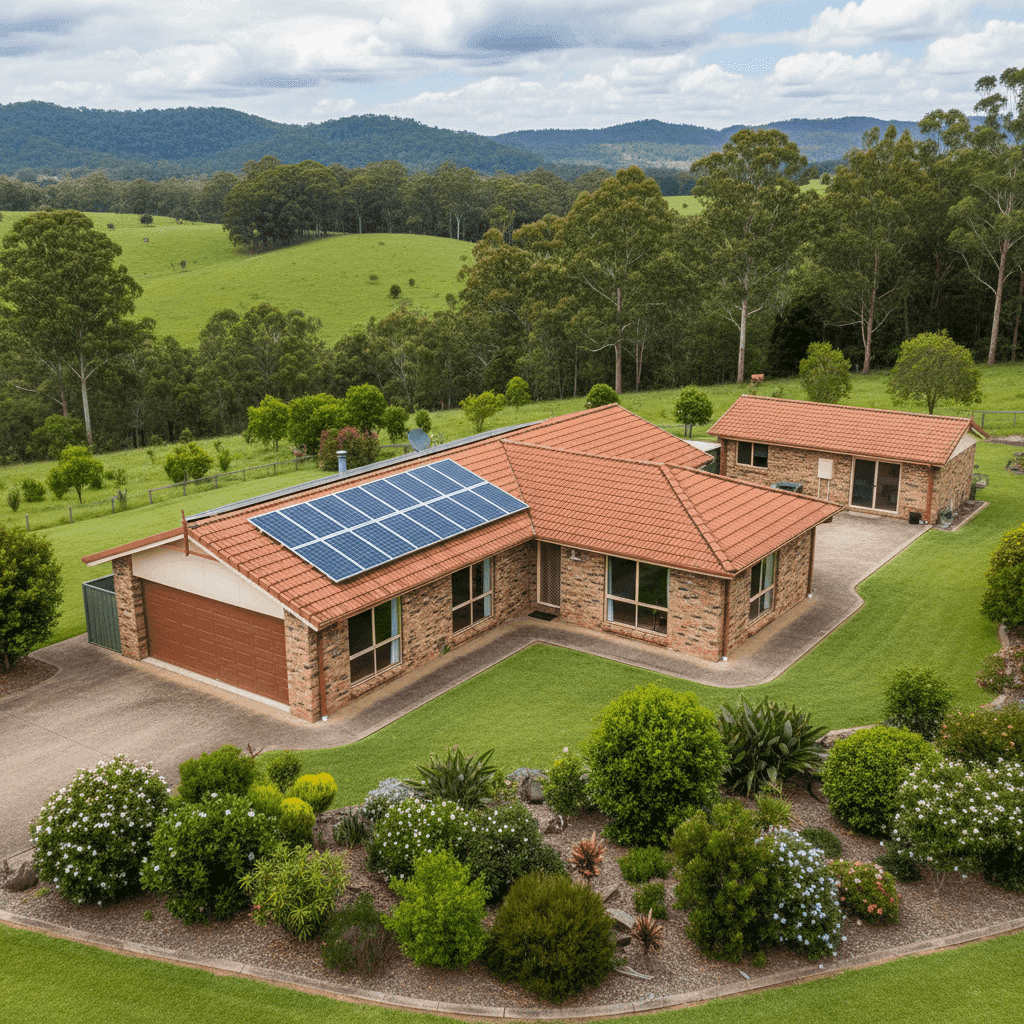
If you own a free standing home in Pumpenbil, NSW 2484, you might be wondering whether you're paying a fair price for home and contents insurance — or leaving money on the table. Nestled in the Kyogle local government area of northern New South Wales, Pumpenbil is a quiet rural locality where property characteristics, regional risk factors, and insurer appetite can all push premiums in unexpected directions. This article breaks down a real insurance quote for a five-bedroom home in the area, benchmarks it against local, state, and national data, and offers practical tips to help you get the best possible cover.
---
Is This Quote Fair?
The quote we're analysing comes in at $4,016 per year (or $378 per month) for a combined home and contents policy. It covers a building sum insured of $503,000 and contents valued at $50,000, with a $1,000 excess on both building and contents claims.
Our price rating for this quote is CHEAP — below average. That's genuinely good news for the homeowner. While "cheap" in insurance doesn't always mean "adequate", in this case the coverage levels are substantial, and the premium still lands well below what many comparable properties across NSW are paying.
To put it in perspective: the NSW state average premium sits at $9,528 per year, meaning this quote is less than half the state average. Even against the NSW median of $3,770, the quote is only modestly above the midpoint — a solid outcome for a five-bedroom property with a granny flat and solar panels, both of which can add complexity to a policy.
---
How Pumpenbil Compares
Benchmarking this quote across different levels of data paints a clear picture:
| Benchmark | Premium |
|---|---|
| This Quote | $4,016 / yr |
| NSW State Average | $9,528 / yr |
| NSW State Median | $3,770 / yr |
| National Average | $5,347 / yr |
| National Median | $2,764 / yr |
| Kyogle LGA Average | $9,180 / yr |
The Kyogle LGA average of $9,180 per year is particularly striking — it's more than double this quote. The LGA encompasses a wide range of properties, many of which may face elevated bushfire exposure, flooding risk, or older construction profiles that attract higher premiums. This quote, at $4,016, sits dramatically below that LGA average, suggesting the property's specific characteristics are working in the homeowner's favour.
Against the national average of $5,347, this quote is roughly 25% cheaper — a meaningful saving. The national median of $2,764 is lower, but that figure is pulled down by smaller properties, units, and lower-risk urban locations that simply aren't comparable to a five-bedroom rural home.
No suburb-level data is currently available for Pumpenbil specifically, but you can check the latest figures as they're updated on the Pumpenbil suburb stats page.
---
Property Features That Affect Your Premium
Several characteristics of this property influence where the premium lands — some favourably, others less so.
Brick veneer walls and a tiled roof are generally well-regarded by insurers. Brick veneer offers solid fire resistance compared to timber or weatherboard cladding, and tiles are more durable than corrugated iron or Colorbond in many risk scenarios. Together, these construction materials typically attract lower premiums than lightweight alternatives.
Slab foundation is another positive signal. Slab-on-ground construction is considered stable and is less susceptible to subsidence or pest-related structural damage than raised timber stumps, which can be common in older rural properties.
Built in 1985, the home is approaching 40 years old — an age bracket where insurers begin to factor in the potential for aging infrastructure such as plumbing, wiring, and roofing materials. However, at 139 sqm of building size, the footprint is relatively modest for a five-bedroom home, which helps keep the replacement cost — and therefore the building sum insured — more manageable.
Solar panels add a layer of complexity to any policy. It's important to confirm with your insurer that the solar system is explicitly covered under the building component of your policy, as some policies treat panels as a grey area between building and contents.
The granny flat is a significant feature that homeowners often overlook at renewal time. Ancillary dwellings need to be accounted for in the building sum insured — if they're not, you could be substantially underinsured in the event of a total loss. Make sure your insurer is aware of the granny flat and that the $503,000 building sum insured reflects the full replacement cost of both structures.
Ducted climate control is a high-value fixed installation that should be captured in the building sum insured. Given the warm summers typical of northern NSW, these systems are common — and costly to replace.
The property is not in a designated cyclone risk area, which is a meaningful saving compared to properties in Queensland or northern WA where cyclone loadings can add hundreds of dollars to annual premiums.
---
Tips for Homeowners in Pumpenbil
1. Review your building sum insured annually Construction costs have risen sharply across Australia in recent years. A sum insured of $503,000 may have been appropriate when the policy was first taken out, but with labour and materials costs continuing to climb, it's worth running a fresh replacement cost estimate each year. Many insurers offer free online calculators, or you can engage a quantity surveyor for a more precise figure.
2. Confirm your granny flat is fully covered Speak directly with your insurer to confirm the granny flat is explicitly included in your policy and that the building sum insured accounts for its full replacement value. Some policies automatically include secondary structures up to a certain percentage of the main dwelling's insured value — others don't.
3. Check your solar panel coverage Ask your insurer whether your solar panels are covered under the building section, the contents section, or as a separate item. Clarify whether coverage extends to inverter failure, storm damage, and accidental breakage. Given the cost of modern solar systems, gaps in coverage here can be expensive.
4. Maintain your property to reduce claim risk In rural northern NSW, regular maintenance goes a long way. Keep gutters clear of leaf litter (especially important heading into bushfire season), trim trees and branches that overhang the roof, and ensure the roof tiles are in good condition after major storms. Some insurers offer loyalty discounts or reduced excesses for homes with documented maintenance histories.
---
Ready to Compare?
Whether you're renewing an existing policy or shopping around for the first time, comparing quotes is the single most effective way to make sure you're not overpaying. At CoverClub, we make it easy to see how your premium stacks up against real data from properties like yours.
Get a home insurance quote today at CoverClub and find out whether your current cover is genuinely competitive — or whether there's a better deal waiting for you.