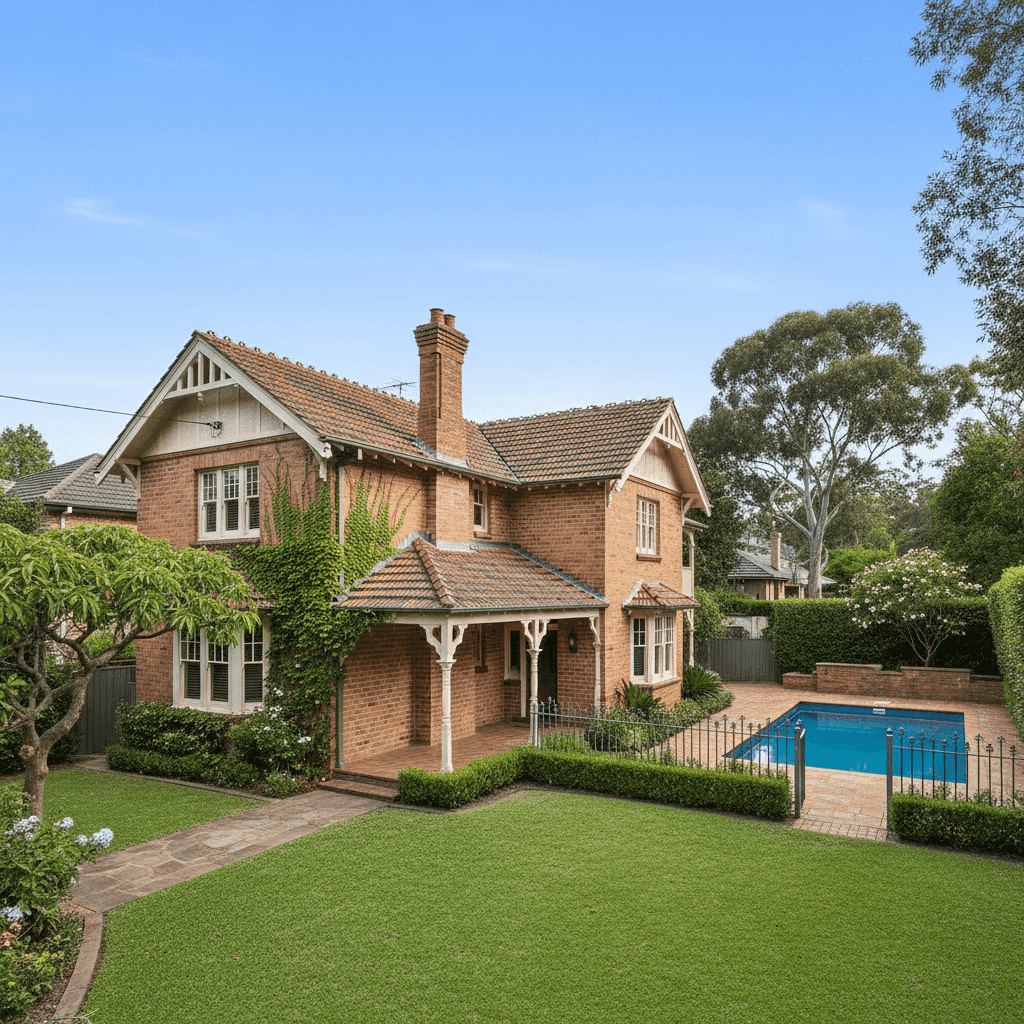
Pymble is one of Sydney's most distinguished upper North Shore suburbs — leafy, quiet, and home to some genuinely remarkable Federation and Edwardian-era architecture. If you own a substantial free standing home here, you already know that protecting it comes at a cost. But how do you know whether the premium you've been quoted is fair? We've analysed a real home and contents insurance quote for a five-bedroom, four-bathroom property in Pymble to help you benchmark your own cover.
---
Is This Quote Fair?
The quote in question comes in at $5,635 per year (or $528 per month), covering a building sum insured of $1,899,000 and $100,000 in contents. Our rating for this quote is Expensive — Above Average.
To put that in perspective, the suburb average for Pymble (NSW 2073) sits at $4,219 per year, with a median of $4,273. This quote lands well above the 75th percentile for the suburb ($4,411), meaning it is pricier than at least three-quarters of comparable quotes we've seen in this postcode.
That said, "expensive" doesn't automatically mean "wrong." This particular property has a number of characteristics that legitimately push premiums upward — more on those below. The key question for any homeowner is whether the price reflects genuine risk factors, or whether there's room to shop around for a better deal without sacrificing cover quality.
---
How Pymble Compares
Understanding where your premium sits relative to broader benchmarks is one of the most useful things you can do as a homeowner. Here's how Pymble stacks up:
| Benchmark | Annual Premium |
|---|---|
| This Quote | $5,635 |
| Pymble Suburb Average | $4,219 |
| Pymble Suburb Median | $4,273 |
| Ku-ring-gai LGA Average | $3,965 |
| NSW State Average | $9,528 |
| NSW State Median | $3,770 |
| National Average | $5,347 |
| National Median | $2,764 |
A few things stand out here. First, the NSW state average of $9,528 is dramatically higher than the median of $3,770 — a classic sign that a small number of very high-value or high-risk properties are pulling the average upward. Pymble's averages are far more tightly clustered, suggesting a relatively consistent risk profile across the suburb.
Compared to the national average of $5,347, this quote is slightly above — though not dramatically so. Against the national median of $2,764, it looks steep, but that figure is heavily influenced by lower-value properties and lower-risk regions across the country.
For Pymble specifically, the quote sits roughly $1,400 above the suburb average, which is meaningful. With only nine quotes in our suburb sample, the data is directionally useful but not definitive — it's worth getting multiple quotes to see whether this premium is the market rate for a property of this profile, or whether savings are available.
---
Property Features That Affect Your Premium
Several characteristics of this property are directly relevant to how insurers price the risk — and most of them point in the direction of a higher premium.
Heritage Listing
Perhaps the single biggest factor here is the heritage overlay. Properties listed under a heritage overlay are subject to strict council controls that require like-for-like restoration using period-appropriate materials and methods. If a double brick wall from 1897 needs repairing after a storm, you can't simply patch it with modern materials — you may need to source matching bricks, engage heritage-qualified tradespeople, and obtain council approvals. All of this adds substantially to rebuild costs, and insurers price accordingly.
Age and Construction (1897, Double Brick on Stumps)
At over 125 years old, this home predates modern building codes entirely. Double brick construction is durable and thermally efficient, but it can be expensive to repair and is susceptible to issues like rising damp and mortar degradation over time. The stump foundation is typical of homes of this era and adds another layer of complexity — stumps can shift, rot, or require re-levelling, which affects both structural integrity and insurance risk assessments.
High Building Sum Insured ($1,899,000)
A rebuild cost of nearly $1.9 million is not unusual for a 315 sqm heritage home with above-average fittings in one of Sydney's most sought-after suburbs. Construction costs in the Ku-ring-gai area are high, and heritage requirements make them higher still. Insurers base their premium calculations heavily on this figure, so it's worth periodically reviewing your sum insured with a quantity surveyor to ensure it's accurate — both under- and over-insuring carry their own risks.
Swimming Pool
The presence of a pool adds liability exposure and increases the complexity of any major rebuild or repair. Most insurers factor this into their pricing, particularly for comprehensive home and contents policies.
Above-Average Fittings and Timber Flooring
Above-average fittings — think high-end joinery, period cornices, decorative ceilings, and quality fixtures — cost more to replace than standard finishes. Combined with timber and laminate flooring (which can warp, crack, or require specialist restoration after water damage), these features contribute to a higher-than-average claims cost profile.
Ducted Climate Control
Ducted systems are more expensive to repair or replace than split systems, and a fault can sometimes cause water damage to ceilings or walls. Insurers note this as a minor but relevant risk factor.
---
Tips for Homeowners in Pymble
1. Get a professional building valuation. With a heritage property of this age and complexity, the rebuild cost is genuinely difficult to estimate without expert input. A quantity surveyor who specialises in heritage properties can give you a defensible figure — helping you avoid being underinsured while also not overpaying on premium for inflated coverage.
2. Document your heritage features thoroughly. Take detailed photos and videos of all period features — cornices, fireplaces, leadlight windows, original floorboards, decorative brickwork. If you ever need to make a claim, this documentation is invaluable for demonstrating the quality and authenticity of what needs to be restored.
3. Compare at least three quotes annually. The home insurance market in Australia is competitive, and premiums can vary significantly between insurers for the same property. Use CoverClub to compare quotes at renewal time — a 20–30 minute exercise could save you hundreds of dollars without any reduction in cover.
4. Ask about heritage-specific policy inclusions. Not all home insurance policies are created equal when it comes to heritage properties. Look for policies that explicitly cover heritage compliance costs, council approval fees, and the use of matching materials. A cheaper premium that excludes these items could leave you significantly out of pocket after a claim.
---
Ready to Compare?
Whether you're reviewing your existing policy or shopping for the first time, CoverClub makes it easy to see what the market looks like for your home. Start a quote at CoverClub and compare your options side by side — it's free, fast, and tailored to your property's specific characteristics. You can also explore Pymble suburb insurance data and NSW state-wide trends to keep benchmarking your cover over time.