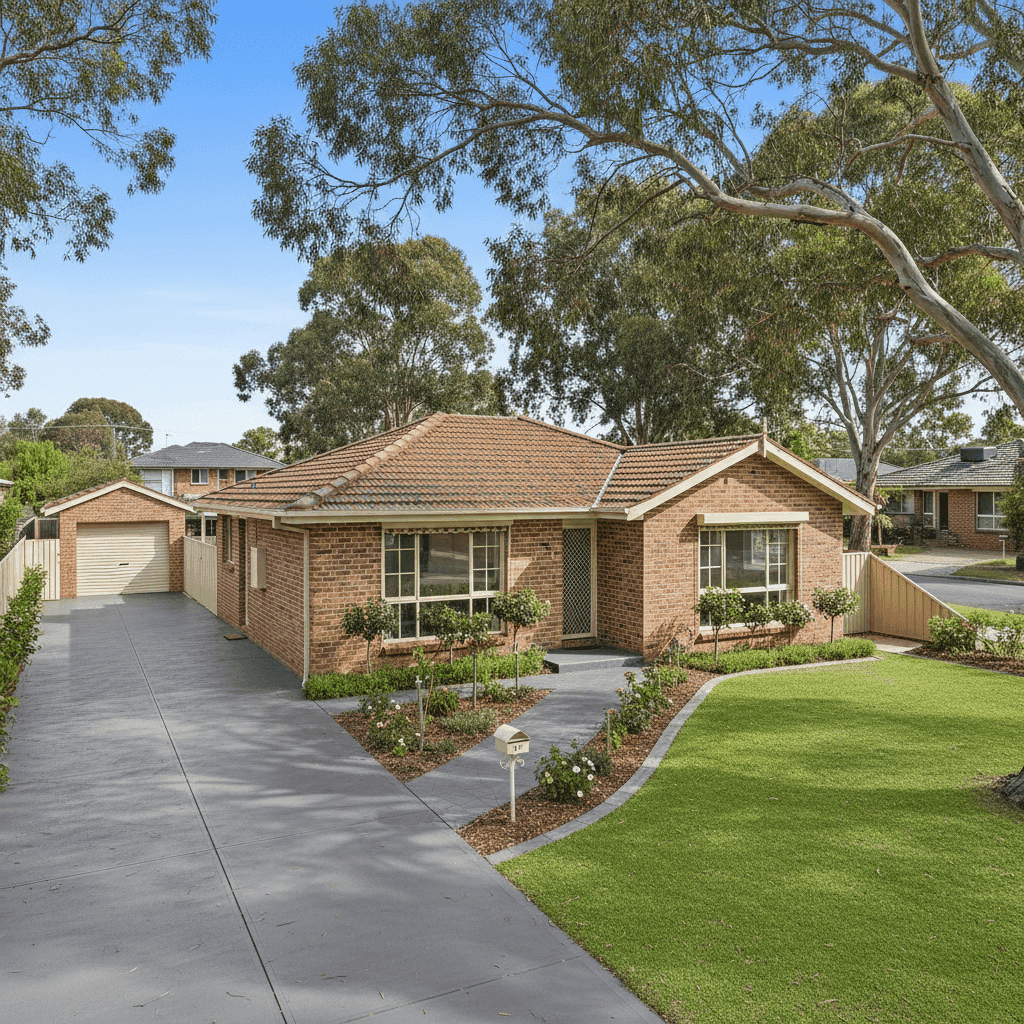
If you own a free standing home in Quakers Hill, NSW 2763, you're probably wondering whether you're paying a fair price for your building insurance — or leaving money on the table. This article breaks down a real building-only insurance quote for a three-bedroom brick veneer home in the suburb, and puts it in context against local, state, and national benchmarks so you can make a more informed decision.
---
Is This Quote Fair?
The annual premium for this quote comes in at $1,383 per year (or roughly $143 per month), covering building only with a $3,000 excess. Our pricing analysis rates this as FAIR — Around Average.
That's a reasonable assessment. Based on a sample of 33 quotes from the Quakers Hill area, this premium lands right on the suburb median of $1,383/yr, meaning exactly half of comparable quotes came in higher and half came in lower. It's not the cheapest coverage available in the area — the 25th percentile sits at $1,066/yr — but it's well below the 75th percentile of $2,012/yr, so there's no cause for alarm.
In short: this quote is competitive but not exceptional. Homeowners who shop around may be able to do better, particularly if their property has features that reduce risk.
---
How Quakers Hill Compares
To really understand whether this premium makes sense, it helps to zoom out and look at the broader picture.
| Benchmark | Average | Median |
|---|---|---|
| Quakers Hill (2763) | $1,526/yr | $1,383/yr |
| LGA (Blacktown) | $2,242/yr | — |
| NSW | $9,528/yr | $3,770/yr |
| National | $5,347/yr | $2,764/yr |
The numbers tell an interesting story. At first glance, the NSW state average of $9,528/yr looks alarming — but that figure is heavily skewed by high-risk and high-value properties across the state, including flood-prone regions, bushfire zones, and prestige coastal suburbs. The median of $3,770/yr is a far more representative figure, and this Quakers Hill quote comes in well below even that.
Compared to the broader Blacktown LGA average of $2,242/yr, this quote looks even more attractive. Quakers Hill appears to be a relatively affordable suburb to insure within the local government area, which is consistent with its established suburban character and lower exposure to extreme weather events.
For a deeper look at how premiums stack up across the postcode, visit the Quakers Hill suburb insurance stats page. You can also explore NSW-wide insurance data or the national insurance benchmarks for broader context.
---
Property Features That Affect Your Premium
Every home is different, and insurers weigh up a range of property characteristics when calculating your premium. Here's how the features of this particular home are likely influencing the price.
Brick veneer construction and tiled roof Brick veneer walls and a tiled roof are generally viewed favourably by insurers. Both materials offer solid fire resistance and durability compared to timber weatherboard or corrugated iron alternatives. This combination tends to attract lower premiums, all else being equal.
Slab foundation A concrete slab foundation is standard for homes of this era in Western Sydney and is generally considered low-risk. Unlike older homes with raised timber subfloors, slabs offer less exposure to subfloor moisture issues and pest damage.
Construction year: 1985 A home built in 1985 is now around 40 years old. While it's well past the stage where new-build teething issues are a concern, it's worth noting that older homes may have ageing plumbing, electrical systems, or roofing that could influence claims risk. Keeping on top of maintenance is important both for safety and for ensuring your insurer doesn't dispute a claim on the basis of wear and tear.
Granny flat on the property This is a notable feature. The presence of a granny flat adds value to the dwelling and increases the overall replacement cost — which is reflected in the $601,000 sum insured. It's important to ensure your building sum insured adequately covers both the main dwelling and any secondary structures on the property.
No pool, no solar panels, no ducted climate control The absence of these features simplifies the risk profile. Pools, solar panel systems, and ducted HVAC all add complexity (and potential claims exposure) to a property. Not having them means fewer variables for the insurer to price in.
Standard fittings, carpet flooring Standard-quality fittings and carpet flooring are the most common configuration in homes of this type and age. They're straightforward to value and replace, which keeps the premium predictable.
---
Tips for Homeowners in Quakers Hill
Whether you're reviewing your existing policy or shopping for a new one, here are four practical steps worth taking.
1. Double-check your sum insured At $601,000, this building sum insured needs to cover the full cost of rebuilding both the main home and the granny flat from scratch — not the market value of the property. Construction costs in Western Sydney have risen significantly in recent years. Use an independent building calculator or speak to a quantity surveyor to make sure you're not underinsured.
2. Consider your excess carefully This quote carries a $3,000 building excess. A higher excess typically reduces your annual premium, but it also means more out-of-pocket expense if you need to make a claim. Think about what you could realistically afford to pay in an emergency before locking in a high excess for the sake of a lower premium.
3. Review your policy annually Insurance needs change over time. If you've renovated, added a structure, or upgraded your fittings since your last policy renewal, your sum insured may be out of date. An annual review — ideally before renewal — ensures your coverage keeps pace with your property.
4. Shop around before renewing Loyalty doesn't always pay in insurance. Premiums can vary significantly between providers for the same property, and many insurers offer better rates to new customers. With this quote sitting at the suburb median, there's a reasonable chance that comparing a few alternatives could uncover a more competitive price.
---
Ready to Compare?
Getting a better deal on your home insurance starts with knowing what's out there. At CoverClub, we make it easy to compare building and contents insurance quotes from multiple providers — so you can see exactly where your current premium sits and whether there's a better option available.
Get a home insurance quote today and find out if you could be paying less for the same level of cover.