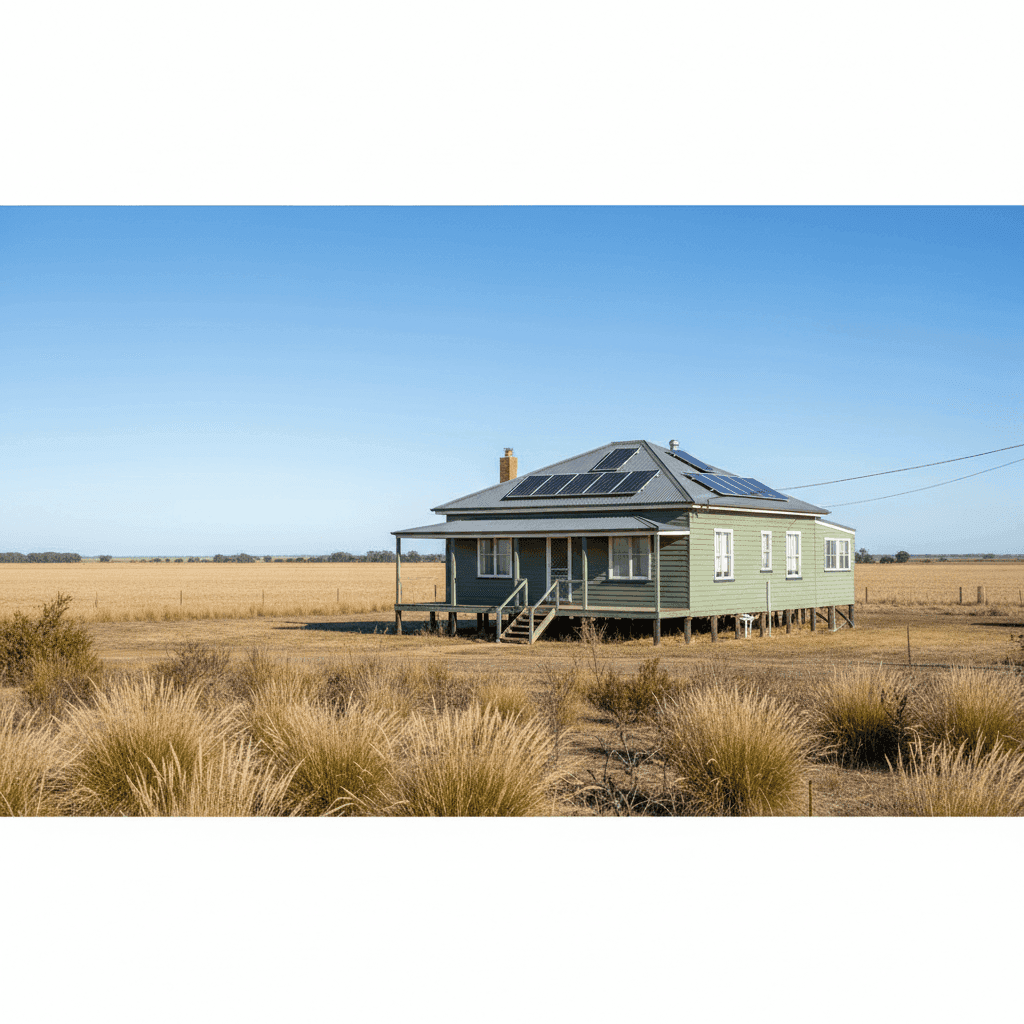
Tucked away in the Gannawarra Shire of north-western Victoria, Quambatook is a quiet rural township surrounded by broad-acre farming country. Like many small regional communities, it tends to fly under the radar — but that doesn't mean home insurance is something locals can afford to overlook. This article breaks down a real home and contents insurance quote for a 3-bedroom free standing home in Quambatook VIC 3540, and examines exactly how it stacks up against local, state, and national benchmarks.
---
Is This Quote Fair?
The short answer: yes — and then some.
The quote in question comes in at $1,288 per year (or $125 per month) for combined home and contents cover, with a building sum insured of $350,000 and contents valued at $20,000. The building excess is $3,000 and the contents excess sits at $1,000.
Our price rating for this quote is CHEAP — below average — which means it's comfortably below what most comparable properties in the area are paying. For homeowners in Quambatook, that's genuinely good news. Given the age of the property (built in 1972) and its weatherboard construction — both factors that can push premiums higher — landing a quote this competitive is a solid result.
The below-average rating is determined by comparing the quote against a range of data points: suburb-level averages, Victorian state figures, and national benchmarks. Across all three comparisons, this quote performs well. More on that below.
---
How Quambatook Compares
Understanding where your premium sits relative to others is one of the most useful things you can do as a homeowner. Here's how this quote measures up:
| Benchmark | Average Premium | Median Premium |
|---|---|---|
| Quambatook (3540) | $2,174/yr | $2,059/yr |
| Victoria (VIC) | $2,921/yr | $2,694/yr |
| National | $2,965/yr | $2,716/yr |
| Gannawarra LGA | $3,536/yr | — |
At $1,288 per year, this quote is:
- 41% below the Quambatook suburb average of $2,174
- 56% below the Victorian state average of $2,921
- 57% below the national average of $2,965
- A remarkable 64% below the Gannawarra LGA average of $3,536
The Gannawarra LGA figure is particularly striking. At $3,536 per year on average, many homeowners across the broader local government area are paying nearly three times what this quote offers. This suggests that insurers are pricing significant risk into parts of the region — likely related to flood exposure along the Murray River corridor and surrounding irrigation districts — while this particular property may benefit from a more favourable risk profile.
You can explore Quambatook suburb insurance statistics, Victorian state averages, and national home insurance data on CoverClub to dig deeper into the numbers.
> Note: The suburb sample size for Quambatook is 5 quotes, so local averages should be interpreted as indicative rather than definitive. As more data is collected, these figures will become increasingly reliable.
---
Property Features That Affect Your Premium
Every home is different, and insurers weigh up a range of property characteristics when calculating a premium. Here's how the features of this particular home likely influence its pricing:
Weatherboard Timber Walls
Weatherboard homes are among the most common dwelling types in rural Victoria, but they do carry a higher fire risk than brick or rendered construction. Insurers typically apply a loading to timber-clad homes, which makes the competitive premium here all the more noteworthy.
Steel/Colorbond Roof
Colorbond roofing is generally viewed favourably by insurers. It's durable, fire-resistant, and performs well in high-wind events — all of which can help moderate the premium compared to older roofing materials like terracotta tiles or corrugated iron in poor condition.
Stump Foundation & Elevated Design
The home sits on stumps and is elevated by less than one metre. Stump foundations are characteristic of older Victorian homes and can be a factor in assessments related to structural integrity and pest risk. However, slight elevation can also offer a degree of protection against minor surface water flooding, which may be a consideration in flat agricultural landscapes like the Mallee.
Timber/Laminate Flooring
Timber and laminate floors are generally straightforward to value and replace. They don't typically attract significant premium loadings, though they are worth documenting carefully for any future contents or building claim.
Solar Panels
This property has solar panels installed. Most modern home insurance policies cover solar panels as part of the building sum insured, but it's worth confirming this with your insurer and ensuring the replacement value of the system is factored into your $350,000 building cover.
Construction Year: 1972
Older homes — particularly those built before modern building codes were introduced — can attract higher premiums due to the cost of bringing repairs up to current standards. A 1972 build is something insurers will note, though the impact varies significantly between providers.
No Pool, No Ducted Climate Control
The absence of a pool and ducted air conditioning removes two common sources of claims (liability incidents and mechanical breakdown respectively), which can help keep premiums lean.
---
Tips for Homeowners in Quambatook
1. Review Your Building Sum Insured Regularly
At $350,000, the building sum insured needs to reflect the full cost of rebuilding — not the market value of the land. Construction costs in regional Victoria have risen sharply in recent years, so it's worth revisiting this figure annually to avoid being underinsured in the event of a total loss.
2. Confirm Solar Panel Coverage
If your solar system was installed after your policy was first taken out, or if it has been upgraded, check that it's explicitly covered under your building policy. Some insurers include it automatically; others require a separate declaration or endorsement.
3. Maintain Your Weatherboard Cladding
Insurers can reduce or deny claims if a property is found to be poorly maintained. Regularly painting and inspecting weatherboard walls helps prevent rot and pest ingress — and keeps your home in insurable condition.
4. Consider Increasing Contents Cover
A contents value of $20,000 is on the lower end for a 3-bedroom, 2-bathroom home. Take the time to walk through each room and estimate the replacement cost of furniture, appliances, clothing, and electronics. Many households find their contents are worth considerably more than they initially estimated.
---
Compare Your Own Quote
Whether you're a long-time Quambatook local or new to the area, it pays to know what you're paying — and whether there's a better deal available. CoverClub makes it easy to compare home and contents insurance quotes from multiple providers in minutes.
Get a quote today at CoverClub and see how your premium stacks up against the suburb, state, and national averages.