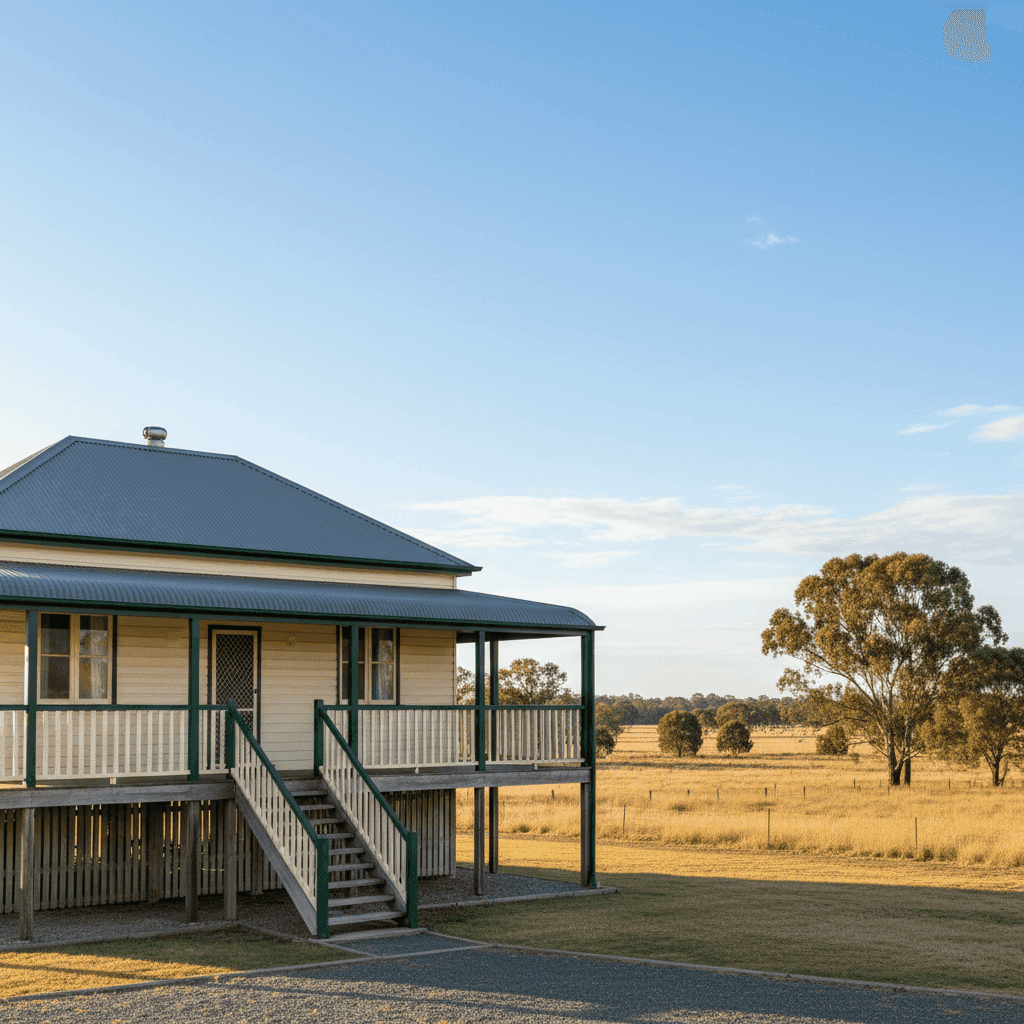
Quinalow is a small rural locality in Queensland's Darling Downs region, sitting within the Toowoomba Local Government Area. It's the kind of place where properties tend to be older, characterful, and built to suit the wide-open landscape — including free-standing homes on stumps, clad in classic weatherboard timber. If you own or are considering insuring a home like this, understanding what a fair premium looks like is an important first step.
This article breaks down a recent home and contents insurance quote for a 2-bedroom, 1-bathroom free-standing home in Quinalow (QLD 4403), covering what drives the price, how it compares to broader benchmarks, and what you can do to make sure you're getting the right cover at the right cost.
---
Is This Quote Fair?
The annual premium on this quote comes in at $2,804 per year (or around $262 per month), covering both building and contents. The building is insured for $449,000 and contents for $61,000, each with a $1,000 excess.
CoverClub rates this quote as CHEAP — below average — which is genuinely good news for the homeowner. In a market where insurance costs have been climbing sharply across Australia, landing below the typical benchmark is meaningful.
To put it in context: the Queensland state average premium sits at $9,129 per year, with a state median of $3,903. Nationally, the average home insurance premium is $5,347, with a national median of $2,764. This quote sits just above the national median — a solid result, particularly given the age and construction type of the property.
It's worth noting that Queensland premiums are heavily skewed upward by high-risk coastal and cyclone-prone areas. Inland locations like Quinalow, which sit outside designated cyclone risk zones, tend to attract more moderate premiums — and this quote reflects exactly that dynamic.
---
How Quinalow Compares
Here's a snapshot of where this quote sits relative to the key benchmarks:
| Benchmark | Annual Premium |
|---|---|
| This Quote | $2,804 |
| Toowoomba LGA Average | $2,479 |
| National Median | $2,764 |
| National Average | $5,347 |
| QLD State Median | $3,903 |
| QLD State Average | $9,129 |
This quote is slightly above the Toowoomba LGA average of $2,479 — which makes sense given that the LGA covers a wide range of property types, some of which may be newer or lower-value. However, it's comfortably below both the state median and national average, which is a strong result.
No suburb-level data is currently available for Quinalow specifically, which isn't unusual for smaller rural localities. For broader regional context, you can explore Queensland insurance statistics or national data to see how premiums vary across the country.
---
Property Features That Affect Your Premium
Several characteristics of this property are worth understanding from an insurance perspective, as they each play a role in how insurers assess risk and calculate premiums.
Weatherboard Timber Walls
Weatherboard construction is common in older Queensland homes and carries a higher fire risk than brick or rendered masonry. Timber can also be more susceptible to termite damage and moisture ingress over time. Insurers typically factor this in, though it doesn't necessarily mean dramatically higher premiums — particularly in low-bushfire-risk areas.
Steel / Colorbond Roof
Colorbond roofing is actually viewed favourably by many insurers. It's durable, low-maintenance, resistant to corrosion, and performs well in high-wind events. Compared to older terracotta tile or corrugated iron roofs, a Colorbond roof can be a modest positive factor in premium calculations.
Stump Foundation (Elevated Less Than 1m)
The home sits on stumps and is slightly elevated — a classic Queensland construction style. Elevation can reduce flood risk to the lower structure, which is a positive from an underwriting perspective. However, stump foundations may require periodic inspection and maintenance, and some insurers will ask questions about stump condition during the quoting process.
Age of Construction (1952)
A home built in 1952 is over 70 years old. Older homes can present higher risk due to ageing electrical wiring, plumbing, and structural components. That said, many older homes have been well-maintained or partially renovated, and insurers assess this on a case-by-case basis. It's important to ensure your sum insured reflects the actual cost to rebuild — not the market value — particularly for period homes where materials and labour can be more expensive.
Ducted Climate Control
The presence of ducted climate control is noted in this property. This system adds to the replacement value of the home and is typically covered under building insurance. It's worth confirming your policy explicitly covers fixed mechanical systems like this, as coverage can vary between insurers.
No Pool, No Solar
The absence of a pool and solar panels simplifies the risk profile slightly. Pools introduce liability considerations, while solar panel systems add to the replacement cost of the building. Neither factor applies here, which keeps things straightforward.
---
Tips for Homeowners in Quinalow
Whether you're reviewing an existing policy or shopping around for the first time, here are four practical steps worth taking.
1. Review your sum insured regularly Building costs have risen significantly in recent years, and a sum insured set several years ago may no longer reflect the true cost to rebuild your home. Use a building cost calculator or speak with a local builder to get a realistic estimate — underinsurance is one of the most common and costly mistakes homeowners make.
2. Check your stump and subfloor condition If your home is on stumps, it's worth having the subfloor inspected periodically for termite activity, rot, or deteriorating stumps. Some insurers may exclude damage caused by gradual deterioration, so staying on top of maintenance protects both your home and your claim eligibility.
3. Compare quotes before renewing Loyalty doesn't always pay in insurance. Premiums can vary significantly between providers for the same property, and insurers don't always pass on their best pricing to existing customers at renewal. Compare home insurance quotes at CoverClub to make sure you're not overpaying.
4. Consider your contents value carefully The contents sum insured on this quote is $61,000. It's easy to underestimate the value of everything inside your home — furniture, appliances, clothing, electronics, and personal items add up quickly. Do a room-by-room audit periodically to make sure your contents cover keeps pace with what you actually own.
---
Find the Right Cover for Your Home
Whether this quote is the right fit depends on more than just the price — it also comes down to the policy terms, inclusions, and exclusions. A cheap premium means little if the cover doesn't pay out when you need it most.
At CoverClub, we make it easy to compare home and contents insurance quotes from a range of Australian insurers, so you can weigh up price alongside what's actually covered. Get a quote today and see how your options stack up.