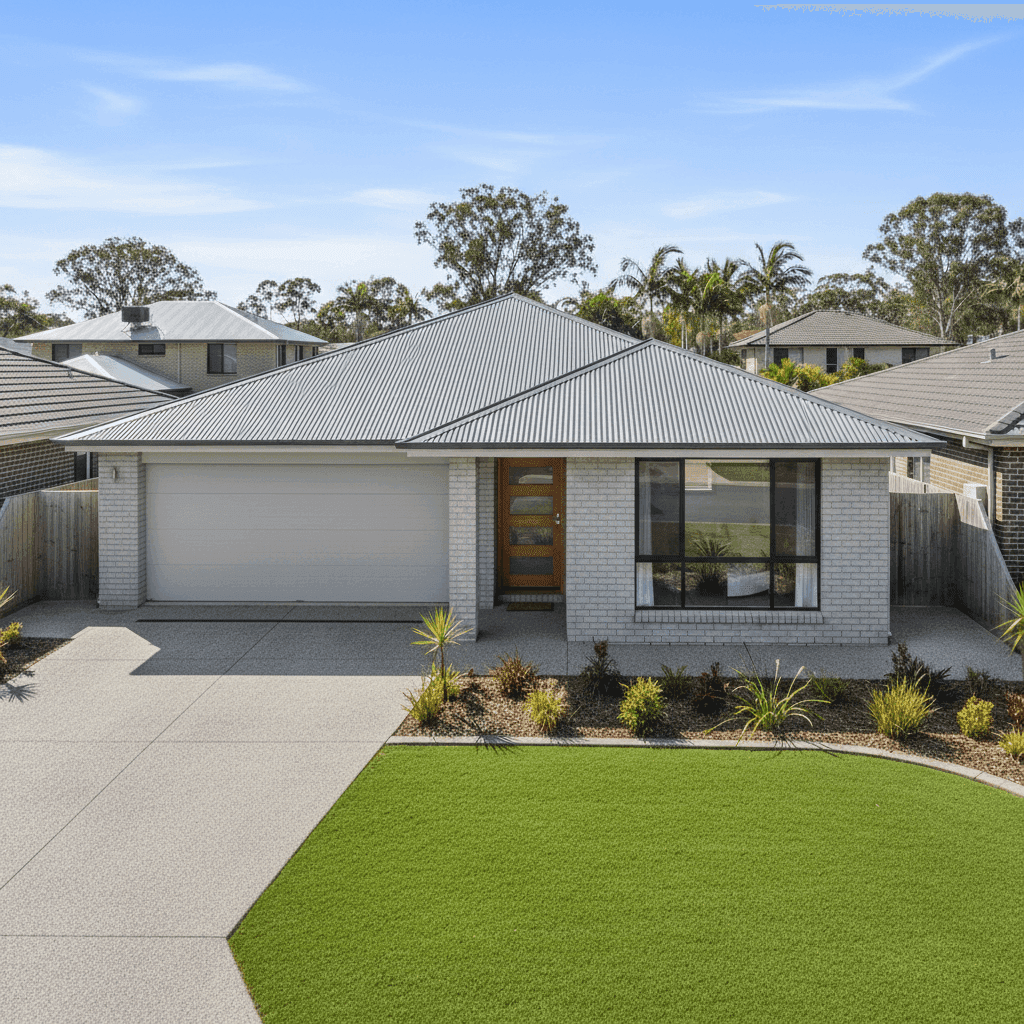
A three-bedroom, two-bathroom free standing home in Qunaba, QLD 4670 recently received a home and contents insurance quote of $1,273 per year — or roughly $124 per month. That's a notably competitive figure, and if you own a similar property in the area, it's worth understanding exactly what's driving that price and how it stacks up against what your neighbours might be paying.
---
Is This Quote Fair?
In short: yes — and then some. This quote has been rated CHEAP (Below Average), meaning it sits well beneath what most comparable properties in Qunaba are attracting from insurers.
The policy covers building sum insured of $525,000 and $50,000 in contents, with a building excess of $3,000 and a contents excess of $1,000. The higher building excess in particular is likely contributing to the lower annual premium — insurers reward policyholders who are willing to absorb more of the initial cost in a claim.
For a home of this size (214 sqm), construction quality, and age (built in 2019), a premium under $1,300 per year for combined home and contents cover is genuinely strong value. Newer homes generally attract lower premiums because they're built to modern standards, carry less risk of structural failure, and are less likely to have ageing systems that could trigger a claim.
---
How Qunaba Compares
To put this quote in proper context, here's how it measures up across three levels:
| Benchmark | Annual Premium |
|---|---|
| This Quote | $1,273 |
| Qunaba Suburb Average | $2,562 |
| Qunaba Suburb Median | $2,328 |
| Qunaba 25th Percentile | $1,553 |
| QLD State Average | $4,547 |
| QLD State Median | $3,931 |
| National Average | $2,965 |
| National Median | $2,716 |
This quote comes in $1,289 below the suburb average and is even lower than the suburb's 25th percentile of $1,553 — meaning it's cheaper than at least 75% of quotes sampled in the area. That's a remarkable result.
Zooming out, the gap becomes even more striking. Queensland's average home insurance premium sits at $4,547 per year — more than three and a half times this quote. Queensland is one of Australia's most expensive states for home insurance, largely due to flood, storm, and cyclone exposure across much of the state. Nationally, the average premium is $2,965 — still more than double what this property is paying.
You can explore more detailed pricing data for the area on the Qunaba suburb stats page, which draws on a sample of 19 quotes from the postcode.
---
Property Features That Affect Your Premium
Several characteristics of this particular property work in its favour from an insurance pricing perspective:
Modern construction (2019): Homes built in the last decade benefit from compliance with updated building codes, which typically means better structural integrity, improved fire resistance, and more reliable plumbing and electrical systems. Insurers view newer builds as lower risk.
Brick veneer external walls: Brick veneer is a well-regarded wall construction type in Australia. It offers solid fire resistance and durability, which generally translates to more favourable underwriting outcomes compared to timber-framed or weatherboard homes.
Steel/Colorbond roof: Colorbond roofing is widely considered one of the more resilient roofing options available. It's resistant to corrosion, performs well in heat, and holds up better under storm conditions than older corrugated iron or tile roofs. This is a meaningful factor for insurers assessing weather-related risk.
Concrete slab foundation: Slab foundations are structurally sound and less susceptible to subsidence or pest-related damage compared to raised timber subfloors. This reduces the likelihood of major structural claims.
Tile flooring: Tiles are durable, water-resistant, and easy to replace in sections — all of which reduce the potential cost of water damage claims.
No pool, no solar panels: While solar panels and pools aren't necessarily red flags for insurers, they do add complexity and liability to a policy. Their absence keeps things straightforward.
Not in a cyclone risk area: This is significant for a Queensland property. Many parts of the state attract cyclone loading on premiums. Qunaba's classification as outside a cyclone risk zone is a meaningful factor in keeping this premium competitive.
---
Tips for Homeowners in Qunaba
Whether you're reviewing your current policy or shopping for the first time, here are a few practical steps to ensure you're getting the best outcome:
1. Don't underinsure your building $525,000 may be appropriate for a 214 sqm home in Qunaba today, but building costs shift over time. Review your sum insured annually and use a building cost calculator to make sure your coverage keeps pace with construction price inflation.
2. Consider your excess carefully The $3,000 building excess on this policy is on the higher side. While it's helping to lower the annual premium, make sure you could genuinely afford that out-of-pocket cost in the event of a claim. If cash flow is a concern, a lower excess with a slightly higher premium might be the smarter trade-off.
3. Compare quotes at renewal — every year Insurance loyalty rarely pays off. Premiums can shift significantly from one year to the next, and the insurer who offered the best rate last year may not be the most competitive this year. Use a comparison tool to benchmark your renewal quote before accepting it.
4. Keep documentation of your contents With $50,000 in contents cover, it's worth maintaining a home inventory — photos, receipts, serial numbers — stored somewhere accessible (like cloud storage). This makes the claims process significantly smoother if you ever need to use it.
---
Compare Your Own Quote at CoverClub
If you own a home in Qunaba or anywhere across Australia, it pays to know what the market looks like before you commit to a policy. CoverClub makes it easy to get a home insurance quote and see how your premium stacks up against real data from your suburb, state, and nationally. A few minutes of comparison could save you hundreds of dollars a year.