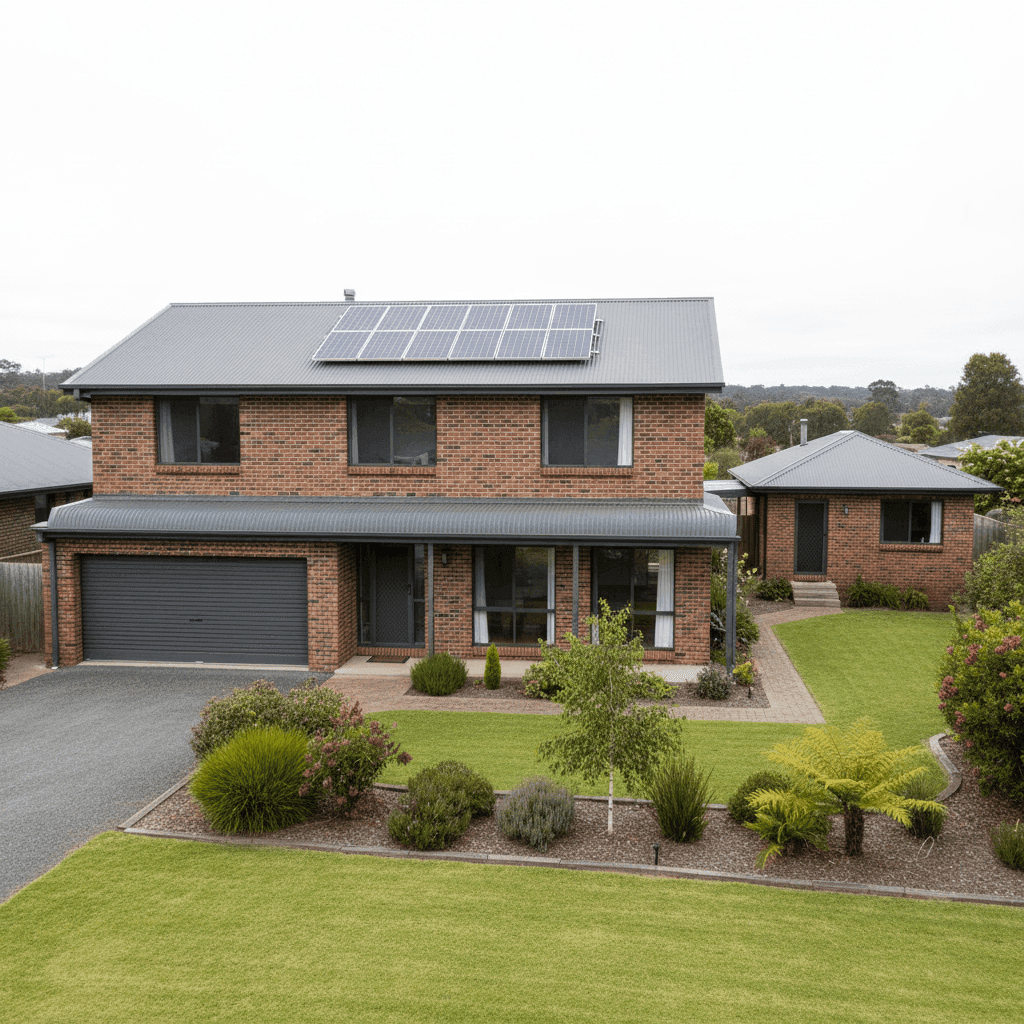
Railton is a quiet township in Tasmania's Latrobe local government area, known for its topiary sculptures and relaxed rural character. If you own a free standing home here, you may be wondering whether your home insurance premium is competitive — or whether you're paying more than you need to. This article breaks down a real quote for a 3-bedroom brick veneer home in Railton (postcode 7305), comparing it against local, state, and national benchmarks to help you make a more informed decision.
---
Is This Quote Fair?
The annual premium for this property came in at $2,274 per year (or $229/month), covering both building and contents. The building is insured for $702,000, with contents valued at $151,000. The building excess is $2,500, and the contents excess is $500.
Our pricing engine has rated this quote as FAIR — Around Average, which is a reasonable outcome for a property of this type and location. It sits comfortably within the middle range of what Railton homeowners are paying, neither unusually expensive nor a standout bargain. For a combined home and contents policy with a solid sum insured, this is a defensible premium — though there may still be room to sharpen the price with a bit of comparison shopping.
---
How Railton Compares
Understanding where your premium sits relative to others in the area gives you real negotiating power. Here's how this quote stacks up:
| Benchmark | Premium |
|---|---|
| This Quote | $2,274/yr |
| Railton Suburb Average | $2,084/yr |
| Railton Suburb Median | $1,965/yr |
| Railton 25th Percentile | $1,761/yr |
| Railton 75th Percentile | $2,393/yr |
| LGA (Latrobe, TAS) Average | $2,263/yr |
| TAS State Average | $2,814/yr |
| TAS State Median | $2,326/yr |
| National Average | $5,347/yr |
| National Median | $2,764/yr |
A few things stand out here. This quote of $2,274 is above the Railton suburb median of $1,965, but still below the 75th percentile of $2,393 — meaning roughly three-quarters of comparable quotes in the area are at or below this price. It's also slightly above the LGA average of $2,263, which suggests the premium is broadly in line with what Latrobe-area homeowners are paying.
Compared to the broader Tasmanian average of $2,814, this quote is notably cheaper — a $540 annual saving. And when held up against the national average of $5,347, the Railton premium looks very reasonable indeed, reflecting Tasmania's generally lower insurance risk profile compared to cyclone-prone or flood-affected regions on the mainland.
You can explore more local data on the Railton suburb insurance stats page, compare against all of Tasmania, or view national home insurance benchmarks.
> Note: The Railton sample size used in this comparison is 13 quotes, so while directionally useful, the suburb-level data should be interpreted with some caution. A larger dataset would provide greater statistical confidence.
---
Property Features That Affect Your Premium
Several characteristics of this property influence how insurers assess risk and price the policy.
Brick Veneer Walls & Colorbond Roof
Brick veneer construction is generally well-regarded by insurers — it's durable, fire-resistant, and widely used across Australian residential builds. Paired with a steel Colorbond roof, this combination tends to attract more competitive premiums than timber-framed or older corrugated iron structures. Colorbond in particular is valued for its resistance to corrosion, wind uplift, and bushfire ember attack.
Slab Foundation & Timber/Laminate Flooring
A concrete slab foundation is a solid, low-maintenance base that insurers view favourably. However, the timber and laminate flooring adds some consideration — these materials can be more susceptible to water damage than tiles, which may slightly influence contents or building claim costs.
Solar Panels
This property has solar panels installed, which are typically covered under building insurance as a fixed fixture. It's worth confirming with your insurer that the panels are explicitly included in your sum insured, and that the $702,000 building cover is sufficient to account for their replacement cost.
Granny Flat
The presence of a granny flat is a meaningful factor. Insurers treat secondary dwellings differently — some policies automatically include a granny flat under the main building cover, while others require a separate endorsement or even a standalone policy. Make sure your policy documentation clearly addresses the granny flat's inclusion, particularly for liability and contents within that space.
Slight Elevation
The property is elevated by less than 1 metre, which can offer modest protection against surface water ingress. It's not significant enough to dramatically reduce flood risk, but it's a minor positive in terms of stormwater management.
1995 Build Year
A home built in 1995 is relatively modern by Tasmanian standards and would have been constructed under building codes that include reasonable structural standards. It's old enough to potentially have some wear on fixtures and fittings, but not so old as to attract the surcharges often applied to pre-1970s homes.
---
Tips for Homeowners in Railton
1. Review your granny flat coverage explicitly Don't assume your granny flat is automatically covered. Contact your insurer and ask for written confirmation that the secondary dwelling — including its structure and any contents — is included in your policy. If it's not, you may be significantly underinsured.
2. Confirm your solar panels are included in the sum insured Solar panel systems can cost $5,000–$15,000 or more to replace. Verify that your building sum insured of $702,000 accounts for this, and that your policy doesn't exclude panels as a "non-standard" fixture.
3. Consider whether your building sum insured reflects current rebuild costs Construction costs in regional Tasmania have risen sharply in recent years. A sum insured of $702,000 for a 130 sqm home equates to roughly $5,400 per sqm — which is on the higher end but may be appropriate given the granny flat. Use a building cost estimator to cross-check this figure annually.
4. Shop around at renewal time A "FAIR" rating means there's likely a better deal available. Even a saving of $200–$300 per year adds up significantly over time. Use CoverClub to compare quotes before your renewal date, rather than simply accepting the rollover premium from your existing insurer.
---
Compare Your Options with CoverClub
Whether you're renewing an existing policy or insuring a new purchase, it pays to see what else is on the market. Get a home insurance quote through CoverClub to compare options tailored to your property in Railton — and make sure you're getting the right cover at a price that makes sense.