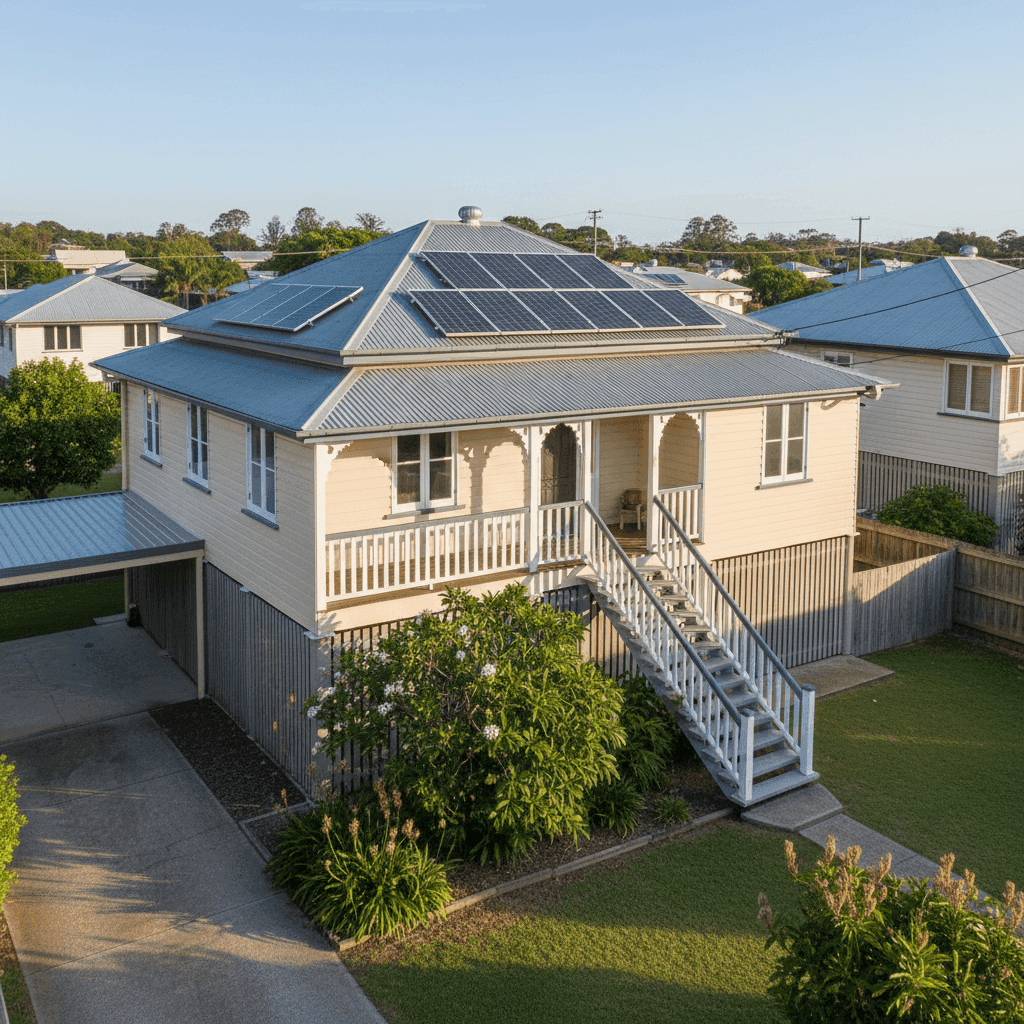
Railway Estate is a riverside suburb sitting just north of Townsville's CBD in Queensland, and like much of coastal North Queensland, it comes with its own unique set of insurance considerations. This analysis looks at a building-only insurance quote for a three-bedroom, two-bathroom free-standing home in the area — breaking down whether the premium is competitive, what's driving the cost, and what local homeowners can do to make sure they're getting the best deal possible.
---
Is This Quote Fair?
The quoted annual premium for this property is $5,868 per year (or $555 per month), covering building only with a $1,000 excess. CoverClub's pricing engine has rated this quote as FAIR — Around Average, and when you dig into the numbers, that assessment holds up well.
Within Railway Estate itself, the suburb average sits at $7,719 per year and the median at $7,692 per year. This quote lands comfortably below both of those benchmarks — in fact, it's closer to the 25th percentile of $5,064 than the median, meaning it's on the more affordable end of what locals are typically paying. That's a meaningful result in a suburb where premiums can swing dramatically, with the 75th percentile reaching $11,498 per year.
To put it simply: this homeowner is paying less than most of their neighbours for equivalent cover. While "fair" might sound like damning with faint praise, in a high-risk coastal suburb like Railway Estate, securing a below-median premium is genuinely a solid outcome.
---
How Railway Estate Compares
The broader context makes the local pricing even more striking. Here's how Railway Estate stacks up against the rest of the country:
| Benchmark | Average Premium |
|---|---|
| Railway Estate (suburb) | $7,719 / yr |
| Townsville LGA | $7,340 / yr |
| Queensland (state) | $4,547 / yr |
| National | $2,965 / yr |
Railway Estate premiums are running at roughly 1.7× the Queensland state average and more than 2.6× the national average. That's a significant loading, and it reflects the very real risks associated with this part of North Queensland — particularly cyclone exposure, which we'll come to shortly.
You can explore the full breakdown of local pricing data on the Railway Estate suburb stats page, compare it against Queensland-wide figures, or see how it sits in the context of national home insurance benchmarks.
The Townsville LGA average of $7,340 per year closely mirrors the suburb average, confirming that elevated premiums are a region-wide phenomenon rather than something specific to Railway Estate alone. Homeowners across greater Townsville are all navigating the same underlying risk environment.
---
Property Features That Affect Your Premium
Several characteristics of this property have a direct bearing on what insurers charge — some pushing the premium up, others helping to keep it in check.
Cyclone Risk Area
This is the single biggest factor. Railway Estate falls within a designated cyclone risk zone, which triggers significant premium loadings across virtually all insurers. North Queensland's exposure to tropical cyclones means insurers price in the potential for severe wind, rain, and storm surge damage. There's no escaping this loading if you own property in the region — it's baked into the market.
Weatherboard Timber Walls
Timber weatherboard construction is common in older Queensland homes, but it's generally considered a higher risk by insurers compared to brick or rendered masonry. Timber is more susceptible to fire, termite damage, and wind events. That said, this home was built in 2019, which means it was constructed to modern building codes — including the more stringent cyclone-resistant standards introduced in North Queensland over recent decades. A newer build in a cyclone zone is meaningfully different from an older one.
Steel/Colorbond Roof
Colorbond roofing is generally viewed favourably by insurers. It's durable, lightweight, and performs well in high-wind conditions relative to older roofing materials like tiles or corrugated iron. This is a modest positive for the premium.
Stump Foundation
Homes on stumps are elevated off the ground, which can offer some protection against flood inundation — a relevant consideration in low-lying parts of Townsville. However, stumped foundations can also be more vulnerable in cyclonic wind events. Insurers treat this as a mixed factor.
Timber/Laminate Flooring
Flooring type can influence the cost to rebuild or repair, particularly after a water or storm event. Timber and laminate flooring is moderately priced to replace, keeping the rebuild cost estimate reasonable.
Solar Panels
This property has solar panels installed, which adds to the insured value and rebuild cost. Solar systems need to be factored into the sum insured to avoid being underinsured — something worth reviewing periodically as panel replacement costs change.
Sum Insured: $535,000
For a 153 sqm home with standard fittings, a sum insured of $535,000 represents a reasonable estimate of rebuild cost in this region. Building costs in North Queensland are elevated compared to southern capitals due to logistics, cyclone-compliant construction requirements, and labour availability. Homeowners should review this figure regularly — particularly given ongoing construction cost inflation across Australia.
---
Tips for Homeowners in Railway Estate
1. Don't assume your current insurer is still competitive — compare annually. The spread of premiums in Railway Estate is enormous, ranging from around $5,000 to over $11,000 per year for similar properties. Insurers reprice regularly, and loyalty doesn't always pay. Running a comparison at renewal time takes minutes and could save you thousands.
2. Review your sum insured carefully. Underinsurance is a serious risk, especially in cyclone-prone areas where rebuilding costs are high and can spike further after a major event when demand for trades surges. Use a building cost calculator or speak to a quantity surveyor to make sure $535,000 still reflects current rebuild costs — don't just accept the default increase your insurer offers each year.
3. Ask about cyclone mitigation discounts. Some insurers offer reduced premiums for homes with cyclone-rated roofing, shutters, or other structural improvements. Given that this home was built in 2019 to current standards, it may already qualify — but it's worth asking explicitly.
4. Consider your excess strategically. A $1,000 building excess is fairly standard, but opting for a higher voluntary excess can reduce your annual premium. In a region where you're primarily worried about major cyclone events rather than minor claims, a higher excess may make financial sense — particularly if you have savings to cover smaller repairs yourself.
---
Ready to Compare?
Whether you're renewing your policy or buying a home in Railway Estate for the first time, it pays to see what the full market looks like. CoverClub makes it easy to compare building and contents insurance quotes from multiple insurers in one place. Get a quote today and find out whether you're paying a fair price — or leaving money on the table.