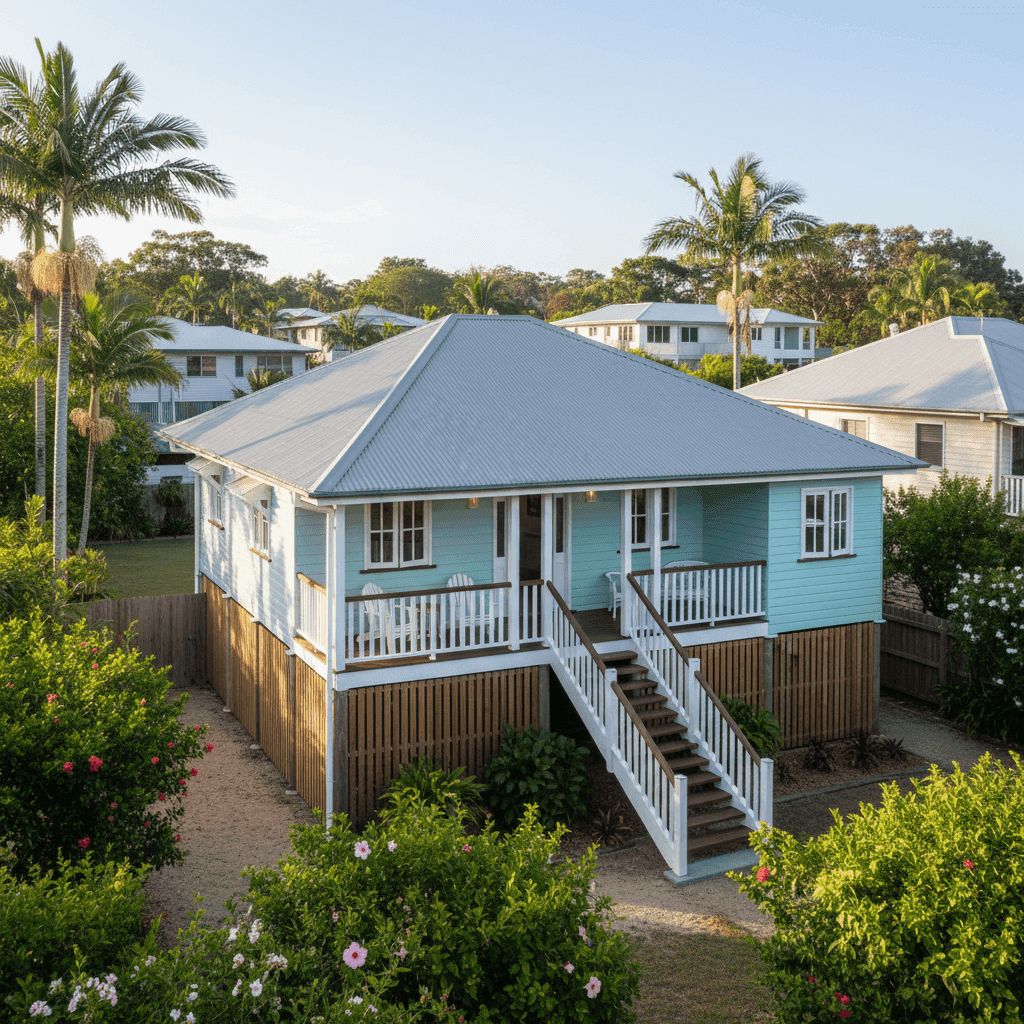
Rainbow Beach is a relaxed coastal town perched on the Cooloola Coast in Queensland's Fraser Coast region — and like many beachside communities, it comes with its own unique set of home insurance considerations. This article takes a close look at a real home and contents insurance quote for a three-bedroom, three-bathroom free-standing home in Rainbow Beach (QLD 4581), breaking down what's driving the premium and how it stacks up against local, state, and national benchmarks.
---
Is This Quote Fair?
The annual premium for this property came in at $4,025 per year (or $386/month), covering a building sum insured of $668,000 and contents valued at $64,000, each with a $1,000 excess.
Our pricing analysis rates this quote as Fair — Around Average, and the data backs that up. Based on 33 quotes collected for Rainbow Beach (4581), the suburb average sits at $3,379/yr and the median at $3,412/yr. This quote lands above both of those figures, but comfortably within the suburb's 75th percentile of $4,078/yr — meaning roughly three-quarters of comparable quotes in the area come in at or below that level.
In other words, you're not being overcharged, but there may be room to find a more competitive rate depending on the insurer and how they assess the specific risk profile of this property.
---
How Rainbow Beach Compares
Understanding where Rainbow Beach sits in the broader insurance landscape helps put this quote in context.
| Benchmark | Premium |
|---|---|
| This Quote | $4,025/yr |
| Suburb Average (Rainbow Beach) | $3,379/yr |
| Suburb Median (Rainbow Beach) | $3,412/yr |
| LGA Average (Fraser Coast) | $4,810/yr |
| QLD State Median | $3,903/yr |
| QLD State Average | $9,129/yr |
| National Median | $2,764/yr |
| National Average | $5,347/yr |
A few things stand out here. The massive gap between Queensland's average ($9,129/yr) and its median ($3,903/yr) tells an important story: a relatively small number of very high-risk properties — particularly those in cyclone-prone or flood-affected areas — are pulling the average up significantly. The median is a more reliable indicator for most Queensland homeowners.
Compared to the QLD state median of $3,903/yr, this quote is actually slightly below that mark, which is a positive sign. And while the national median of $2,764/yr is notably lower, it's worth remembering that Queensland properties — especially coastal ones — typically carry higher risk profiles than the national average would suggest.
At the Fraser Coast LGA level, the average is $4,810/yr, so this quote comes in meaningfully below that benchmark too, which further supports the "Fair" rating.
---
Property Features That Affect Your Premium
Several characteristics of this property have a direct bearing on what insurers charge. Here's how they factor in:
Elevated on Poles This is one of the most significant features from an insurance perspective. The home is elevated by at least one metre on a pole (or stump) foundation — a classic Queenslander-style construction. Elevation can actually work in your favour when it comes to flood risk, as water is less likely to enter the living areas during minor inundation events. However, elevated homes can also be more vulnerable to wind uplift and storm damage, which insurers factor into their pricing.
Weatherboard Timber Walls Timber weatherboard is a common external wall material in older Queensland homes, and this property, built in 1989, fits that profile. Timber construction is generally considered higher risk than brick veneer or concrete due to its susceptibility to fire, rot, and termite damage — all of which can influence premiums.
Steel/Colorbond Roof On the upside, a steel Colorbond roof is viewed favourably by most insurers. It's durable, low-maintenance, and performs well in high-wind conditions compared to older tile or fibrous cement roofing. This is likely providing some downward pressure on the premium.
Timber and Laminate Flooring The flooring type is relevant for contents and building claims alike. Timber and laminate floors can be costly to repair or replace following water damage, so this is factored into the building sum insured.
No Pool, No Solar, No Ducted Climate Control The absence of a pool, solar panels, and ducted air conditioning keeps the risk profile relatively straightforward. Each of these features can add complexity — and cost — to a claim, so not having them simplifies the insurer's assessment.
Building Size: 139 sqm At 139 square metres, this is a modest-sized home, which helps keep the rebuild cost — and therefore the sum insured — from ballooning. The $668,000 building sum insured appears reasonable for a three-bedroom, three-bathroom home of this construction type in a coastal Queensland location.
---
Tips for Homeowners in Rainbow Beach
If you own a home in Rainbow Beach or are considering buying in the area, here are some practical steps to manage your insurance costs without compromising on cover.
1. Review Your Sum Insured Annually Building costs in Queensland have risen sharply in recent years. Make sure your sum insured reflects the actual cost to rebuild your home from scratch — not just its market value. Underinsurance is one of the most common and costly mistakes homeowners make.
2. Ask About Flood and Storm Surge Cover Rainbow Beach is a coastal community, and while this property isn't in a designated cyclone risk area, storm surge and localised flooding can still be a concern. Check your policy carefully to confirm whether flood cover is included, and if not, whether it can be added.
3. Maintain Your Timber Weatherboard Exterior Keeping your weatherboard walls in good condition — free from rot, peeling paint, and damage — not only protects the home but can also support your claim if you ever need to make one. Some insurers may reduce payouts if poor maintenance is deemed a contributing factor.
4. Compare Quotes Before Renewal With a "Fair" rating, this quote is reasonable — but that doesn't mean it's the best available. Insurers price risk differently, and the same property can attract quite different premiums across providers. Use a comparison platform like CoverClub to see what else is on the market before your renewal date.
---
Compare Your Options with CoverClub
Whether you're reviewing an existing policy or shopping for cover for the first time, it pays to compare. CoverClub makes it easy to see how your quote stacks up against real data from your suburb, your state, and across the country. Get a home insurance quote today and find out if you're paying a fair price — or if there's a better deal waiting for you.