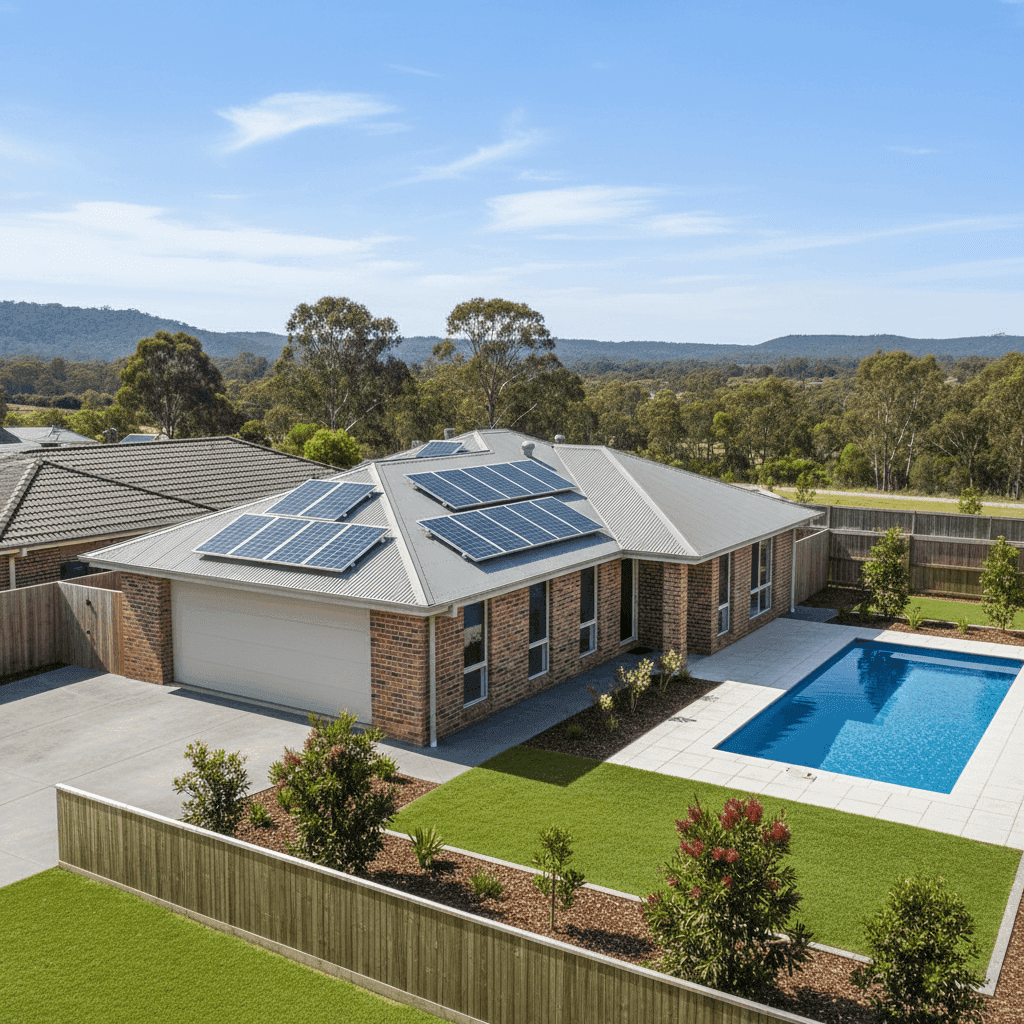
If you own a free standing home in Rainbow Flat, NSW 2430, you've probably wondered whether you're paying a fair price for home and contents insurance — or whether you're leaving money on the table. This article breaks down a real insurance quote for a four-bedroom, two-bathroom property in the area, compares it against local, state, and national benchmarks, and offers practical tips to help you get the best value cover.
---
Is This Quote Fair?
The quote in question comes in at $1,958 per year (or roughly $201 per month) for combined home and contents insurance, covering a building sum insured of $654,000 and contents valued at $140,000. The building excess is $3,000 and the contents excess is $500.
Our price rating for this quote? Cheap — well below average.
To put that into perspective, the suburb average for Rainbow Flat sits at $4,706 per year, and the median is $3,913 per year. This quote lands comfortably below even the 25th percentile of $2,999 per year — meaning it's cheaper than at least 75% of comparable quotes in the area. That's a genuinely strong result, and homeowners receiving a premium in this range should feel confident they're getting competitive pricing.
Of course, price alone doesn't tell the whole story. It's worth reviewing the policy's coverage limits, exclusions, and conditions to ensure the low premium isn't the result of significant gaps in protection. But from a pure cost standpoint, this quote is well positioned.
---
How Rainbow Flat Compares
Understanding how your suburb stacks up against broader benchmarks gives valuable context when assessing any insurance quote. Here's how Rainbow Flat compares across three levels:
| Benchmark | Average Premium | Median Premium |
|---|---|---|
| Rainbow Flat (suburb) | $4,706/yr | $3,913/yr |
| Mid-Coast LGA | $5,840/yr | — |
| NSW (state) | $9,528/yr | $3,770/yr |
| National | $5,347/yr | $2,764/yr |
A few things stand out here. The NSW state average of $9,528 is dramatically higher than the median of $3,770 — a clear sign that a relatively small number of very expensive policies (likely in high-risk coastal or flood-prone areas) are pulling the average upward. Rainbow Flat's suburb average of $4,706 is more moderate, reflecting a mix of risk profiles across the postcode.
The Mid-Coast LGA average of $5,840 is notably higher than the Rainbow Flat suburb average, suggesting that some properties within the broader council area attract considerably higher premiums — possibly due to flood exposure or proximity to waterways.
For deeper data on this postcode, visit the Rainbow Flat insurance stats page. You can also explore NSW-wide insurance trends or the national home insurance statistics for a broader picture.
---
Property Features That Affect Your Premium
Every home is different, and insurers weigh up a range of property characteristics when calculating your premium. Here's how the features of this particular property likely influence the quote:
🏗️ Construction — Brick Veneer & Colorbond Roof
Brick veneer external walls are generally viewed favourably by insurers. They offer solid fire resistance and structural durability without the full cost of double-brick construction. Paired with a steel/Colorbond roof, this home benefits from excellent weather resistance and longevity — Colorbond is well regarded in the Australian climate for its ability to handle heat, rain, and wind. These construction materials typically attract more competitive premiums than timber-framed or older tile-roofed homes.
📅 Build Year — 2021
A home built in 2021 is relatively new, meaning it was constructed to modern Australian building standards. This generally translates to better structural integrity, updated electrical and plumbing systems, and reduced claims risk — all of which can contribute to a lower premium.
🏊 Swimming Pool
A pool adds value to the property but also introduces some liability considerations. Insurers may factor in the cost of repairing or replacing pool infrastructure, as well as public liability exposure. It's worth confirming your policy explicitly covers pool-related structures and liability.
☀️ Solar Panels
Solar panels are increasingly common on Australian homes, and many insurers now include them under standard building cover — but not all do. It's essential to check whether the panels are covered under your building sum insured of $654,000 and whether accidental damage or storm damage to the panels is included.
❄️ Ducted Climate Control
Ducted air conditioning systems are expensive to repair or replace. As a fixed installation, this is typically covered under building insurance, but it's worth verifying the policy wording to ensure the system is adequately covered within the building sum insured.
📐 Size & Quality
At 214 sqm with above-average fittings, this is a well-appointed home. The above-average fittings quality means the cost to rebuild or repair to the same standard is higher than a standard home of similar size — which is reflected in the $654,000 building sum insured. Ensuring your sum insured accurately reflects current rebuild costs (not just market value) is critical to avoiding underinsurance.
---
Tips for Homeowners in Rainbow Flat
1. Review Your Sum Insured Annually
Building costs in Australia have risen significantly in recent years due to labour shortages and materials inflation. A sum insured that was accurate two years ago may already be insufficient. Use a building cost calculator or speak with a quantity surveyor to ensure your $654,000 figure keeps pace with current rebuild costs.
2. Confirm Solar Panel and Pool Coverage
Given this property has both solar panels and a swimming pool, it's worth reading your policy's product disclosure statement (PDS) carefully. Some policies exclude solar panels or limit pool cover — knowing this upfront avoids nasty surprises at claim time.
3. Consider Your Excess Strategy
This quote carries a $3,000 building excess, which is on the higher side. A higher excess typically reduces your premium, but it means you'll need to cover more out of pocket if you make a claim. Make sure you have that amount readily accessible, or consider whether a lower excess (at a slightly higher premium) better suits your financial situation.
4. Compare Quotes Regularly
Even if your current premium is well below average — as this one is — the insurance market changes every year. Insurers reprice based on claims data, reinsurance costs, and risk modelling. Shopping around at renewal time ensures you're not caught off guard by a sudden premium increase.
---
Ready to Compare Home Insurance in Rainbow Flat?
Whether you're a new homeowner or simply due for a renewal, comparing quotes is the smartest way to ensure you're getting the right cover at the right price. CoverClub makes it easy to see how your quote stacks up against real data from across your suburb, state, and the country.
Get a home insurance quote today and find out if you're paying too much — or discover just how competitive your current premium really is.