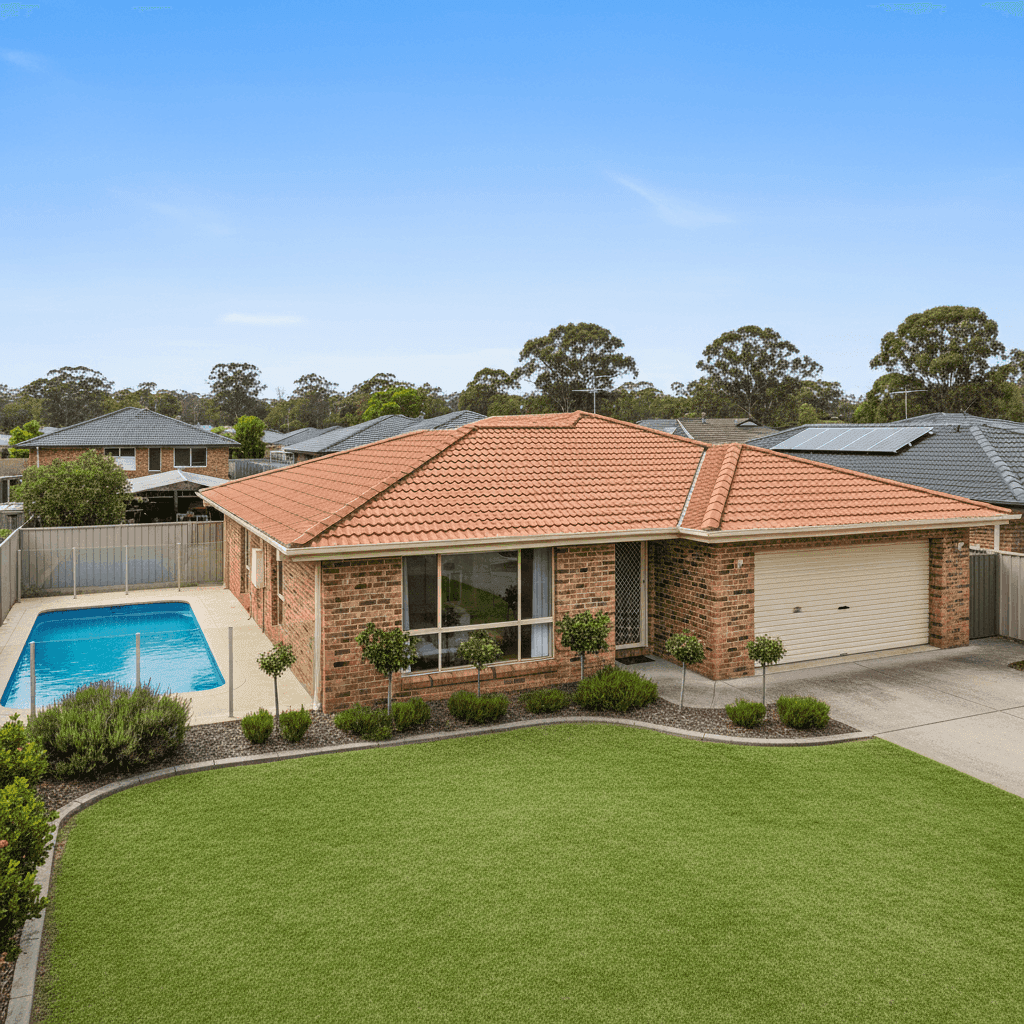
Rainbow Flat is a quiet residential locality on the Mid-North Coast of New South Wales, sitting within the Mid-Coast Council area near Taree. It's the kind of place where a modest, well-built brick veneer home on a slab is the norm — and that's exactly the property type we're looking at here. This article breaks down a real home and contents insurance quote for a 3-bedroom, 1-bathroom free-standing home in Rainbow Flat (postcode 2430), examining whether the premium is competitive and what factors are likely driving the cost.
---
Is This Quote Fair?
The quote in question comes in at $4,494 per year (or $431/month) for combined home and contents cover, with a building sum insured of $600,000 and contents valued at $200,000. Both the building and contents excess are set at $1,000.
CoverClub's pricing engine rates this quote as Fair — Around Average, and the data backs that up. The suburb average for Rainbow Flat sits at $4,706/year, meaning this quote is actually tracking about $212 below the local average — a modest but welcome saving. It also falls comfortably within the middle of the market, sitting between the suburb's 25th percentile ($2,999/yr) and 75th percentile ($5,493/yr).
A "Fair" rating doesn't mean you should stop shopping — it means you're not being gouged, but there's still a reasonable chance a competing insurer could do better. Given that the cheapest quarter of quotes in this suburb come in under $3,000/year, there's meaningful room to save if you're willing to compare.
---
How Rainbow Flat Compares
Understanding your premium in isolation only tells part of the story. Here's how Rainbow Flat stacks up against broader benchmarks:
| Benchmark | Premium |
|---|---|
| This Quote | $4,494/yr |
| Suburb Average (Rainbow Flat) | $4,706/yr |
| Suburb Median (Rainbow Flat) | $3,913/yr |
| LGA Average (Mid-Coast) | $5,840/yr |
| NSW Average | $9,528/yr |
| NSW Median | $3,770/yr |
| National Average | $5,347/yr |
| National Median | $2,764/yr |
A few things stand out here. The NSW state average of $9,528/year is dramatically higher than the median of $3,770/year — a clear sign that a handful of very expensive properties (think high-value homes in flood-prone or cyclone-affected areas) are pulling the average up significantly. The median is a more reliable benchmark for typical homeowners, and at $4,494/year, this quote sits modestly above both the NSW and national medians.
Compared to the Mid-Coast LGA average of $5,840/year, this quote looks even more favourable — coming in roughly $1,346 cheaper than the local government area norm. That's a meaningful difference over the life of a policy.
For a deeper look at how premiums are trending in this postcode, visit the Rainbow Flat insurance stats page. You can also explore NSW-wide premium data or browse national home insurance benchmarks for broader context.
> Note: The suburb sample size for Rainbow Flat is 12 quotes, which is a relatively small dataset. Treat suburb-level averages as a guide rather than a definitive benchmark — the more quotes collected over time, the more reliable these figures become.
---
Property Features That Affect Your Premium
Every insurer prices risk differently, but the physical characteristics of a property play a significant role in determining your premium. Here's how the features of this particular home are likely influencing the cost:
Brick Veneer Walls & Tile Roof Brick veneer construction is generally viewed favourably by insurers. It's more fire-resistant than timber weatherboard and holds up well in most weather conditions. A tiled roof similarly performs well for durability and fire resistance, though it can be more expensive to repair after hail damage compared to Colorbond. Together, these materials typically attract mid-range to lower premiums.
Slab Foundation A concrete slab is a solid, low-maintenance foundation type that presents minimal risk of subsidence or termite ingress compared to raised timber stumps. Insurers generally don't penalise slab homes, and in some cases may rate them slightly more favourably.
1985 Construction Year Homes built in the mid-1980s sit in an interesting zone for insurers. They're old enough that some systems (electrical wiring, plumbing) may be ageing, but they predate many of the quality concerns associated with the building boom of the late 1990s and early 2000s. A well-maintained 1985 home typically doesn't attract significant age-related loading.
Swimming Pool The presence of a pool adds a layer of liability risk and can nudge premiums upward. Pools also increase the cost of contents and property claims if something goes wrong (e.g., storm damage, fence collapse). It's worth confirming your policy explicitly covers pool-related damage and liability.
Standard Fittings & Carpet Flooring Standard-quality fittings and carpet flooring keep the replacement cost of the home relatively predictable and modest compared to high-end finishes. This is reflected in the contents valuation and helps keep the overall premium in check.
No Solar Panels, No Ducted Climate Control The absence of solar panels and ducted air conditioning removes two common sources of claim complexity. Solar systems can be expensive to replace and may not be adequately covered under all policies, so their absence here actually simplifies the risk profile.
---
Tips for Homeowners in Rainbow Flat
1. Compare at least three quotes before renewing With 12 quotes in the CoverClub dataset for this suburb ranging from under $3,000 to over $5,400, the spread is significant. Don't let your policy auto-renew without checking whether a competing insurer can offer better value for the same level of cover.
2. Review your sum insured annually Building costs in regional NSW have risen sharply in recent years. A $600,000 sum insured may have been appropriate at the time the policy was taken out, but it's worth checking against current construction cost estimates — underinsurance is a common and costly mistake.
3. Check your pool is properly covered Not all standard home insurance policies cover pool infrastructure (pumps, filters, fencing) as a matter of course. Ask your insurer specifically what pool-related damage and liability is included, and whether a pool fence compliance certificate affects your cover.
4. Consider raising your excess to reduce your premium With both the building and contents excess currently set at $1,000, there may be room to increase this if you have sufficient savings to cover a higher out-of-pocket cost in the event of a claim. Many insurers offer meaningful premium discounts for higher voluntary excesses.
---
Ready to Compare?
Whether you're renewing an existing policy or shopping for cover for the first time, comparing quotes is the single most effective way to ensure you're not overpaying. Get a home insurance quote at CoverClub and see how your current premium stacks up against the market in minutes — no jargon, no pressure.