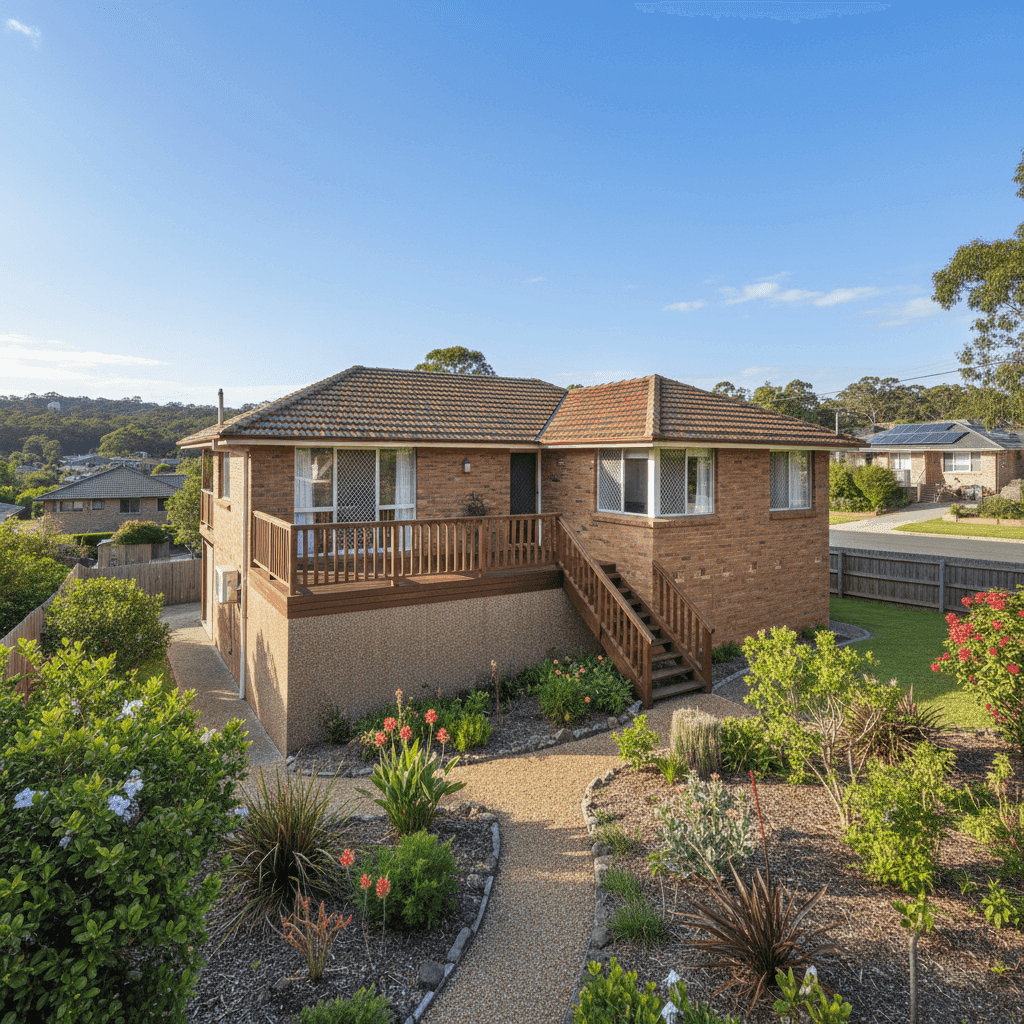
If you own a free standing home in Raleigh, NSW 2454, you're probably curious whether your home insurance premium is competitive — or whether you're quietly paying more than you need to. This article breaks down a real home and contents insurance quote for a three-bedroom, two-bathroom brick veneer home in Raleigh, comparing it against suburb, state, and national benchmarks so you can make a genuinely informed decision.
---
Is This Quote Fair?
The quote in question comes in at $4,544 per year (or $443/month) for combined home and contents cover, with a building sum insured of $816,000 and contents valued at $50,000. Both the building and contents excess are set at $1,000.
Our price rating for this quote is Expensive (Above Average).
To put that in context: the suburb average for Raleigh is $4,042/yr, and the suburb median sits at $3,939/yr. This quote is roughly 12% above the local average and about 15% above the median. That's a meaningful gap — not alarming, but certainly worth scrutinising before you simply accept the renewal.
It's worth noting the quote does sit within the suburb's 75th percentile range (up to $4,483/yr), so it's not wildly out of step with what some Raleigh homeowners are paying. However, given that a quarter of comparable properties are insured for $3,276/yr or less, there's clearly room to explore more competitive options.
---
How Raleigh Compares
Understanding where Raleigh sits within the broader insurance landscape helps put the premium in perspective.
| Benchmark | Average Premium | Median Premium |
|---|---|---|
| Raleigh (NSW 2454) | $4,042/yr | $3,939/yr |
| Nambucca Valley LGA | $5,223/yr | — |
| NSW | $9,528/yr (avg) | $3,770/yr |
| National | $5,347/yr (avg) | $2,764/yr |
A few things stand out here. The NSW state average of $9,528/yr looks eye-watering, but the state median of $3,770/yr tells a more balanced story — a handful of very high-risk or high-value properties in flood and coastal zones are pulling that average up significantly. Raleigh's median of $3,939/yr is actually slightly above the NSW median, which suggests the area carries a moderate risk profile.
Compared to the national picture, where the median sits at $2,764/yr, Raleigh premiums are noticeably higher — roughly 43% above the national median. This reflects the Mid-North Coast's exposure to weather events, including heavy rainfall and riverine flooding in parts of the region.
Within the Nambucca Valley LGA, the average of $5,223/yr is considerably higher than Raleigh's suburb average, suggesting that Raleigh itself is one of the more favourably priced pockets within the broader local government area.
For a full breakdown of NSW home insurance statistics, including suburb-level comparisons, visit our dedicated stats hub.
---
Property Features That Affect Your Premium
Several characteristics of this particular property have a direct bearing on its insurance cost — both positively and negatively.
Brick Veneer Walls & Tiled Roof
Brick veneer construction with a tiled roof is generally viewed favourably by insurers. These materials offer solid fire resistance and durability compared to weatherboard or Colorbond alternatives, which can translate to lower rebuild costs and reduced premiums in some cases.
Elevated Foundation (At Least 1 Metre)
This is a significant factor. The property is elevated by at least one metre on a slab foundation — a design feature common in flood-prone or high-moisture areas of coastal NSW. While elevation can reduce flood risk to the structure itself, insurers may still price in the regional flood and storm risk associated with the broader Raleigh area, particularly given its proximity to the Bellinger River catchment.
Above Average Fittings Quality
The property features above average internal fittings — think quality cabinetry, fixtures, and finishes. This directly increases the cost to rebuild or repair, which justifies a higher building sum insured and, consequently, a higher premium. The $816,000 building sum insured reflects this.
Ducted Climate Control
Ducted air conditioning systems are a notable contents and building item. They add to the overall insured value and can increase replacement costs in the event of storm or fire damage.
Timber & Laminate Flooring
Timber and laminate floors are susceptible to water damage and can be expensive to replace. Insurers factor this into their risk assessment, particularly in regions with above-average rainfall like the Mid-North Coast.
No Pool or Solar Panels
The absence of a pool and solar panels simplifies the risk profile slightly, removing liability concerns (pool) and potential electrical or roof-penetration risks (solar). This works modestly in the homeowner's favour.
---
Tips for Homeowners in Raleigh
1. Compare Multiple Quotes Annually
The 22-quote sample for Raleigh's 2454 postcode shows a spread from roughly $3,276/yr to $4,483/yr at the 25th and 75th percentiles respectively. That's over $1,200 in annual variation for broadly similar properties. Shopping around at renewal time is one of the most effective ways to avoid overpaying.
2. Review Your Building Sum Insured
At $816,000, the building sum insured is substantial — appropriate given the above average fittings and 139 sqm floor plan. However, it's worth ensuring this figure reflects current construction costs rather than a figure that's crept up through automatic indexation over the years. Both under-insuring and over-insuring carry real costs.
3. Consider Your Excess Settings
Both excesses are set at $1,000. Opting for a higher voluntary excess (say, $2,000 or $2,500) can meaningfully reduce your annual premium, particularly if you have a solid emergency fund and are unlikely to make small claims. Just ensure the excess is genuinely affordable if you ever do need to claim.
4. Ask About Flood and Storm Cover
Given Raleigh's location near river systems and the broader Mid-North Coast weather patterns, it's critical to confirm that your policy explicitly covers flood — not just storm or rainwater damage. These are distinct definitions under Australian insurance law, and the gap between them can be costly in a major weather event.
---
Ready to Find a Better Deal?
Whether this quote is right for you depends on your full risk picture, but the data suggests there's room to explore. At CoverClub, we make it easy to compare home and contents insurance quotes side by side so you can see exactly what you're getting — and what you might be overpaying for.
Get a home insurance quote for your Raleigh property →
You can also explore detailed Raleigh suburb insurance statistics or browse the full NSW insurance data to see how your postcode stacks up.