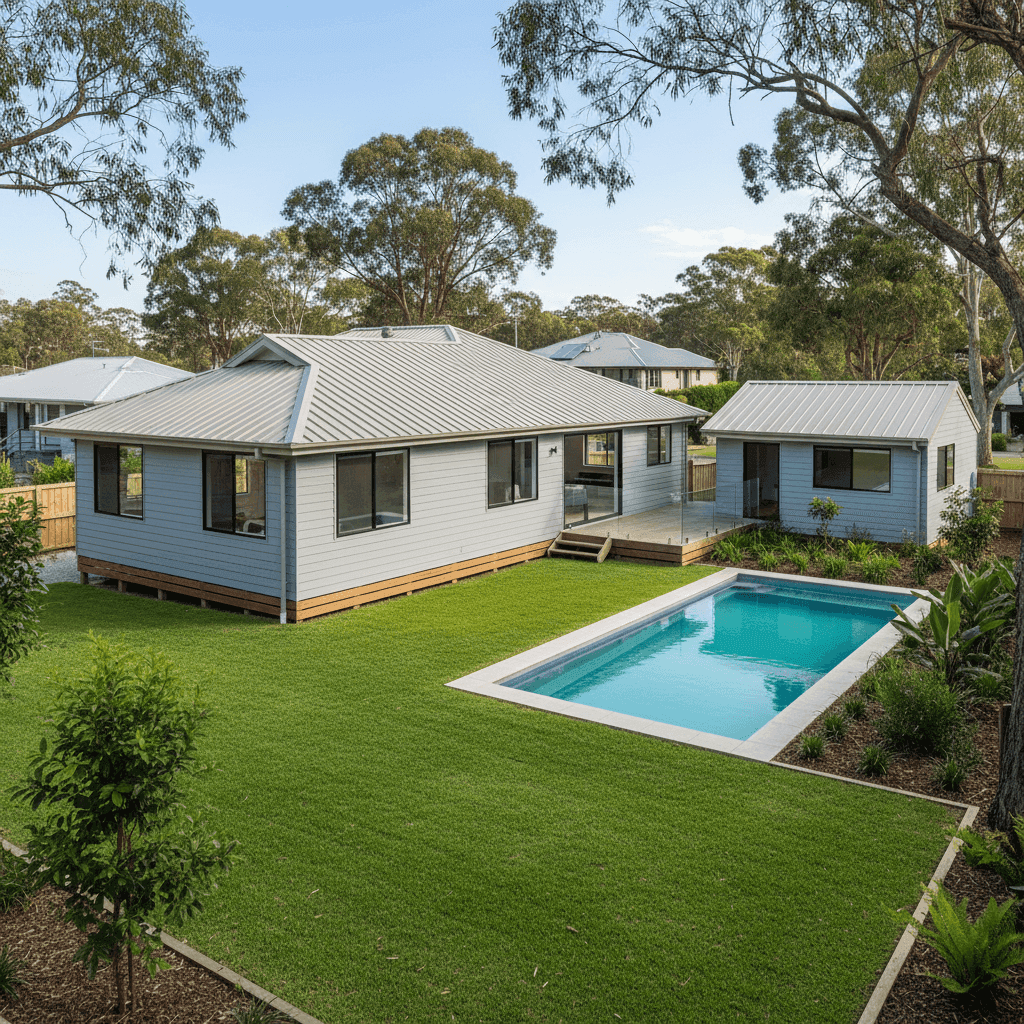
If you own a free standing home in Raleigh, NSW 2454, you already know it's a beautiful part of the Mid North Coast — but understanding what you should be paying for home insurance can feel like navigating a maze. This article breaks down a real home and contents insurance quote for a five-bedroom property in Raleigh, compares it against local, state, and national benchmarks, and offers practical advice for homeowners in the area.
---
Is This Quote Fair?
The quote in question sits at $10,206 per year (or $971/month) for combined home and contents cover, with a building sum insured of $1,758,000 and contents valued at $50,000. Both the building and contents excess are set at $1,000.
Our rating for this quote is Expensive — above average for the suburb.
To put that in perspective: the suburb average for Raleigh sits at just $4,042 per year, with a median of $3,939. This quote is roughly 2.5 times the local average, which is a significant gap that warrants a closer look.
That said, context matters enormously here. The building sum insured of $1,758,000 is likely far higher than most comparable properties in the suburb — and that alone will push the premium well above typical local figures. A larger, higher-value home with above-average fittings, a pool, a granny flat, and ducted climate control will naturally attract a higher premium than a standard three-bedroom brick veneer down the road.
---
How Raleigh Compares
Here's how this quote stacks up against broader benchmarks:
| Benchmark | Average Premium | Median Premium |
|---|---|---|
| Raleigh (2454) | $4,042/yr | $3,939/yr |
| Nambucca Valley LGA | $5,223/yr | — |
| NSW | $9,528/yr | $3,770/yr |
| National | $5,347/yr | $2,764/yr |
A few things stand out from this data. First, the NSW state average of $9,528 per year is actually quite close to this quote — suggesting that at a state level, premiums for larger or higher-value homes can climb substantially. Second, the wide gap between the NSW average ($9,528) and median ($3,770) tells us the state average is being pulled upward by high-value properties — exactly the kind of home we're analysing here.
Compared to the national average of $5,347, this quote is still nearly double — but again, the $1.75M+ building sum insured is doing a lot of the heavy lifting.
The Nambucca Valley LGA average of $5,223 sits below this quote but above the Raleigh suburb average, which suggests that larger or more complex properties across the LGA are nudging the local average upward.
With only 22 quotes in the Raleigh suburb sample, it's worth noting the dataset is relatively small. The 25th percentile sits at $3,276 and the 75th at $4,483 — meaning this quote falls well outside even the upper range of typical local premiums, primarily due to the property's size and value.
---
Property Features That Affect Your Premium
Several characteristics of this property are likely contributing to the higher-than-average premium:
High building sum insured ($1,758,000) This is the single biggest driver. Insurers price premiums relative to the cost of rebuilding your home from scratch, and $1.758 million reflects a large, high-quality home. At 315 sqm with above-average fittings, this figure is not unreasonable — but it does mean you're paying to insure significantly more than the average Raleigh homeowner.
Hardiplank / Hardiflex external walls Fibre cement cladding like Hardiplank is generally viewed favourably by insurers — it's durable, fire-resistant, and low-maintenance. This likely has a neutral to slightly positive effect on your premium compared to timber weatherboard.
Steel / Colorbond roof Colorbond roofing is one of the better roof types from an insurance perspective. It's resilient against weather events, doesn't corrode, and is less prone to storm damage than some alternatives. This should work in your favour.
Stump foundation (elevated less than 1m) Homes on stumps can attract additional scrutiny from insurers, particularly around underfloor damage, pest risk, and structural movement. The slight elevation also means flood and storm water ingress is a minor consideration, though the sub-1m height limits significant risk.
Swimming pool A pool adds to the insured value of the property and may also increase liability considerations under some policies. It's a standard premium contributor for homes with this feature.
Granny flat The presence of a granny flat adds to the overall rebuild cost of the property and is reflected in the building sum insured. Make sure your policy explicitly covers the granny flat structure — some policies require it to be noted separately.
Ducted climate control Ducted systems are expensive to repair or replace, and their inclusion in the building's fixtures contributes to the higher sum insured and, by extension, the premium.
Above-average fittings quality Premium finishes — think stone benchtops, quality cabinetry, high-end appliances — cost more to replace and are factored into both the sum insured and the overall risk profile.
---
Tips for Homeowners in Raleigh
1. Review your sum insured regularly Building costs fluctuate, and being over-insured can mean you're paying more than necessary. Use a professional building cost estimator or ask your insurer to confirm your rebuild cost aligns with current construction rates in the Mid North Coast region. Equally, being under-insured is a serious risk — so aim for accuracy, not just a lower number.
2. Compare quotes from multiple insurers The spread between the cheapest and most expensive quotes for similar properties can be enormous. Even if your current insurer is competitive, it's worth getting at least two or three alternative quotes annually. CoverClub makes it easy to compare — you can see how your premium stacks up against real data from your suburb.
3. Check what's included for the granny flat Not all home insurance policies automatically cover secondary dwellings on the same property. Confirm with your insurer that the granny flat is explicitly included in your building cover, and that the sum insured accounts for its full rebuild cost.
4. Ask about discounts for security and safety features Homes with monitored alarm systems, deadbolts, and other security measures may be eligible for premium discounts with certain insurers. It's always worth asking — even a 5–10% reduction on a $10,000+ annual premium adds up quickly.
---
Ready to Compare?
Whether you think your current premium is too high or you're simply curious about what else is on the market, comparing quotes is the smartest first step. CoverClub lets you benchmark your home insurance against real quotes from Raleigh and across NSW — so you can make a confident, informed decision. Check out the Raleigh suburb stats to see how your property compares to others in the area.