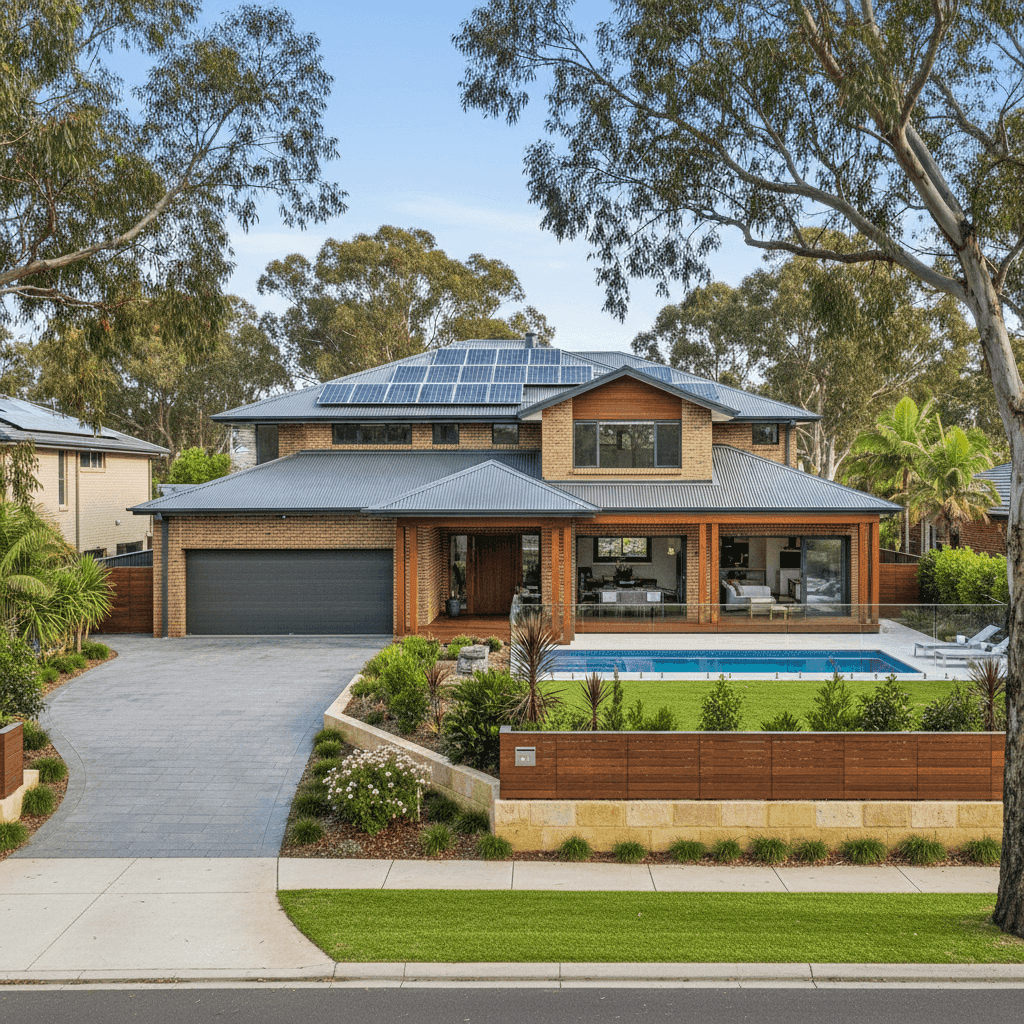
If you own a free standing home in Rangeville, QLD 4350, you're sitting in one of Toowoomba's most sought-after residential pockets. Leafy streets, quality housing stock, and a strong sense of community make it a desirable suburb — but desirability comes with its own insurance considerations. This article breaks down a real home and contents insurance quote for a five-bedroom property in Rangeville, benchmarks it against local, state, and national data, and offers practical tips to help you get better value on your cover.
---
Is This Quote Fair?
The annual premium for this quote comes in at $3,956 per year (or $379/month), which CoverClub's pricing engine rates as Expensive — Above Average for this area.
To put that in perspective:
- The suburb average for Rangeville is $1,882/yr, and the median sits at $2,112/yr
- This quote is roughly 2.1× the suburb average and sits well above the 75th percentile of $2,833/yr — meaning it's pricier than at least three-quarters of comparable quotes in the area
That said, context matters enormously here. This is not a standard mid-range property. The home carries a building sum insured of $2,800,000 — a figure that reflects top-of-the-range fittings and a substantial 235 sqm floor plan. The contents are insured for a further $245,000. When you're insuring a high-value asset at replacement cost, a higher premium is to be expected. The question isn't just whether the premium is high — it's whether the coverage justifies the cost.
The building excess of $5,000 is on the higher side, which typically acts as a mechanism to reduce the base premium. The contents excess of $500 is more standard. If the building excess were lowered, the annual premium would likely be even higher.
---
How Rangeville Compares
Understanding where this quote sits relative to broader benchmarks helps frame the conversation. Here's a snapshot:
| Benchmark | Premium |
|---|---|
| This quote | $3,956/yr |
| Rangeville suburb average | $1,882/yr |
| Rangeville suburb median | $2,112/yr |
| Toowoomba LGA average | $2,479/yr |
| QLD state average | $4,547/yr |
| QLD state median | $3,931/yr |
| National average | $2,965/yr |
| National median | $2,716/yr |
Interestingly, while this quote looks expensive compared to the Rangeville suburb average, it actually sits below the Queensland state average of $4,547/yr and is broadly in line with the QLD median of $3,931/yr. This tells an important story: Queensland as a whole carries elevated insurance costs due to its exposure to severe weather events, and high-value properties in the state are priced accordingly.
Compared to the national average of $2,965/yr, this quote is higher — but again, the sum insured here is substantially above what most standard policies cover.
You can explore more local data on the Rangeville suburb stats page, compare it against QLD state-wide insurance trends, or see how it stacks up against national home insurance benchmarks.
---
Property Features That Affect Your Premium
Several characteristics of this property have a meaningful influence on the premium calculated. Here's how each one plays a role:
Double Brick Walls
Double brick construction is generally viewed favourably by insurers. It's robust, fire-resistant, and structurally sound — qualities that can reduce the likelihood of certain types of claims. However, it also costs more to rebuild per square metre than lighter-weight construction methods, which feeds into a higher sum insured.
Steel / Colorbond Roof
Colorbond roofing is a popular choice across Queensland for good reason — it handles heat, rain, and wind well. From an insurance perspective, it's considered a lower-risk roofing material compared to older options like terracotta tiles or fibrous cement, and it tends to be straightforward to repair or replace.
Construction Year: 1970
A home built in 1970 is now over 50 years old. While double brick construction ages well, older homes can present risks around ageing plumbing, electrical systems, and other infrastructure. Some insurers apply loadings to older properties, and it's worth ensuring your policy doesn't contain exclusions related to gradual deterioration or pre-existing conditions.
Swimming Pool
Pools add value to a property but also add liability exposure. Most home insurance policies include some level of legal liability cover, which is particularly relevant when a pool is on site. Ensure your policy's liability limit is adequate.
Solar Panels
Solar panels are increasingly common across Queensland, and most modern home insurance policies will cover them as a fixed fixture of the building. It's worth confirming they're explicitly included in your policy wording — particularly for events like hail damage, which is not uncommon in the Toowoomba region.
Top-of-the-Range Fittings
This is perhaps the single biggest driver of the high sum insured. Premium appliances, high-end joinery, stone benchtops, designer fixtures, and luxury flooring all cost significantly more to replace than standard equivalents. Insurers price this accordingly, and underinsuring a high-spec home can leave you badly exposed at claim time.
Slab Foundation & Tiled Flooring
Concrete slab foundations are standard and well-regarded in Queensland's climate. Tiled flooring is durable and relatively straightforward to replace, though large-format or imported tiles can carry a higher replacement cost.
---
Tips for Homeowners in Rangeville
1. Validate Your Sum Insured Regularly
With a building sum insured of $2.8 million, it's critical to revisit this figure annually. Construction costs in Queensland have risen sharply in recent years. An independent building valuation every two to three years is a worthwhile investment to ensure you're neither underinsured nor paying premiums on an inflated figure.
2. Shop Around — Even on a High-Value Property
It's a common misconception that high-value homes have fewer insurer options. Several specialist and premium insurers actively compete for this segment. Using a comparison platform like CoverClub to benchmark quotes can reveal meaningful savings without sacrificing cover quality.
3. Review Your Excess Strategy
The $5,000 building excess on this policy is a deliberate trade-off — a higher excess lowers the base premium. If you have the financial capacity to absorb a larger out-of-pocket expense in the event of a claim, maintaining a higher excess can be a sound strategy. However, make sure you're genuinely comfortable with that figure before committing.
4. Confirm Solar Panel and Pool Coverage
Given both features are present on this property, take the time to read your Product Disclosure Statement carefully. Confirm that solar panels are covered for storm, hail, and accidental damage, and that your liability cover is sufficient for a property with a pool. Some policies cap liability at levels that may feel inadequate for a high-value home.
---
Compare Your Options with CoverClub
Whether you're renewing your existing policy or shopping for cover for the first time, it pays to compare. CoverClub makes it easy to benchmark your home insurance quote against real data from your suburb, your state, and across Australia. Get a quote today and find out whether you're paying a fair price — or leaving money on the table.