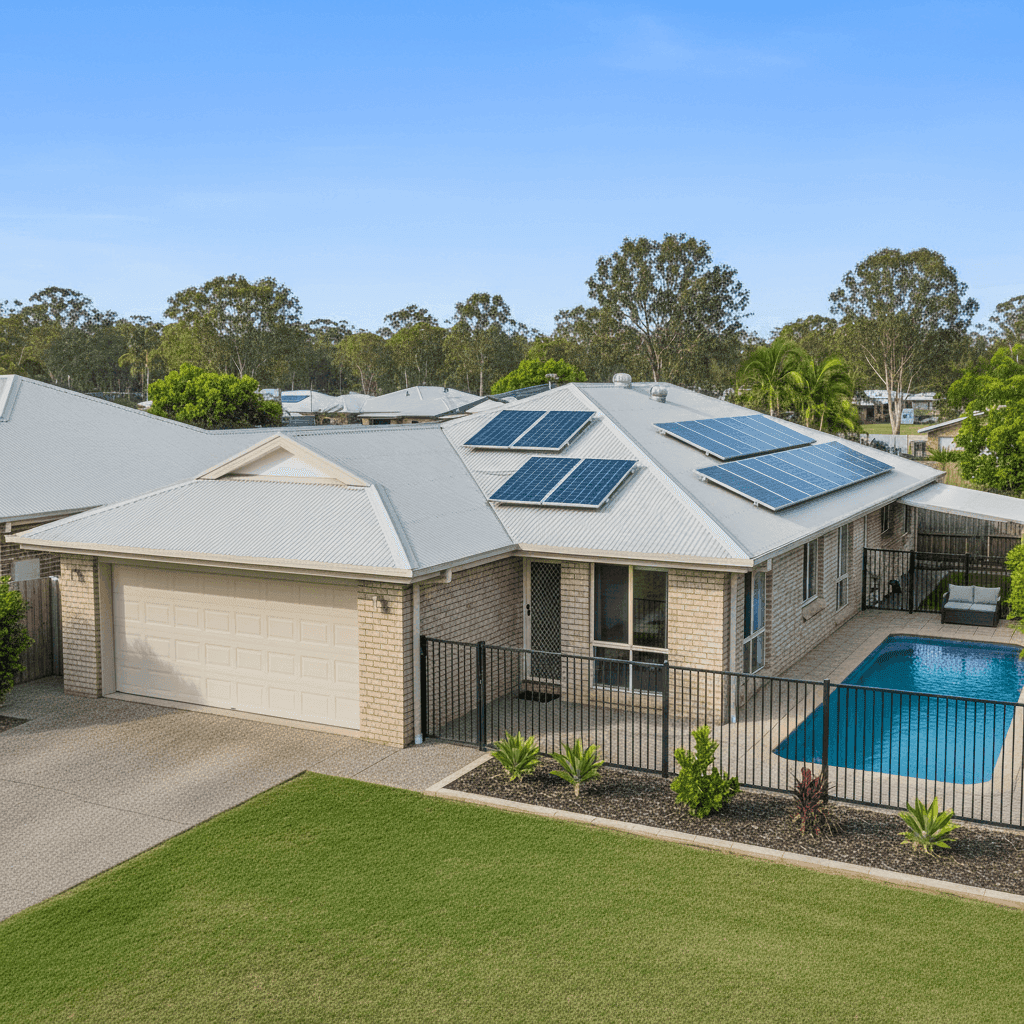
If you own a free standing home in Rangewood, QLD 4817, you already know that insuring a property in regional Queensland comes with its own set of considerations — from tropical weather risks to the realities of rebuilding costs in areas away from major urban centres. This article breaks down a real home and contents insurance quote for a four-bedroom, double brick home in Rangewood, examines how the premium stacks up against local, state, and national benchmarks, and offers practical guidance for homeowners looking to get the best value from their cover.
---
Is This Quote Fair?
The annual premium on this quote comes in at $4,325 per year (or $414 per month), covering both building and contents for a 244 sqm free standing home. The building is insured for $1,101,000 and contents for $50,000, with a $1,000 excess applying to both.
Our independent price rating for this quote is FAIR — Around Average. That assessment holds up well when you place it in context. The Queensland state average for home and contents insurance sits at $4,547 per year, meaning this quote comes in roughly $222 below the state average — a meaningful saving, even if it doesn't look dramatic at first glance. Against the state median of $3,931, the premium is somewhat higher, which reflects the elevated risk profile of the property and its location rather than any particular inefficiency in pricing.
On a national scale, the gap is more pronounced. The national average premium is $2,965 per year, and the national median sits at $2,716. This quote is notably above both figures — but that's largely expected for a Queensland property with cyclone exposure, a pool, and a relatively high sum insured. In short, this is not an overpriced quote; it reflects genuine risk factors that push premiums higher in this part of Australia.
---
How Rangewood Compares
Without suburb-level comparison data available for Rangewood specifically, we can draw on the broader regional picture. The Charters Towers LGA average — the local government area in which Rangewood sits — is $3,995 per year. This quote of $4,325 sits about $330 above that LGA average, which is worth noting.
That said, LGA averages encompass a wide variety of properties — smaller homes, lower sum insureds, and varying risk profiles. A 244 sqm home with a pool, solar panels, and a building sum insured of over $1.1 million will naturally attract a higher premium than the typical property in the area. When you account for those features, the pricing looks reasonable.
For a broader picture of what homeowners across Queensland are paying, visit the QLD insurance stats page.
| Benchmark | Annual Premium |
|---|---|
| This Quote | $4,325 |
| QLD State Average | $4,547 |
| QLD State Median | $3,931 |
| Charters Towers LGA Average | $3,995 |
| National Average | $2,965 |
| National Median | $2,716 |
---
Property Features That Affect Your Premium
Several characteristics of this property have a direct bearing on the premium. Understanding them helps you appreciate why the quote lands where it does — and what levers you might have to adjust it.
Cyclone Risk Area
This is arguably the single biggest premium driver. Rangewood falls within a designated cyclone risk zone, which means insurers apply loading to account for the potential for wind and storm damage. Cyclone cover typically includes damage from high winds, flying debris, and associated flooding — all of which can be catastrophic for residential properties in tropical Queensland.
Double Brick Construction
Double brick walls are generally viewed favourably by insurers. They offer superior structural integrity compared to timber or lightweight cladding, and tend to perform better in high-wind events. This construction type can help moderate the premium relative to what it might otherwise be in a cyclone-prone area.
Steel/Colorbond Roof
Colorbond roofing is a common and practical choice in Queensland. It's durable, relatively low-maintenance, and performs reasonably well in storm conditions. Insurers generally regard it as a standard, acceptable roofing material — neither a significant risk loading nor a notable discount factor.
Swimming Pool
A pool adds to the insurable value of the property and introduces additional liability considerations. Pool equipment, fencing, and surrounds all contribute to rebuilding costs, which is reflected in the building sum insured and, consequently, the premium.
Solar Panels
Solar panels are now a standard feature on many Australian homes, but they do add to the replacement cost of a building. If panels are damaged by hail, storm, or fire, they can be expensive to replace — particularly larger systems. Their inclusion in the sum insured is appropriate and necessary.
Age and Construction (1985, Slab Foundation)
Built in 1985, this home is approaching 40 years old. Older homes can carry slightly higher risk in the eyes of insurers due to ageing plumbing, electrical systems, and building materials. The slab foundation is a neutral-to-positive factor — slabs are stable and generally less prone to subsidence than other foundation types in many Queensland soil conditions.
High Building Sum Insured
At $1,101,000, the building sum insured is substantial. This figure should reflect the full cost of rebuilding the property from scratch — including demolition, materials, labour, and professional fees. In regional Queensland, where trades and materials can carry a distance premium, a higher sum insured is often warranted. Underinsurance is a serious risk in this part of the country.
---
Tips for Homeowners in Rangewood
1. Review your sum insured annually Construction costs have risen significantly in recent years, particularly in regional areas. Make sure your building sum insured keeps pace with current rebuild costs — not just the market value of your home. Tools like the Cordell Sum Sure calculator can help you arrive at a more accurate figure.
2. Understand your cyclone excess Many policies in cyclone-prone areas include a separate, higher excess for cyclone-related claims. This can sometimes be several thousand dollars, separate from the standard building excess. Read your Product Disclosure Statement carefully so there are no surprises when you need to make a claim.
3. Consider whether your contents cover is adequate A $50,000 contents sum may be appropriate for some households, but it's worth doing a room-by-room inventory to verify. Electronics, appliances, furniture, clothing, and jewellery can add up quickly — and many homeowners discover they're underinsured on contents only after a loss event.
4. Compare quotes before renewal Insurers rarely reward loyalty with their best pricing. Before your policy renews each year, take the time to compare what's available in the market. Even a FAIR-rated quote may be improvable — and a 10–15% saving on a premium of this size translates to several hundred dollars a year.
---
Ready to Compare?
Whether you're reviewing your current policy or shopping for cover for the first time, comparing quotes is the smartest move you can make. Get a home insurance quote at CoverClub and see how your premium stacks up against the market — it takes just a few minutes and could save you significantly at renewal time.