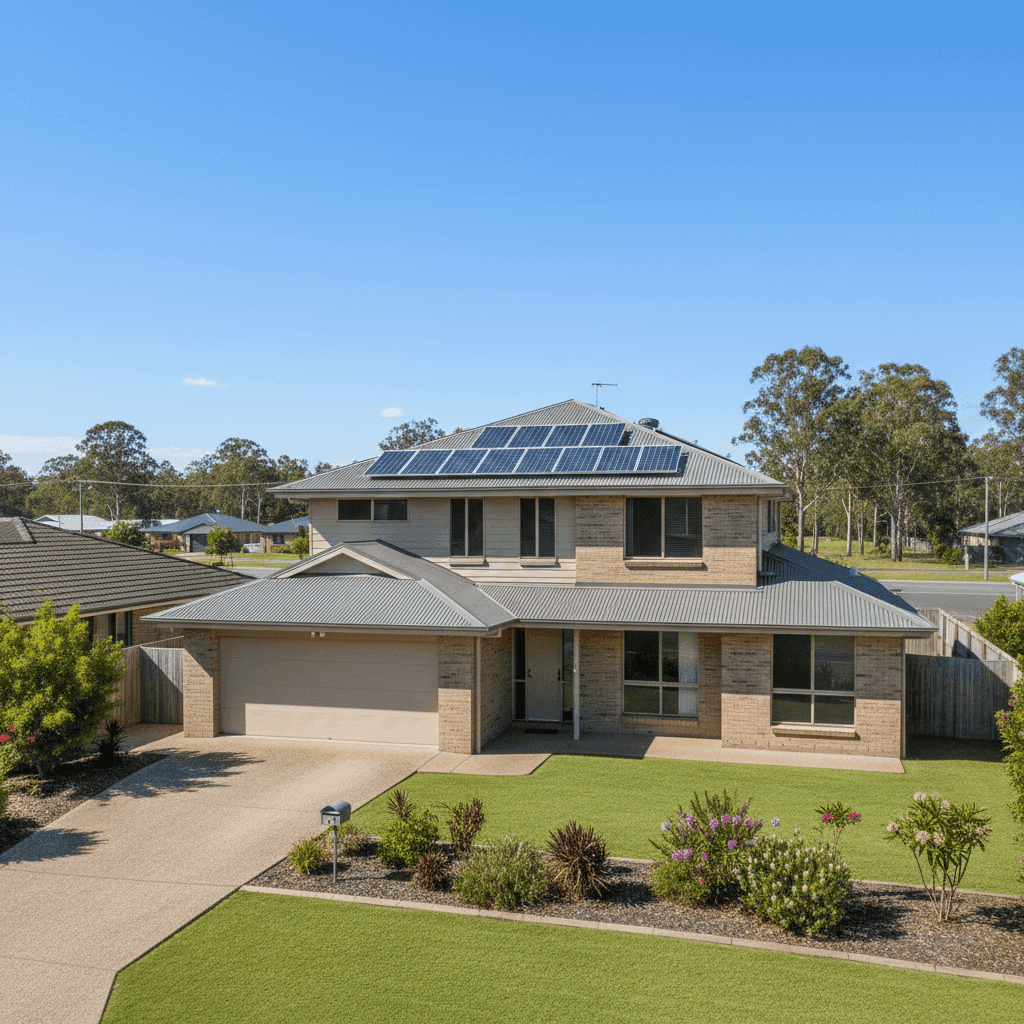
If you own a free standing home in Rangewood, QLD 4817, you already know that insuring a property in North Queensland comes with its own set of considerations — from cyclone season to the sheer cost of rebuilding in a regional area. This article breaks down a real building insurance quote for a four-bedroom, double brick home in Rangewood, compares it against suburb, state, and national benchmarks, and offers practical tips to help you get the best value from your policy.
---
Is This Quote Fair?
The quote in question is $3,331 per year (or $325/month) for building-only cover on a 214 sqm free standing home with a sum insured of $679,000 and a building excess of $5,000.
Our price rating for this quote is CHEAP — below the suburb average — and the data backs that up convincingly.
The average premium paid by homeowners in Rangewood sits at $4,701 per year, meaning this quote comes in roughly $1,370 below what most neighbours are paying. Even compared to the suburb's 25th percentile — the point at which only 25% of quotes are cheaper — this policy at $3,331 sits just below the $3,614 mark, confirming it is genuinely competitive rather than just slightly under average.
For a property in a cyclone risk zone, securing cover below the suburb's lower quartile is a notable result. Insurers price cyclone-prone postcodes aggressively, so a premium this far below the local average deserves a second look to ensure the policy terms, exclusions, and sum insured are appropriate — but on price alone, this is a strong outcome.
---
How Rangewood Compares
Understanding where your premium sits relative to broader benchmarks gives important context. Here's how Rangewood stacks up:
| Benchmark | Premium |
|---|---|
| This quote | $3,331/yr |
| Rangewood suburb average | $4,701/yr |
| Rangewood suburb median | $4,160/yr |
| Rangewood 25th percentile | $3,614/yr |
| Rangewood 75th percentile | $5,373/yr |
| LGA (Charters Towers) average | $4,457/yr |
| QLD state average | $9,129/yr |
| QLD state median | $3,903/yr |
| National average | $5,347/yr |
| National median | $2,764/yr |
(Based on 13 quotes sampled for the Rangewood suburb.)
A few things stand out here. Queensland's state average of $9,129/yr is extraordinarily high compared to both the national average and the local suburb figures — a reflection of the enormous variation in premiums across QLD, where far-north coastal and flood-prone properties can attract eye-watering premiums that pull the average upward. The QLD median of $3,903/yr is a more representative figure for typical Queensland homeowners, and this quote sits comfortably below even that.
Against the national average of $5,347/yr, this quote is 38% cheaper. However, the national median of $2,764/yr is lower — a reminder that many Australian homeowners in lower-risk areas (think suburban Melbourne or Adelaide) pay considerably less. For a cyclone-risk postcode in regional Queensland, a premium under $3,400 is genuinely competitive.
You can explore full pricing data for this area at the Rangewood suburb stats page, or broaden your view with QLD state insurance stats and national home insurance benchmarks.
---
Property Features That Affect Your Premium
Every detail of a home influences how an insurer calculates risk. Here's how the key features of this Rangewood property play into the pricing:
Double Brick External Walls
Double brick construction is generally viewed favourably by insurers. It offers superior structural integrity, better resistance to wind and impact damage, and improved fire resistance compared to lightweight cladding or timber weatherboard. In a cyclone-risk area, this is a meaningful advantage.
Steel / Colorbond Roof
Colorbond steel roofing is a popular choice in Queensland for good reason — it is lightweight, durable, and performs well in high-wind events when properly installed and maintained. Insurers typically view it positively, though the condition and age of the roof (the home was built in 1988) may be a factor some insurers assess at claim time.
Slab Foundation & Tile Flooring
A concrete slab foundation provides stability and reduces the risk of subsidence or pest-related structural damage. Combined with tile flooring, the property has a lower susceptibility to water damage from minor flooding or leaks compared to homes with timber subfloors and carpet.
Solar Panels
The presence of solar panels adds to the replacement cost of the home and is worth confirming is captured within the $679,000 sum insured. Some policies cover rooftop solar as part of the building, while others treat it separately — it's worth checking the product disclosure statement (PDS) carefully.
Ducted Climate Control
Ducted air conditioning systems represent a significant fixed asset within the building. Like solar panels, it's important to verify that the system is included in the building sum insured rather than classified as contents.
Cyclone Risk Area
This is arguably the single biggest pricing factor for this property. Rangewood falls within a cyclone risk zone, which typically triggers higher base premiums and specific policy conditions around cyclone cover, including potentially separate cyclone excesses. The fact that this quote remains below the suburb average despite the cyclone risk designation suggests the insurer has assessed the property's construction features (double brick, Colorbond roof, slab) favourably.
Age of Construction: 1988
At approximately 37 years old, the property is well-established. Some insurers apply loading to older homes due to the potential for aging electrical wiring, plumbing, or roofing materials. Keeping maintenance records and having recent electrical and plumbing inspections can help demonstrate the home's upkeep.
---
Tips for Homeowners in Rangewood
1. Review Your Sum Insured Annually
With building costs rising across Queensland, the cost to rebuild a 214 sqm home can shift significantly year to year. A sum insured of $679,000 may be appropriate today but could fall short in two or three years. Use a building cost calculator annually and adjust your cover accordingly — being underinsured at claim time is a costly mistake.
2. Confirm Cyclone-Specific Policy Conditions
Not all policies treat cyclone damage the same way. Some apply a separate cyclone excess (often a percentage of the sum insured rather than a flat dollar amount), and others impose waiting periods before cyclone cover activates on a new policy. Read the PDS carefully and ask your insurer directly about how cyclone events are handled.
3. Check That Solar Panels Are Covered
As noted above, solar panels are sometimes excluded from standard building cover or subject to sub-limits. Given the cost of a typical rooftop solar system, it's worth a five-minute phone call to confirm your panels are fully covered under the building sum insured.
4. Don't Auto-Renew Without Comparing
Even if your current premium is competitive, the home insurance market changes every year. Insurers reprice based on claims data, reinsurance costs, and risk modelling — meaning a great deal this year may not be next year. Set a reminder to compare quotes at CoverClub before each renewal to ensure you're still getting value.
---
Ready to Compare?
Whether you're reviewing an existing policy or shopping for cover for the first time, CoverClub makes it easy to see how your premium stacks up. Get a quote today at CoverClub and find out if you could be paying less for the same level of protection — or getting more cover for what you're already spending.