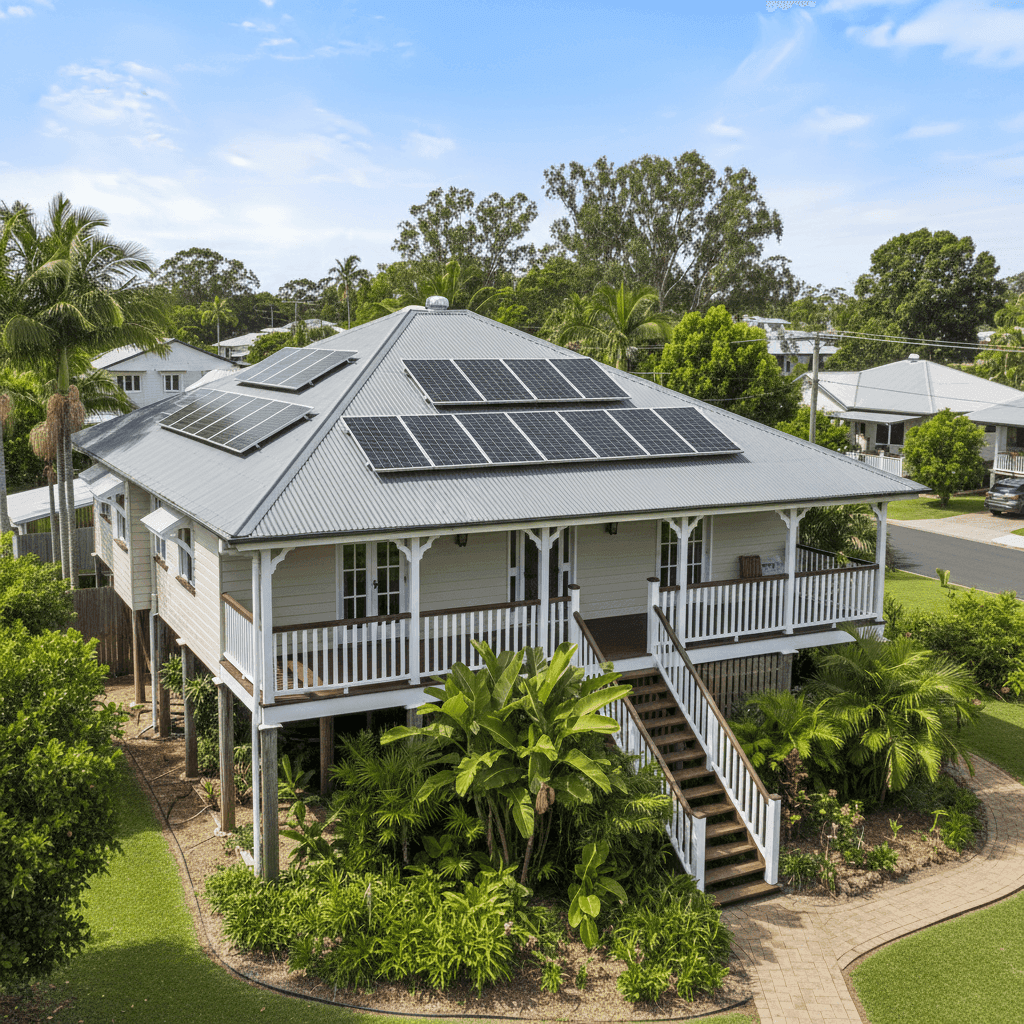
Rapid Creek is a leafy, established suburb sitting just north of Darwin's CBD, popular with families and long-term Darwin residents alike. For owners of free standing homes in this part of the Northern Territory, understanding what drives your home insurance premium — and whether you're paying a fair price — can make a real difference to your household budget. This article breaks down a real building-only insurance quote for a four-bedroom, two-bathroom free standing home in Rapid Creek, NT 0810 and puts it in context against local, state, and national benchmarks.
---
Is This Quote Fair?
The quote in focus comes in at $3,996 per year (or $376 per month) for building-only cover on a 214 sqm free standing home insured for $698,000, with a $1,000 building excess. CoverClub rates this as CHEAP — below the suburb average — and it's not hard to see why.
The suburb average premium for comparable properties in Rapid Creek sits at $5,631 per year, with a median of $5,550. Even the cheapest quarter of quotes in the area (the 25th percentile) comes in at $5,261 — meaning this quote is comfortably below what most homeowners nearby are paying. In practical terms, this policy is saving the homeowner roughly $1,600 per year compared to the typical Rapid Creek quote.
That's a meaningful saving, and it underscores why shopping around — rather than simply renewing with your existing insurer — can pay off substantially, especially in a high-risk region like the Top End.
---
How Rapid Creek Compares
To appreciate just how competitive this quote is, it helps to zoom out and look at the broader picture.
| Benchmark | Premium |
|---|---|
| This quote | $3,996/yr |
| Rapid Creek suburb average | $5,631/yr |
| Rapid Creek suburb median | $5,550/yr |
| NT state average | $10,773/yr |
| NT state median | $3,402/yr |
| Darwin LGA average | $15,687/yr |
| National average | $5,347/yr |
| National median | $2,764/yr |
A few things stand out here. The NT state average of $10,773 per year is extraordinarily high — nearly double the national average of $5,347 — reflecting the elevated risk profile of the Territory, particularly around cyclones, flooding, and storm damage. The Darwin LGA average of $15,687 is even more striking, driven in part by higher-value properties and greater exposure to severe weather events.
The fact that this Rapid Creek quote sits well below both the suburb average and the NT state average is a strong indicator that the homeowner has found genuine value. It's worth noting, however, that the NT state median of $3,402 is actually lower than this quote — which tells us the NT market is heavily skewed by some very expensive policies at the top end, pulling the average up significantly.
For more detailed suburb-level data, visit the Rapid Creek insurance stats page.
---
Property Features That Affect Your Premium
Several characteristics of this property have a direct bearing on how insurers price the risk — and in this case, some features cut both ways.
Cyclone Risk Area
This is the single biggest factor for any Darwin property. Rapid Creek falls within a designated cyclone risk zone, and insurers price this in heavily. Cyclone damage can be catastrophic and widespread, which is why NT premiums trend so much higher than the national average. Any quote that comes in below the suburb average in this context deserves a close look at what's actually covered.
Elevated on Stumps
The home is elevated by at least one metre on a stump foundation — a classic Queenslander-style design that's well-suited to the Top End climate. Elevation helps with airflow and reduces the risk of inundation during the wet season's heavy rainfall events. Insurers generally view this positively, as it lowers the likelihood of flood and water damage claims.
Steel/Colorbond Roof
A Colorbond roof is considered a durable, low-maintenance choice that performs well in tropical conditions. It's resistant to corrosion and holds up better than some alternatives during high-wind events — a relevant consideration in a cyclone-prone area.
Solar Panels
The presence of solar panels adds to the replacement cost of the building and is factored into the sum insured. It's important to confirm with your insurer that solar panels are explicitly covered under your policy, as some policies treat them as an optional extra or exclude damage caused by specific events.
Ducted Climate Control
Ducted air conditioning is a significant fixed asset in a home of this size. Like solar panels, it contributes to the overall rebuild cost and should be reflected in your sum insured figure. In Darwin's climate, climate control isn't a luxury — it's essential — so ensuring it's adequately covered matters.
Construction Era (1975)
A home built in 1975 predates modern cyclone-resistant building codes introduced in Darwin following Cyclone Tracy in December 1974. While many homes of this era have since been upgraded, insurers may factor in the age and construction standards when assessing risk. It's worth reviewing whether any cyclone-proofing upgrades have been made, as these can influence your premium.
Timber/Laminate Flooring
Timber and laminate floors are susceptible to water damage, which is a real consideration in the wet season. This is worth keeping in mind when reviewing the scope of your cover.
---
Tips for Homeowners in Rapid Creek
1. Review your sum insured annually Building costs in the NT have risen sharply in recent years. A sum insured of $698,000 for a 214 sqm home may be appropriate today, but it's worth recalculating your estimated rebuild cost each year — particularly given the cost of materials and labour in Darwin. Being underinsured in the event of a total loss is a risk no homeowner wants to take.
2. Confirm cyclone cover details Not all policies treat cyclone damage the same way. Some apply a separate cyclone excess, while others have specific exclusions around storm surge or flooding associated with cyclonic events. Read the Product Disclosure Statement (PDS) carefully and ask your insurer directly about what's covered — and what isn't — in a cyclone scenario.
3. Check your solar panel and ducted AC coverage Given that both solar panels and ducted climate control are present in this home, it's worth verifying these are explicitly listed as covered items in your policy. Some standard building policies cover them automatically; others require you to declare them or pay an additional premium.
4. Don't auto-renew without comparing This quote is already below the suburb average, but that doesn't mean it's the best available price every year. Insurers regularly adjust their pricing models, and the competitive landscape shifts. Taking 15 minutes to compare quotes at renewal time — especially in a high-premium market like Darwin — can save you hundreds of dollars annually.
---
Ready to Compare?
Whether you're a first-time buyer in Rapid Creek or a long-term homeowner looking to cut costs, comparing quotes is the smartest move you can make. CoverClub makes it easy to see what multiple insurers would charge for your specific property — so you're never paying more than you need to. Get a quote today at CoverClub and find out where your premium really sits.