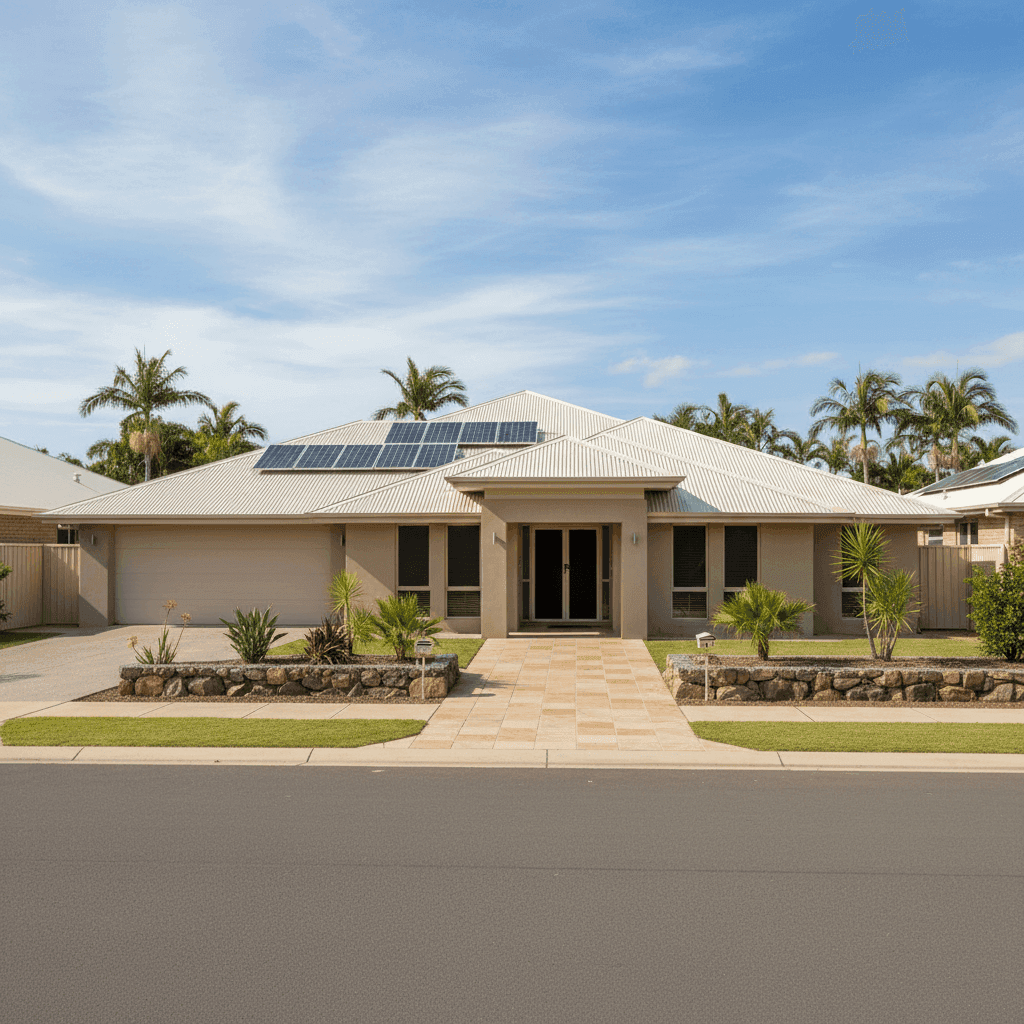
If you own a free standing home in Rasmussen, QLD 4815, you already know that insuring your property comes with some unique considerations — not least of which is the area's exposure to cyclone risk. This article takes a close look at a recent building insurance quote for a five-bedroom, two-bathroom home in the suburb, breaks down how that premium stacks up against local, state and national benchmarks, and offers practical advice for homeowners looking to get better value from their cover.
---
Is This Quote Fair?
The quote in question comes in at $6,324 per year (or $606 per month) for building-only cover on a 214 sqm free standing home with a sum insured of $400,000. Our price rating for this quote is Expensive — Above Average.
To put that in perspective, the suburb average premium in Rasmussen sits at $3,079 per year, with a median of $2,737. This quote is more than double the local median, which is a significant gap worth investigating before you simply accept renewal.
That said, context matters. Rasmussen falls within the Townsville LGA, where the average premium is $7,340 per year — so while this quote is above the suburb average, it's actually below the broader LGA average. Cyclone-prone regions in North Queensland consistently attract higher premiums across the board, and insurers price this risk heavily into their models.
---
How Rasmussen Compares
Understanding where your premium sits relative to broader benchmarks is one of the most useful things you can do as a homeowner. Here's how the numbers line up:
| Benchmark | Premium |
|---|---|
| This quote | $6,324 / yr |
| Rasmussen suburb average | $3,079 / yr |
| Rasmussen suburb median | $2,737 / yr |
| Rasmussen 25th percentile | $2,092 / yr |
| Rasmussen 75th percentile | $3,848 / yr |
| Townsville LGA average | $7,340 / yr |
| QLD state average | $9,129 / yr |
| QLD state median | $3,903 / yr |
| National average | $5,347 / yr |
| National median | $2,764 / yr |
A few things stand out here. First, the QLD state average of $9,129 is dramatically higher than the state median of $3,903 — a sign that a relatively small number of very high-risk properties (think beachfront or flood-prone homes in cyclone corridors) are pulling the average upward. The same dynamic plays out at the national level, where the average ($5,347) is nearly double the median ($2,764).
For Rasmussen specifically, the sample of 18 quotes shows a fairly wide spread — from $2,092 at the 25th percentile to $3,848 at the 75th. This quote, at $6,324, sits well above the 75th percentile for the suburb, suggesting there may be room to shop around, even accounting for this property's specific risk profile.
---
Property Features That Affect Your Premium
Several characteristics of this particular home will be influencing the premium — some pushing it higher, others potentially working in the homeowner's favour.
Cyclone Risk Area
This is the single biggest factor. Rasmussen is located in a designated cyclone risk zone, and insurers apply significant loadings to properties in these regions. Cyclone cover typically includes damage from wind, rain and storm surge associated with tropical weather events, and the claims exposure in North Queensland is well-documented. This loading alone can account for thousands of dollars in additional annual premium.
Concrete External Walls
Concrete construction is generally viewed favourably by insurers. It's more resistant to wind, fire and impact damage than timber weatherboard, which can translate to a lower base rate. For a cyclone-prone area, this is a meaningful advantage.
Steel / Colorbond Roof
Colorbond roofing is a popular choice in Queensland for good reason — it's durable, lightweight and performs well in high-wind conditions. Insurers typically regard it positively compared to older roofing materials, though any roof in a cyclone zone will still attract scrutiny.
Slab Foundation & Tile Flooring
A concrete slab foundation provides solid structural integrity and reduces the risk of subsidence or pest-related damage. Tiled flooring is also durable and low-maintenance, which can be a minor positive in the insurer's risk assessment.
Solar Panels
Solar panels are now a standard feature on many Queensland homes, but they do add to the replacement cost of the building. If your sum insured doesn't account for the full cost of replacing your panels, you could be underinsured. It's worth confirming that your $400,000 sum insured adequately covers the panels as part of the building.
Ducted Climate Control
Ducted air conditioning systems are another item that contributes to the overall replacement cost. Like solar panels, these should be factored into your sum insured calculation to avoid a shortfall at claim time.
Building Size & Age
At 214 sqm and built in 2011, this is a relatively modern, mid-to-large sized home. Newer builds tend to benefit from updated building codes — particularly important in Queensland, where cyclone construction standards were significantly strengthened after Cyclone Tracy. The 2011 construction date means this home was built under robust modern standards, which may offer some premium relief.
---
Tips for Homeowners in Rasmussen
1. Shop the Market — Seriously
With this quote sitting well above the suburb's 75th percentile, comparing quotes from multiple insurers is not optional — it's essential. Premiums for the same property can vary by thousands of dollars depending on the insurer's risk appetite and pricing model. Get a comparison quote at CoverClub to see what else is available for your address.
2. Review Your Sum Insured Carefully
A sum insured of $400,000 for a 214 sqm concrete home with solar panels and ducted air conditioning in QLD is worth double-checking. Use a building cost calculator or speak with a quantity surveyor to ensure your figure reflects true replacement cost — not market value. Being underinsured can leave you significantly out of pocket after a major event.
3. Consider Your Excess Strategy
This quote carries a $5,000 building excess. A higher excess generally lowers your premium, but it also means a larger out-of-pocket expense if you need to claim. In a cyclone-prone area where claims can be substantial, make sure you have the liquidity to cover that excess without financial stress. If you don't, it may be worth requesting quotes with a lower excess to compare the trade-off.
4. Ask About Cyclone-Specific Discounts
Some insurers offer discounts for homes that meet or exceed cyclone-resistance standards — including concrete construction, Colorbond roofing and compliance with modern building codes. Given that this home ticks several of those boxes, it's worth asking insurers directly whether any of these features are being recognised in the pricing.
---
Find a Better Deal with CoverClub
Whether you're renewing your policy or shopping for the first time, comparing quotes is the most effective way to make sure you're not overpaying. CoverClub aggregates real premium data from across Australia so you can see exactly how your quote stacks up — and find better options fast. Start your comparison at CoverClub and see what homeowners in Rasmussen are actually paying for their cover.
You can also explore detailed premium data for Rasmussen and surrounding suburbs, the broader Queensland insurance market, or national home insurance trends.