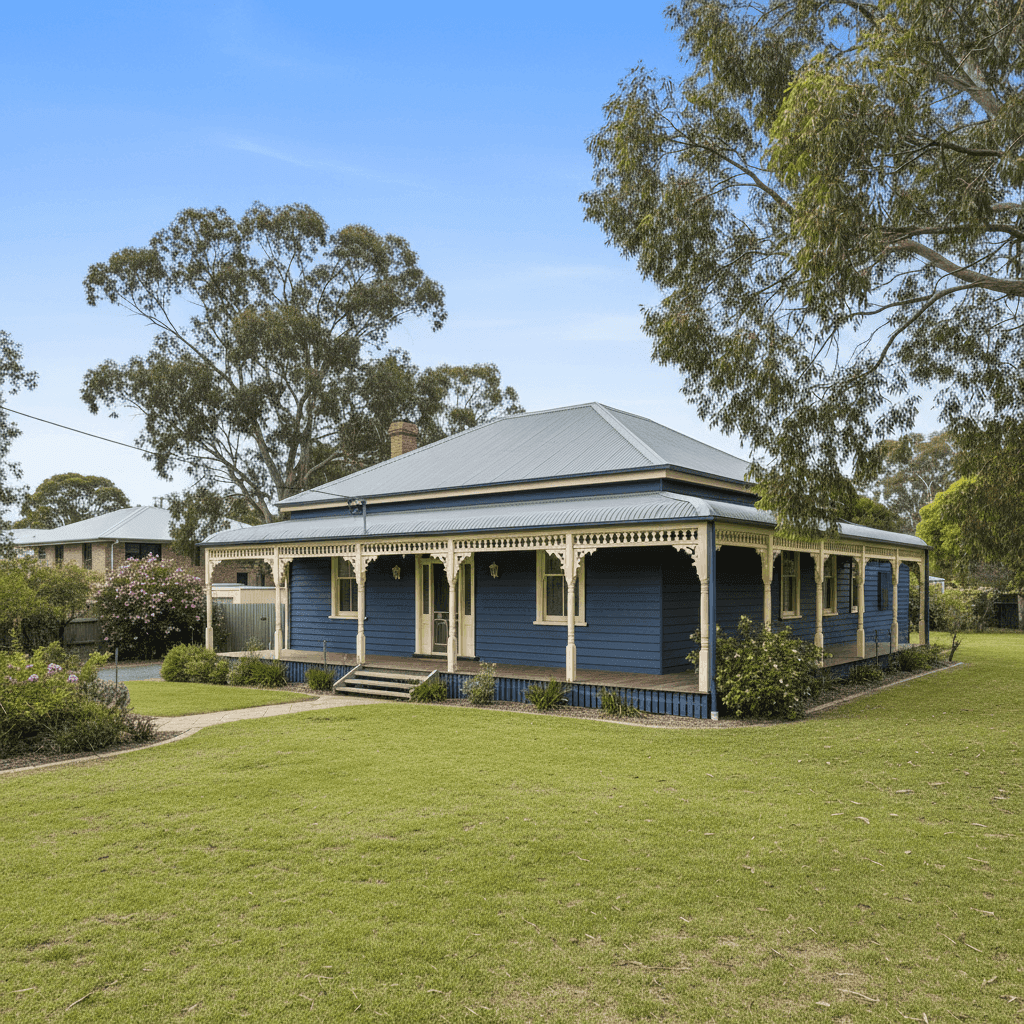
Raymond Terrace, nestled in the Hunter Valley region of New South Wales, is a suburb with genuine character — and nowhere is that more evident than in its older housing stock. This analysis looks at a home and contents insurance quote for a five-bedroom, two-bathroom free-standing home in Raymond Terrace (NSW 2324), a property that dates back to 1870 and carries heritage listing status. With weatherboard timber walls, a Colorbond steel roof, and stump foundations, this is exactly the kind of home that tells a story — but it also comes with some unique insurance considerations.
---
Is This Quote Fair?
The annual premium for this property came in at $10,184 per year (or $976/month), covering a building sum insured of $1,802,000 and $50,000 in contents. Our analysis rates this quote as Expensive — Above Average.
To put that in perspective, the suburb average for Raymond Terrace sits at just $2,377 per year, with a median of $2,032. Even at the 75th percentile — meaning 75% of quotes in the area are cheaper — the figure is only $2,853. This quote is more than three times the suburb's 75th percentile, which is a significant gap by any measure.
That said, context matters enormously here. The building sum insured of $1,802,000 is substantially higher than what most homes in the suburb are insured for, and the heritage listing on this property introduces a layer of complexity that standard homes simply don't face. Insurers price heritage properties differently because rebuilding or repairing them to heritage specifications can be far more expensive than standard construction — and that cost is baked into the premium.
So while the price tag is high, it's not entirely without justification. The question every homeowner should ask is: am I getting the right cover for what I'm paying?
---
How Raymond Terrace Compares
Understanding where Raymond Terrace sits in the broader insurance landscape helps put any individual quote into context.
| Benchmark | Average Premium | Median Premium |
|---|---|---|
| Raymond Terrace (2324) | $2,377/yr | $2,032/yr |
| LGA (Maitland) | $4,142/yr | — |
| NSW State | $3,801/yr | $3,410/yr |
| National | $2,965/yr | $2,716/yr |
Interestingly, Raymond Terrace's suburb-level averages are notably below both the NSW state average and the national average. This suggests that, as a postcode, 2324 is generally considered a relatively affordable area to insure — at least for typical properties. The Maitland LGA average of $4,142, however, is higher than the NSW state figure, indicating that some properties within the broader local government area attract elevated premiums.
For a heritage-listed home with a high sum insured, sitting well above the LGA average is understandable. But it does highlight why it's so important to shop around — premiums for the same property can vary dramatically between insurers, particularly for non-standard homes.
---
Property Features That Affect Your Premium
Several characteristics of this particular home have a direct influence on the premium quoted. Here's what's at play:
Heritage Listing
This is arguably the single biggest factor. Heritage-listed properties must be restored using period-appropriate materials and methods when damaged, which can cost significantly more than modern repairs. Insurers account for this by increasing premiums and, in some cases, limiting the policies they're willing to offer at all.
Construction Age (1870)
A home built in 1870 is over 150 years old. While well-maintained older homes can be structurally sound, ageing wiring, plumbing, and building materials introduce greater risk of damage and more complex (and costly) claims. This is a key underwriting consideration for any insurer.
Weatherboard Timber Walls
Timber weatherboard is a classic Australian building material, particularly common in heritage homes. However, it carries a higher fire risk rating than brick or rendered masonry, which typically pushes premiums upward. It also requires more maintenance to prevent rot and deterioration.
Stump Foundations
Homes on stumps (or piers) can be more susceptible to movement, particularly in areas with reactive soils or where the stumps themselves are ageing. This increases the risk of structural claims and is a factor insurers weigh carefully.
High Building Sum Insured ($1,802,000)
The sum insured directly drives the premium. A higher insured value means a larger potential payout, so the insurer charges more to carry that risk. For heritage homes, the replacement cost is genuinely high — so underinsuring to reduce premiums would be a costly mistake.
Ducted Climate Control
The presence of ducted air conditioning adds to the overall insured value of the home's fixtures and fittings, contributing modestly to the premium.
Colorbond Steel Roof
On the positive side, a Colorbond steel roof is generally viewed favourably by insurers. It's durable, fire-resistant, and low-maintenance compared to older roofing materials like terracotta tiles or corrugated iron, which may help offset some of the premium pressure from other risk factors.
---
Tips for Homeowners in Raymond Terrace
If you own a heritage or older home in Raymond Terrace, here are some practical steps to make sure you're getting the best outcome from your insurance:
- Get a professional building valuation. Heritage homes are notoriously difficult to value accurately. An independent quantity surveyor or heritage building specialist can help you determine the correct sum insured — avoiding both underinsurance (which can leave you out of pocket after a claim) and overinsurance (which unnecessarily inflates your premium).
- Maintain your property proactively. Insurers look favourably on well-maintained homes. Keeping your timber weatherboards painted and sealed, ensuring your stumps are in good condition, and regularly servicing your electrical and plumbing systems can reduce your risk profile — and may be required to keep your policy valid.
- Compare multiple insurers who specialise in heritage properties. Not all insurers are comfortable with heritage-listed homes, and those that are will price the risk very differently. Using a comparison platform like CoverClub gives you visibility across multiple providers so you're not stuck with the first quote you receive.
- Review your contents cover separately. With a $50,000 contents sum insured on a five-bedroom home, it's worth taking stock of whether this figure accurately reflects what you own. Contents are often underestimated — and a shortfall at claim time can be painful.
---
Compare Your Options with CoverClub
Whether you're insuring a heritage treasure or a modern build, paying more than you need to is never the goal. CoverClub makes it easy to compare home and contents insurance quotes from multiple Australian insurers in one place — so you can see exactly where your premium sits and whether there's a better deal available. For Raymond Terrace homeowners, especially those with older or heritage-listed properties, a few minutes of comparison could make a meaningful difference to what you pay each year.