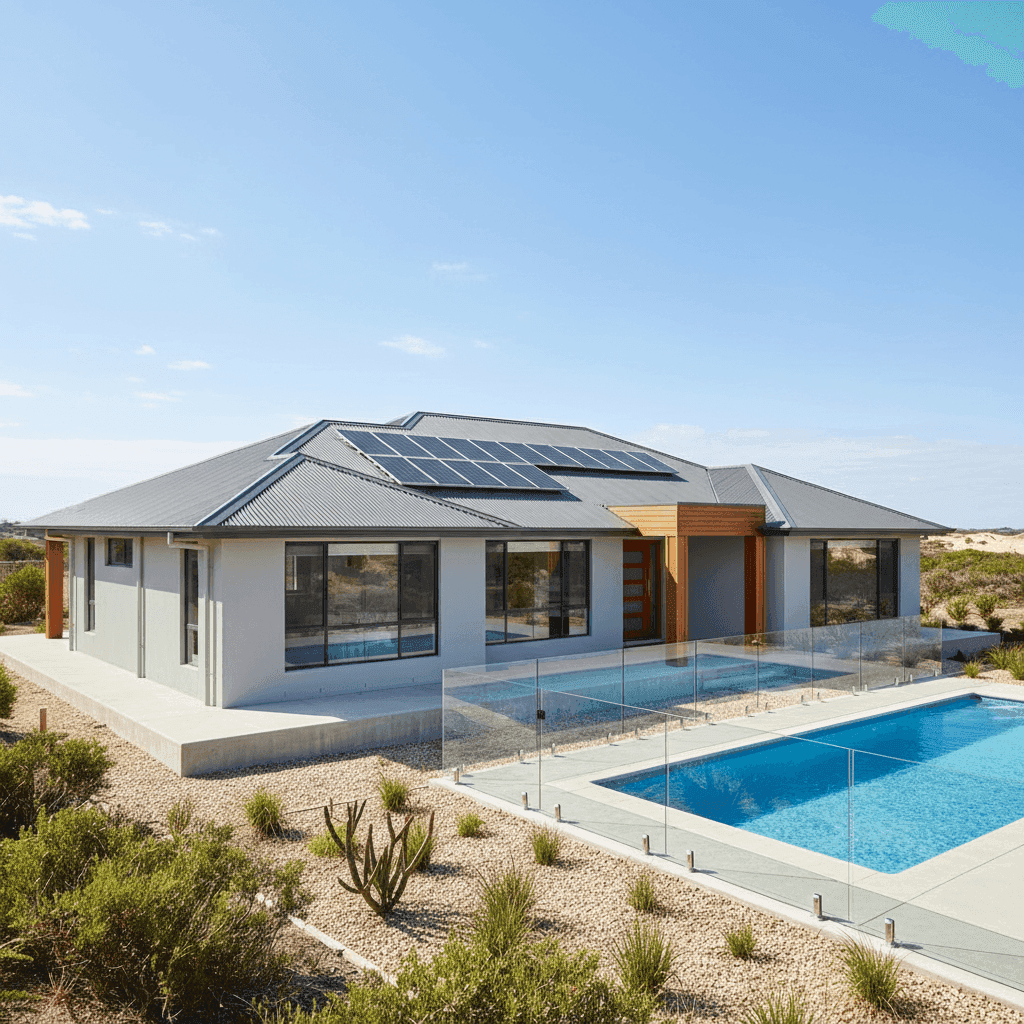
Red Head is a coastal village on the mid-north coast of New South Wales, nestled within the Mid-Coast Council local government area. It's a sought-after location — close to beaches, surrounded by natural bushland, and a popular destination for both permanent residents and holiday homeowners. If you own a free standing home here, understanding what you should be paying for home and contents insurance is an important part of protecting one of your most significant assets.
This article breaks down a real home insurance quote for a 3-bedroom, 2-bathroom free standing home in Red Head (postcode 2430), and puts the numbers in context so you can make a more informed decision.
---
Is This Quote Fair?
The quote in question comes in at $3,674 per year (or $352 per month) for combined home and contents cover, with a building sum insured of $1,249,000 and contents valued at $105,000. Both the building and contents excess are set at $1,000.
Our price rating for this quote is FAIR — Around Average, and the data backs that up. Looking at suburb-level statistics for Red Head (2430), the average premium across 36 quotes sits at $3,295 per year, with a median of $3,185. This quote lands above both of those figures, but it's well within the suburb's interquartile range — the 25th percentile is $2,609 and the 75th is $3,930. In other words, this premium is solidly in the middle of what Red Head homeowners are actually paying, which is exactly what a "fair" rating reflects.
It's worth noting that a higher sum insured (at $1,249,000 for the building alone) will naturally push a premium upward compared to properties insured for less. For a newly built home of 235 sqm with above-average fittings and features like a pool, solar panels, and ducted climate control, that level of cover is entirely reasonable.
---
How Red Head Compares
One of the most striking things about this quote is how favourably Red Head compares to broader benchmarks. Here's a quick snapshot:
| Benchmark | Average Premium | Median Premium |
|---|---|---|
| Red Head (2430) | $3,295/yr | $3,185/yr |
| Mid-Coast LGA | $5,840/yr | — |
| NSW | $9,528/yr | $3,770/yr |
| National | $5,347/yr | $2,764/yr |
The NSW state average of $9,528 is heavily skewed by high-value properties and elevated-risk suburbs across the state — the median of $3,770 is a more representative figure, and Red Head sits comfortably below it. Compared to the national average of $5,347, Red Head again looks very affordable. Even within the Mid-Coast LGA — where the average jumps to $5,840 — Red Head stands out as a relatively cost-effective suburb to insure.
This suggests that while Red Head carries some coastal and bushfire-adjacent risk, it doesn't attract the severe premium loading seen in many other parts of NSW and Australia more broadly.
---
Property Features That Affect Your Premium
Several characteristics of this property play a meaningful role in how the premium is calculated.
Newly built construction (2025): Brand-new homes are generally viewed favourably by insurers. Modern building codes mean better structural integrity, improved fire resistance, and up-to-date electrical and plumbing systems — all of which reduce the likelihood of a claim.
Steel/Colorbond roof: Colorbond roofing is widely regarded as one of the most insurer-friendly roof types in Australia. It's durable, low-maintenance, resistant to fire and corrosion, and performs well in coastal environments where salt air can degrade other materials.
Slab foundation and tiled flooring: A concrete slab foundation is a solid, low-risk base that's resistant to subsidence and pest damage. Combined with tile flooring throughout, this property presents a profile that minimises water damage and structural risk concerns.
Swimming pool: A pool adds value to the property but also introduces liability considerations. Insurers factor in the replacement cost of pool infrastructure, as well as the potential for associated liability claims.
Solar panels: Solar systems are now a standard inclusion in many modern homes, but they do add to the replacement cost of the building. Ensuring your sum insured accounts for the full value of your solar installation is important — underinsurance is a common and costly mistake.
Ducted climate control: As with solar, ducted air conditioning is a significant fixed asset that forms part of the building's insured value. It's a mark of above-average fittings quality, which this property is rated for.
Above-average fittings: Higher-quality fixtures, finishes, and appliances cost more to replace. Insurers price this into the premium, and it's one of the reasons this property commands a higher sum insured relative to a standard 3-bedroom home.
---
Tips for Homeowners in Red Head
1. Review your sum insured annually. Building costs have risen significantly in recent years. A sum insured of $1,249,000 may be appropriate today, but construction costs can shift quickly. Use a building cost calculator or speak with a quantity surveyor to make sure you're not underinsured — especially with a newly built, above-average-quality home.
2. Document your contents carefully. With $105,000 in contents cover, it's worth keeping an up-to-date home inventory — photos, receipts, and serial numbers for valuables. This makes the claims process significantly smoother and helps ensure you're not underestimating what you own.
3. Ask about discounts for security and safety features. Your new home may already have smoke alarms, security systems, or deadbolts that qualify you for premium discounts with some insurers. It's always worth asking — these savings aren't always applied automatically.
4. Compare quotes before your renewal date. Insurance premiums can vary significantly between providers for the same property. The "fair" rating on this quote means it's competitive, but that doesn't mean it's the best available. Shopping around at renewal — rather than simply auto-renewing — is one of the easiest ways to save money without reducing your cover.
---
Ready to Compare?
Whether you're reviewing an existing policy or shopping for cover on a new home, CoverClub makes it easy to see what the market looks like for your specific property. Get a home insurance quote today and compare it against real suburb-level data — so you always know where you stand.