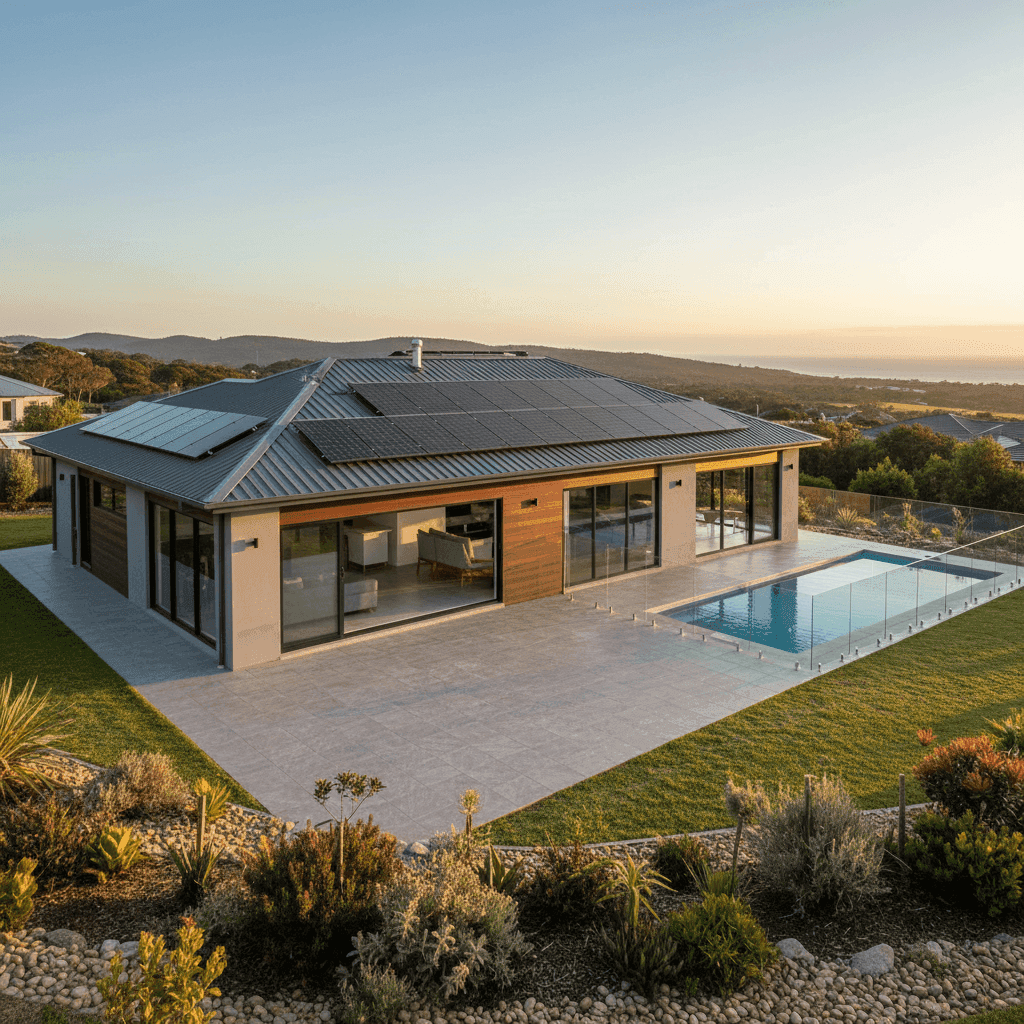
Red Head is a coastal village nestled within the Mid-Coast region of New South Wales, sitting just south of Forster-Tuncurry along one of the state's most scenic stretches of coastline. It's the kind of place where modern builds are increasingly common — and where getting the right home insurance cover is just as important as the ocean views. This article breaks down a real home and contents insurance quote for a free-standing home in Red Head (NSW 2430), examines how it stacks up against state and national benchmarks, and offers practical tips to help local homeowners get the best value from their policy.
---
Is This Quote Fair?
The quote in question comes in at $4,153 per year (or $398/month) for combined home and contents cover, with a building sum insured of $1,502,000 and contents valued at $97,000. Both the building and contents excess sit at $1,000 — a standard arrangement for a policy of this type.
Our pricing analysis rates this quote as CHEAP — below average for the area, which is genuinely good news for the homeowner. Given the relatively high building sum insured (over $1.5 million), a sub-$4,200 annual premium represents strong value. For context, this works out to roughly 0.28% of the total insured value per year — well within the range considered competitive for a modern, well-built home.
It's worth noting that a "cheap" rating doesn't mean the cover is inadequate. Rather, it signals that the premium is priced favourably relative to comparable properties and risk profiles in the region. Homeowners should always verify that the sum insured accurately reflects the full cost of rebuilding — not just the market value of the property — but if the numbers check out, this is a quote worth holding onto.
---
How Red Head Compares
Understanding where your premium sits relative to broader benchmarks helps you gauge whether you're being treated fairly by your insurer. Here's how this quote measures up:
| Benchmark | Annual Premium |
|---|---|
| This Quote | $4,153 |
| NSW State Average | $9,528 |
| NSW State Median | $3,770 |
| National Average | $5,347 |
| National Median | $2,764 |
| Mid-Coast LGA Average | $5,840 |
The quote sits 56% below the NSW state average and 22% below the Mid-Coast LGA average — both meaningful gaps. It's slightly above the NSW state median ($3,770) and the national median ($2,764), but those figures reflect a much broader mix of properties, many of which carry lower building sums insured. When you factor in the $1,502,000 building cover, paying $4,153 is genuinely competitive.
You can explore Red Head suburb insurance statistics, NSW state-wide data, and national insurance benchmarks on CoverClub to see how your own situation compares.
---
Property Features That Affect Your Premium
Every home is different, and insurers price risk based on a detailed picture of the property. Here are the key features of this particular home and how they likely influence the premium:
New Construction (Built 2025)
A brand-new home is one of the most favourable risk signals an insurer can see. Modern builds comply with current Australian Standards and the National Construction Code, meaning better structural integrity, updated electrical and plumbing systems, and materials that are less prone to failure. Insurers typically reward this with lower premiums.
Steel/Colorbond Roof
Colorbond steel roofing is highly regarded in the insurance world. It's fire-resistant, durable in high winds, and far less susceptible to storm damage than older tile or fibrous cement alternatives. In a coastal environment like Red Head, where salt air and occasional severe weather are facts of life, this is a meaningful risk reducer.
Slab Foundation & Tile Flooring
A concrete slab foundation provides excellent structural stability and eliminates the risk of subfloor moisture damage or pest intrusion that can affect homes on stumps or piers. Tiled flooring similarly reduces the risk of water damage claims — a common driver of contents and building payouts.
Above-Average Fittings Quality
Above-average fittings — think stone benchtops, quality cabinetry, premium tapware, and the like — increase the replacement cost of the home, which is reflected in the higher building sum insured. This can push premiums up, but it also ensures that in the event of a total loss, the homeowner can rebuild to the same standard.
Pool, Solar Panels & Ducted Climate Control
These three features add complexity to the insured asset. Swimming pools carry liability considerations and can be costly to repair or replace after storm or structural events. Solar panel systems represent significant capital value on the roof and need to be explicitly covered. Ducted climate control systems are expensive to repair and often underinsured. The fact that all three are presumably included in the sum insured makes the $4,153 premium even more impressive.
---
Tips for Homeowners in Red Head
1. Review your building sum insured annually. Construction costs have risen sharply across regional NSW in recent years. A sum insured that was accurate when you took out the policy may no longer reflect the true cost of rebuilding — particularly for a home with above-average fittings. Use a quantity surveyor's estimate or an insurer's building calculator to stay current.
2. Confirm your solar and pool are explicitly covered. Not all standard home insurance policies automatically cover solar panel systems or swimming pools to their full replacement value. Check your Product Disclosure Statement (PDS) carefully and ask your insurer to confirm the extent of cover for these features in writing.
3. Consider your excess strategy. A $1,000 excess is fairly standard, but homeowners who rarely claim may benefit from opting for a higher excess (say, $2,000–$2,500) in exchange for a lower annual premium. Conversely, if cash flow is a concern, keeping the excess lower provides more predictable out-of-pocket costs at claim time.
4. Compare at renewal, not just at sign-up. Insurers often offer their best pricing to new customers and quietly increase premiums at renewal. Set a reminder to compare quotes on CoverClub a few weeks before your policy renews — even a 10–15% saving on a $4,000+ premium is worth the effort.
---
Get a Quote for Your Red Head Home
Whether you're a first-time buyer in Red Head or a long-term local looking to benchmark your existing policy, CoverClub makes it easy to see what you should be paying. Our platform compares real quotes from leading Australian insurers, giving you transparent, suburb-level insight in minutes. Start your free quote today and find out if your current insurer is giving you a fair deal.