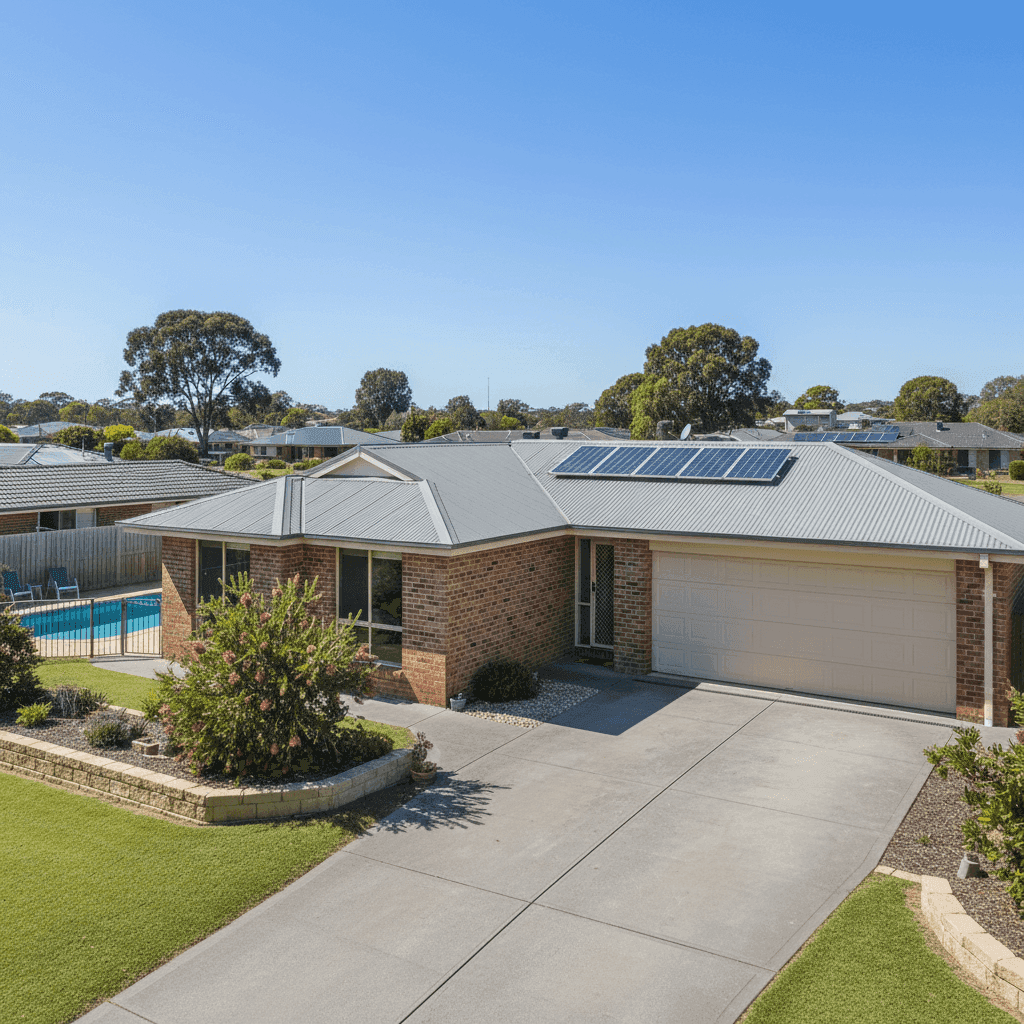
Red Head is a coastal suburb tucked along the Mid-Coast region of New South Wales, known for its relaxed beach lifestyle and scenic headland views. For owners of a free standing home in this area, understanding what you should be paying for home and contents insurance is just as important as finding the right cover. This article breaks down a recent quote for a 4-bedroom, 2-bathroom brick veneer home in Red Head (postcode 2430) — and helps you make sense of whether the numbers stack up.
---
Is This Quote Fair?
The quote in question comes in at $3,460 per year (or $332/month) for combined home and contents cover, with a building sum insured of $692,000 and contents valued at $203,000. Both the building and contents excess sit at $1,000 — a fairly standard arrangement.
Our pricing analysis rates this quote as Fair (Around Average) — and the data backs that up. The suburb average premium for Red Head is $3,295/yr, while the median sits at $3,185/yr. At $3,460, this quote lands just above the average but comfortably within the middle of the market — well below the 75th percentile of $3,930/yr. In other words, roughly a quarter of comparable properties in the area are paying more than this.
That said, "fair" doesn't necessarily mean "the best available." There's a meaningful gap between this quote and the suburb's 25th percentile of $2,609/yr, which suggests that with the right insurer, savings of $800 or more per year could potentially be on the table.
---
How Red Head Compares
To put this quote in broader context, it helps to look at what homeowners are paying across New South Wales and nationally.
| Benchmark | Premium |
|---|---|
| This Quote | $3,460/yr |
| Red Head suburb average | $3,295/yr |
| Red Head suburb median | $3,185/yr |
| Mid-Coast LGA average | $5,840/yr |
| NSW state average | $9,528/yr |
| NSW state median | $3,770/yr |
| National average | $5,347/yr |
| National median | $2,764/yr |
A few things stand out here. First, the NSW state average of $9,528/yr is dramatically higher than the median of $3,770/yr — a clear sign that a small number of very high-risk or high-value properties are pulling the average upward significantly. For most homeowners, the median is a more meaningful benchmark.
Compared to the NSW median of $3,770/yr, this Red Head quote is actually slightly below the state midpoint — a positive sign. It also sits above the national median of $2,764/yr, though that's largely expected given that coastal NSW properties tend to carry higher replacement costs and some level of weather-related risk compared to inland areas.
What's particularly notable is how favourably Red Head compares to the broader Mid-Coast LGA average of $5,840/yr. The Red Head suburb stats suggest the local market is pricing more competitively than the wider LGA — likely reflecting the relatively contained risk profile of this specific pocket of the coast.
---
Property Features That Affect Your Premium
Several characteristics of this property will be influencing the premium, both positively and negatively.
Brick veneer construction is generally viewed favourably by insurers. It offers solid fire resistance and structural durability compared to weatherboard or fibre cement, which can translate to lower premiums. The Colorbond steel roof is another plus — it's lightweight, durable, resistant to corrosion, and performs well in high-wind conditions, making it a preferred roofing material for many Australian insurers.
The slab foundation is standard for homes of this era and construction type, and typically doesn't attract any loading from underwriters. Similarly, timber and laminate flooring is common in Australian homes built around 1990 and is generally straightforward to insure.
The property does include a few features that can add to the premium. A swimming pool increases the insurer's liability exposure and adds to the overall replacement cost of the property — both factors that nudge premiums upward. Solar panels are increasingly common, but they do add to the building's insured value and can complicate claims if damaged in a storm or hail event. Ducted climate control is another higher-cost system to replace, which contributes to the $692,000 building sum insured.
The home was built in 1990, placing it in a generation of construction that's generally well-understood by insurers — old enough to have some character, but not so old that it raises significant concerns about ageing materials or outdated wiring.
Importantly, Red Head is not classified as a cyclone risk area, which removes one of the more significant premium loading factors that affect properties further north along the NSW and Queensland coasts.
---
Tips for Homeowners in Red Head
1. Shop the market at renewal time With a 25th percentile of $2,609/yr in the suburb, there's genuine competition among insurers for properties like this one. Don't let your policy auto-renew without running a comparison — the savings can be substantial.
2. Review your building sum insured regularly Construction costs have risen sharply in recent years across Australia. The $692,000 building sum insured should reflect current rebuild costs — not the original purchase price or market value. A shortfall here could leave you significantly underinsured after a major event.
3. Check your pool and solar panel coverage Make sure your policy explicitly covers your pool equipment and solar panel system, including inverters. Some standard policies have sub-limits or exclusions for these items that many homeowners don't discover until they make a claim.
4. Consider your excess strategically A $1,000 excess is reasonable, but if you have a solid emergency fund and rarely make small claims, opting for a higher excess (say, $2,000) can meaningfully reduce your annual premium. Conversely, if cash flow is a concern, a lower excess gives you more predictable out-of-pocket costs at claim time.
---
Compare Your Options at CoverClub
Whether you're reviewing an existing policy or shopping for cover on a new property, CoverClub makes it easy to see how your premium stacks up and find a better deal. Get a quote today and compare home and contents insurance options tailored to your property in Red Head — you might be surprised at what's available.