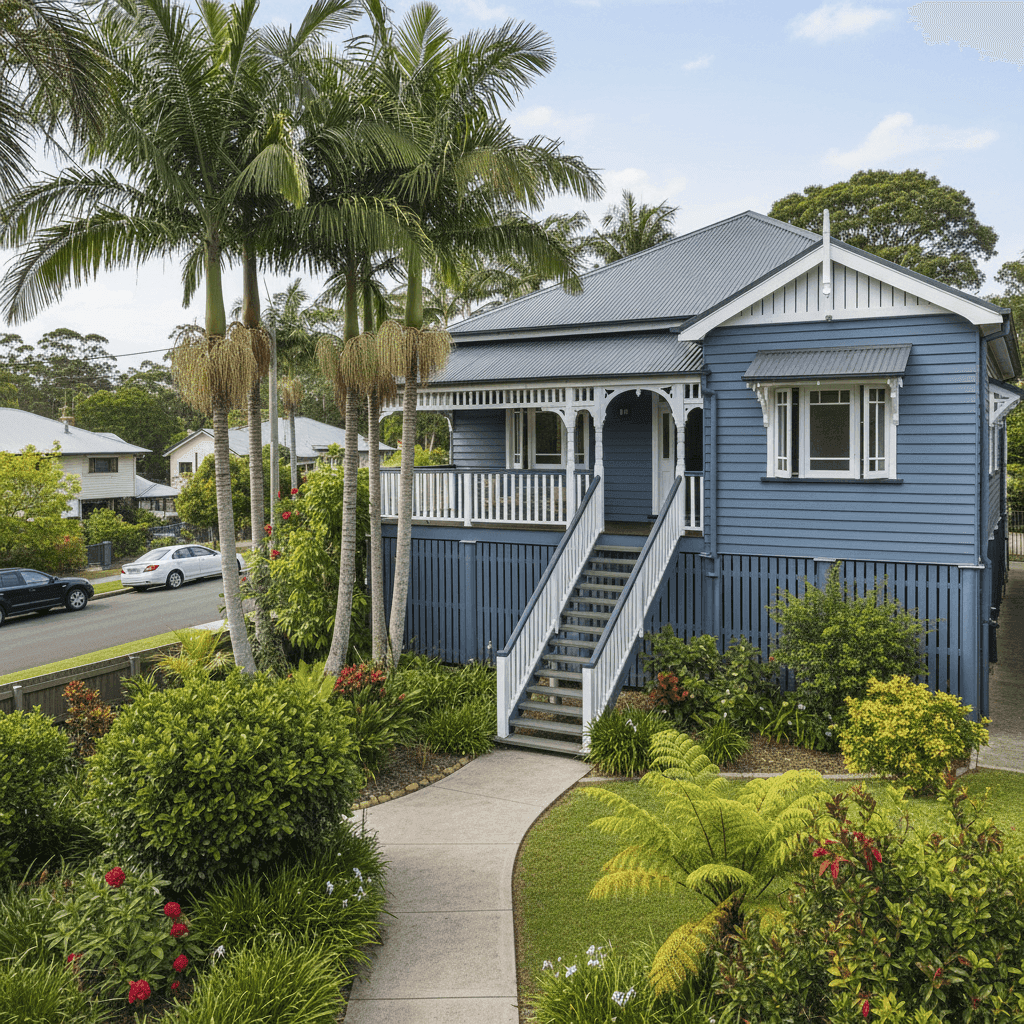
If you own a classic free standing home in Red Hill, QLD 4059, you're likely no stranger to the charm — and the quirks — that come with inner-Brisbane living. Nestled just 2 kilometres from the CBD, Red Hill is a suburb of character-filled Queenslanders, leafy streets, and a tight-knit community. But charm doesn't insulate you from insurance costs, and understanding what you're actually paying — and why — is essential to protecting one of your most valuable assets.
This article breaks down a real home and contents insurance quote for a four-bedroom, two-bathroom free standing home in Red Hill, benchmarks it against state and national data, and offers practical tips to help you get the best value cover.
---
Is This Quote Fair?
The annual premium for this property came in at $1,462 per year (or $149/month), covering $800,000 in building sum insured and $100,000 in contents. Our pricing model rates this as CHEAP — below average for the market.
To put that in perspective:
- The Brisbane LGA average premium is a staggering $16,277/year
- The Queensland state average sits at $9,129/year, with a median of $3,903/year
- The national average is $5,347/year, with a median of $2,764/year
At $1,462, this quote comes in well beneath every one of those benchmarks — including the national median. For a four-bedroom home with $800,000 in building cover, that's a genuinely competitive result. The building excess is set at $3,000 and the contents excess at $1,000, which are fairly standard trade-offs for keeping the annual premium lower.
So yes — on the available data, this quote represents strong value.
---
How Red Hill Compares
While no suburb-level data is currently available for Red Hill specifically, we can draw meaningful conclusions from the broader context. You can explore Red Hill insurance statistics as more data becomes available, and compare against Queensland-wide figures or the national picture.
What's striking here is the gap between this quote and the Brisbane LGA average of $16,277. That's more than 11 times higher than the premium quoted. Even accounting for variation in property values and cover levels, the difference is substantial. A few factors likely contribute to Red Hill bucking the Brisbane trend:
- No cyclone risk designation — parts of Queensland carry significant cyclone loading, which dramatically inflates premiums in affected areas. Red Hill does not fall into this category.
- Proximity to the CBD — while inner-city suburbs can attract higher rebuild costs, they're also well-serviced by emergency services, which can moderate risk assessments.
- No pool or solar panels — these are common add-ons that increase both the insured value and the complexity of a policy.
The Queensland median of $3,903 remains the most relevant state-level benchmark, and this quote sits well below even that figure — a positive sign for the homeowner.
---
Property Features That Affect Your Premium
Every property tells a story, and insurers read it carefully. Here's how the specific characteristics of this Red Hill home influence what you pay:
Weatherboard Timber Walls
Weatherboard homes are iconic in Queensland, but timber construction is generally considered higher risk than brick or rendered masonry. Timber is more susceptible to fire, termite damage, and rot — all factors that can push premiums upward. That said, many insurers have refined their pricing for weatherboard homes, particularly in well-established suburbs.
Steel/Colorbond Roof
This is a positive from an insurer's perspective. Colorbond roofing is durable, fire-resistant, and performs well in severe weather. Compared to terracotta tiles or older corrugated iron, a steel roof can contribute to a more favourable premium outcome.
Stump Foundation (Elevated Less Than 1m)
Homes on stumps are a hallmark of Queensland architecture. Elevation provides natural ventilation and some protection from minor flooding, but it also introduces structural considerations — particularly around subfloor maintenance and the condition of the stumps themselves. Being elevated by less than 1 metre places this home in a relatively low-risk category compared to more significantly raised structures.
Timber/Laminate Flooring
Flooring type can influence contents and building valuations. Timber flooring, especially in a home built in 1929, may carry heritage value and higher replacement costs, which is worth factoring into your sum insured calculation.
Age of Construction: 1929
A pre-war home brings character, but also complexity. Older homes may have original wiring, plumbing, and structural elements that are more costly to repair or replace to modern standards. Insurers factor this into their risk models, so it's important to ensure your building sum insured reflects the true cost of rebuilding — not just the market value of the property.
Ducted Climate Control
The presence of ducted climate control is noted as a feature of this property. This adds to the replacement value of the home's fixtures and should be accurately reflected in your building sum insured.
---
Tips for Homeowners in Red Hill
1. Review Your Building Sum Insured Regularly
With a construction year of 1929 and timber weatherboard construction, rebuild costs can be significantly higher than you might expect. Building costs in Brisbane have risen sharply in recent years. Use a building cost calculator or speak with a quantity surveyor to ensure $800,000 genuinely reflects what it would cost to rebuild your home from scratch — not what it would sell for.
2. Understand Your Excess Trade-Off
The $3,000 building excess on this policy is on the higher end. This keeps annual premiums lower, but means you'll need to cover more out of pocket in the event of a claim. Make sure you have that buffer accessible, and consider whether a lower excess (at a slightly higher premium) better suits your financial position.
3. Maintain Your Subfloor and Stumps
For homes on stump foundations, subfloor maintenance is critical. Deteriorating stumps, moisture damage, and pest activity can lead to structural issues that may complicate insurance claims. Regular inspections — ideally annually — can catch problems early and support any future claims.
4. Compare Quotes Before Renewal
The fact that this quote came in well below state and national averages is encouraging, but it's not a reason to set and forget. Premiums can shift significantly at renewal. Use a comparison platform like CoverClub to benchmark your renewal quote before you commit.
---
Ready to Compare Your Own Quote?
Whether you're a Red Hill local or own a property elsewhere in Queensland, understanding how your premium stacks up against the market is the first step to making an informed decision. At CoverClub, we make it easy to compare home and contents insurance quotes side by side — so you can see exactly what you're getting and what it's worth.
Get a quote today at CoverClub and find out if your current insurer is giving you a fair deal.