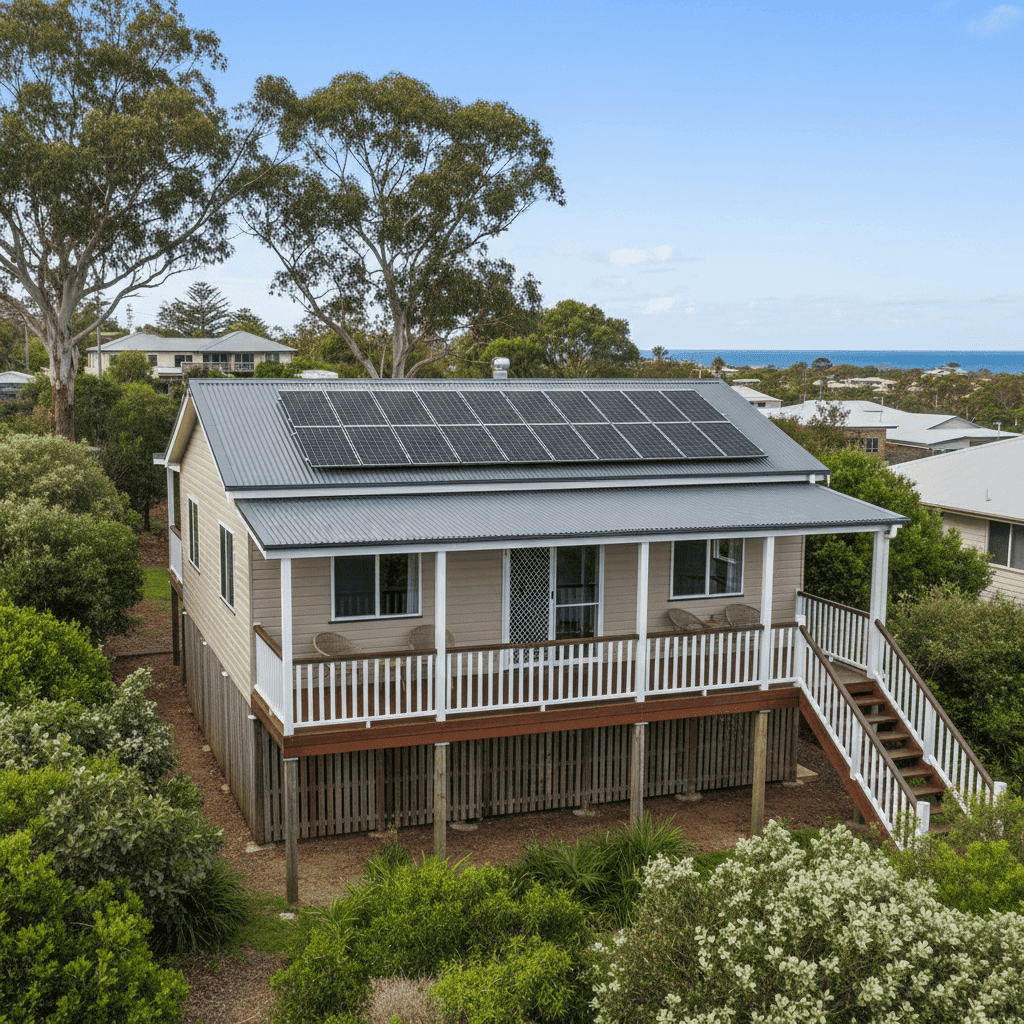
Red Rock is a small, picturesque coastal community on the Coffs Coast of New South Wales — and like many regional NSW towns, insuring a home here comes with its own set of considerations. This article breaks down a recent home and contents insurance quote for a four-bedroom free-standing home in Red Rock (postcode 2456), examines whether the premium is fair, and offers practical tips for local homeowners looking to get better value on their cover.
---
Is This Quote Fair?
The quote in question comes in at $4,839 per year (or $464/month) for a combined home and contents policy, covering a building sum insured of $700,000 and contents valued at $10,000, with a $500 excess on both components.
Our price rating for this quote is Expensive — above average for the Red Rock area.
To put that in context: the suburb average annual premium sits at $3,384, and the median is $3,271. This quote is roughly 43% above the suburb average and nearly 48% above the median, placing it well outside the typical range for comparable properties in the area. Even the 75th percentile for Red Rock — meaning the top quarter of premiums — is only $3,611 per year, so this quote exceeds that benchmark by a significant margin.
That said, several property-specific factors (explored below) help explain why this particular home attracts a higher-than-typical premium.
---
How Red Rock Compares
Understanding where Red Rock sits in the broader insurance landscape is useful context for any homeowner.
| Benchmark | Annual Premium |
|---|---|
| This Quote | $4,839 |
| Red Rock Suburb Average | $3,384 |
| Red Rock Suburb Median | $3,271 |
| NSW State Average | $9,528 |
| NSW State Median | $3,770 |
| National Average | $5,347 |
| National Median | $2,764 |
| Clarence Valley LGA Average | $31,244 |
A few things stand out here. First, the NSW state average of $9,528 is dramatically higher than what most Red Rock homeowners are actually paying — this is heavily skewed by high-risk and high-value properties elsewhere in the state. The NSW median of $3,770 is a more reliable indicator of what a typical NSW homeowner pays, and this quote sits modestly above that figure.
Compared to the national average of $5,347, this quote is actually slightly below — which suggests it's not wildly out of step with broader Australian pricing, even if it feels steep locally.
The Clarence Valley LGA average of $31,244 is an extreme outlier, almost certainly driven by a small number of very high-value or high-risk properties in the region, and shouldn't be used as a direct comparison point for a standard residential home.
You can explore more localised data on the Red Rock suburb stats page.
> Note: The Red Rock suburb sample size for this comparison is 6 quotes, which is a relatively small dataset. Averages and percentiles should be interpreted with some caution — a few outlier properties can meaningfully shift the figures.
---
Property Features That Affect Your Premium
Several characteristics of this property are likely contributing to a higher-than-average premium. Here's how insurers typically view each one:
Age of Construction (1952)
A home built in 1952 is over 70 years old. Older homes often attract higher premiums because they may have ageing electrical wiring, plumbing, and structural components that increase the likelihood of a claim. Insurers factor in the cost of repairing or replacing materials that may no longer meet modern building codes.
Elevated Foundation (Stumps, Raised by at Least 1m)
This home sits on stumps and is elevated by at least one metre — a classic Queensland-influenced design common in coastal and subtropical NSW. While elevation can actually reduce flood risk in some scenarios, it also introduces structural complexity. Repairs to subfloor areas, stumps, and elevated decking can be costly, and some insurers price this in accordingly.
Hardiplank/Hardiflex Cladding
Fibre cement cladding like Hardiplank is generally considered a durable and fire-resistant material, which can work in a homeowner's favour. However, the cost of replacing or repairing this type of cladding — particularly on an older home — can be higher than standard brick veneer, influencing the building sum insured and premium.
Solar Panels
This property has solar panels, which add to the replacement cost of the home and are typically included in the building sum insured calculation. Panels can be damaged by hail, storms, or fire, and their inclusion nudges premiums upward.
Ducted Climate Control
Ducted air conditioning systems are expensive to replace and repair. Their presence contributes to a higher effective rebuild cost, which is reflected in the $700,000 building sum insured — a figure that insurers use directly to calculate your premium.
Timber/Laminate Flooring
Timber flooring, while aesthetically appealing, is more susceptible to water damage than tiles and can be costly to replace. This is a minor but real factor in premium pricing.
---
Tips for Homeowners in Red Rock
1. Review Your Building Sum Insured
At $700,000, the building sum insured is substantial. It's worth periodically verifying this figure using a professional building replacement cost estimator (not the market value of your property). Over-insuring inflates your premium unnecessarily, while under-insuring leaves you exposed. Many insurers offer free online calculators to help.
2. Compare Multiple Quotes
Given that this quote is above the local suburb average, shopping around is well worth the effort. Premiums for the same property can vary by hundreds — sometimes thousands — of dollars between insurers. Get a fresh quote at CoverClub to see how other providers price your specific home.
3. Consider Adjusting Your Excess
A $500 excess is fairly standard, but opting for a higher excess (say, $1,000 or $2,000) can meaningfully reduce your annual premium. If you have a solid emergency fund and are unlikely to make small claims, a higher excess is often a smart trade-off.
4. Ask About Discounts for Security and Safety Features
Some insurers offer discounts for homes with monitored alarm systems, deadbolts, or fire-safety equipment. Given the age of this home, it may also be worth checking whether any recent upgrades (rewiring, roof replacement, restumping) can be documented and presented to your insurer — these improvements can sometimes result in a lower risk assessment.
---
Compare Your Options with CoverClub
Whether you're renewing your policy or shopping for the first time, it pays to know where your quote stands. CoverClub makes it easy to benchmark your premium against real data from homes in your suburb, your state, and across Australia. Start comparing home insurance quotes today and make sure you're not paying more than you need to.