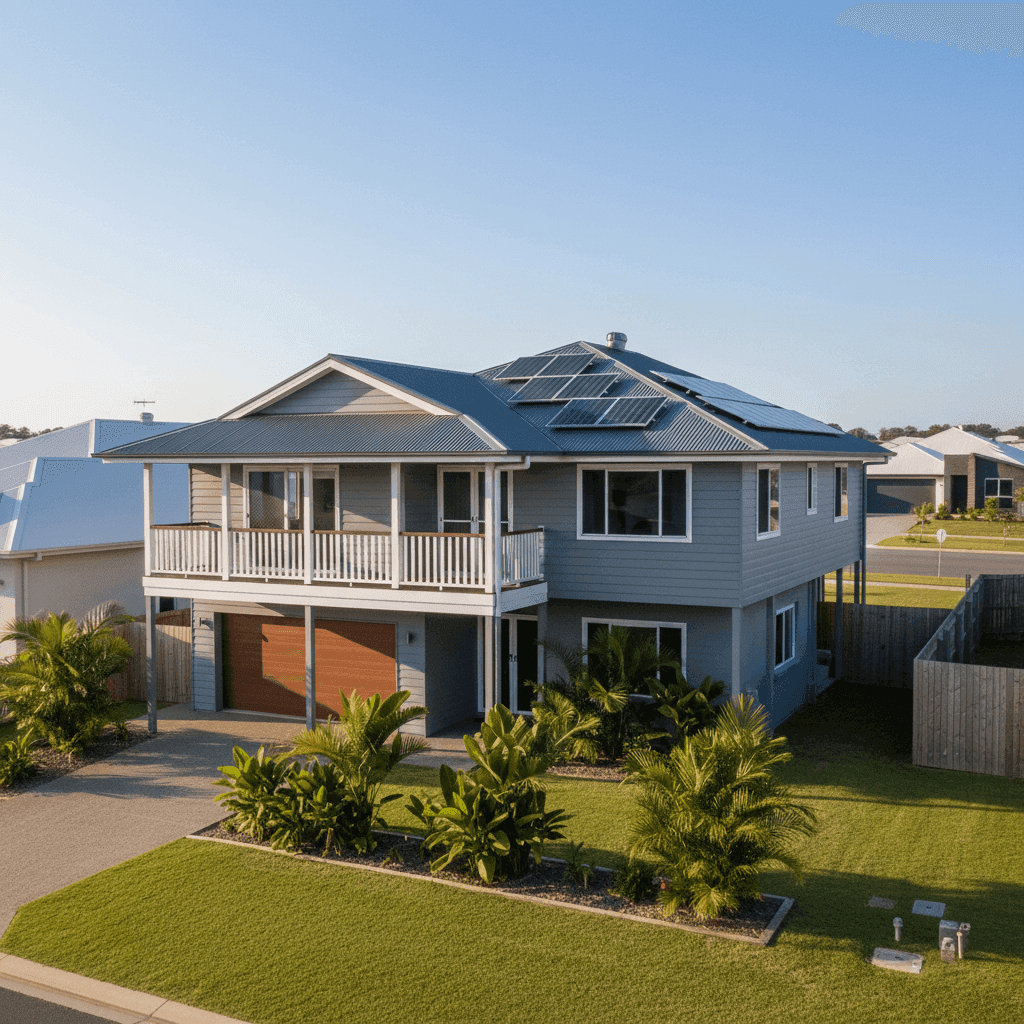
Redbank Plains, nestled in the City of Ipswich about 35 kilometres southwest of Brisbane, has grown into one of Queensland's most popular family-friendly suburbs. With its mix of newer estates and established streets, it attracts buyers looking for affordable space — and that includes four-bedroom free standing homes like the one we're analysing today. If you own a similar property here, understanding what drives your insurance premium can save you real money.
This article breaks down a recent home and contents insurance quote for a 4-bedroom, 2-bathroom free standing home in Redbank Plains (postcode 4301), compares it against local, state, and national benchmarks, and offers practical tips to help you get better value on your cover.
---
Is This Quote Fair?
The quote in question comes in at $3,770 per year (or $361/month) for combined home and contents cover, with a building sum insured of $856,000 and contents valued at $110,000. Both the building and contents excess are set at $1,000.
Our price rating for this quote is Expensive — above average for the Redbank Plains area.
To put that in perspective: the suburb average premium sits at just $2,149 per year, and the median is even lower at $2,037. This quote is 75% higher than the suburb median, which is a significant gap worth investigating.
That said, context matters. The sum insured here — $856,000 for the building alone — is on the higher end, and a larger insured value naturally pushes premiums up. The property is also 244 sqm, which is a generous footprint for the area, and includes solar panels and ducted climate control, both of which add to the replacement cost insurers must account for.
Even so, the gap between this quote and the suburb average suggests there may be room to shop around.
---
How Redbank Plains Compares
Understanding where Redbank Plains sits within the broader insurance landscape is useful context for any homeowner. Here's how the numbers stack up:
| Benchmark | Annual Premium |
|---|---|
| This quote | $3,770 |
| Suburb average (4301) | $2,149 |
| Suburb median (4301) | $2,037 |
| Suburb 25th percentile | $1,381 |
| Suburb 75th percentile | $2,438 |
| LGA average (Ipswich) | $8,901 |
| QLD state average | $9,129 |
| QLD state median | $3,903 |
| National average | $5,347 |
| National median | $2,764 |
A few things stand out here. First, Redbank Plains is actually well below both the Queensland state average and the national average — a reassuring sign for local homeowners. The suburb's median of $2,037 is comfortably under the national median of $2,764, reflecting the area's relatively lower flood and cyclone risk compared to many other Queensland postcodes.
Second, the Ipswich LGA average of $8,901 is strikingly high — driven largely by flood-prone pockets within the broader council area. Redbank Plains itself fares much better, which is worth knowing if you've been quoted using broader regional risk data.
You can explore the full data for this suburb at our Redbank Plains insurance stats page, or compare it against all of Queensland and national benchmarks.
---
Property Features That Affect Your Premium
Several characteristics of this home have a direct bearing on what insurers charge. Here's how each one plays into the pricing:
Hardiplank/Hardiflex exterior walls Fibre cement cladding like Hardiplank is generally viewed favourably by insurers. It's resistant to fire, rot, and termites — all meaningful risks in southeast Queensland. This material typically attracts lower premiums than weatherboard or older cladding types.
Steel/Colorbond roof Colorbond roofing is durable, low-maintenance, and performs well in storms. Insurers tend to rate it positively compared to tile or older corrugated iron roofs, particularly for wind and hail events.
Elevated foundation (less than 1m on stumps) The home sits on stumps and is elevated by less than one metre. While this is a modest elevation, it can offer some protection against minor surface water ingress. Homes elevated significantly higher tend to attract better flood-related ratings, but even a small elevation can matter at the margins.
Timber/laminate flooring Flooring type can influence contents and building claims. Timber and laminate floors are susceptible to water damage, which insurers factor into their risk modelling — particularly in a region where storm events are not uncommon.
Solar panels Solar panels increase the insured replacement value of the building, and insurers must account for the cost of replacing them if damaged by hail, storm, or fire. With a quality solar system potentially worth $8,000–$15,000 or more, this meaningfully contributes to both the sum insured and the premium.
Ducted climate control Ducted air conditioning is a significant fixed asset. Like solar panels, it adds to the overall replacement cost of the home and is factored into the building sum insured.
Construction year: 2019 A home built in 2019 benefits from modern building codes, which include improved cyclone and storm resilience standards. Newer builds are generally cheaper to insure than older properties with ageing infrastructure.
No pool, not in a cyclone risk area The absence of a pool removes a common liability risk, and being outside a designated cyclone zone keeps premiums meaningfully lower than many other Queensland postcodes.
---
Tips for Homeowners in Redbank Plains
1. Review your sum insured carefully At $856,000, the building sum insured is the single biggest driver of this premium. It's worth checking whether this figure accurately reflects your home's rebuild cost — not its market value. Tools like the Cordell Sum Sure Calculator can help you arrive at a defensible number. Overinsuring is just as costly as underinsuring.
2. Shop around — especially given the suburb context This quote is above the suburb average by a considerable margin. With 104 quotes in our Redbank Plains dataset, there's meaningful competition in this postcode. Using a comparison platform like CoverClub to benchmark multiple insurers side by side is the fastest way to identify whether you're overpaying.
3. Consider your excess level Both the building and contents excess are set at $1,000 — a standard figure. Increasing your excess (say, to $2,000 or $2,500) can reduce your annual premium noticeably. If you have a solid emergency fund and are unlikely to make small claims, a higher excess is often a smart trade-off.
4. Bundle strategically, but verify the discount Many insurers offer discounts for bundling home and contents cover, which this policy already does. However, not all bundled policies are the best value — sometimes separate policies from different providers work out cheaper. It's worth running the numbers both ways.
---
Ready to Compare?
Whether you're renewing your current policy or shopping for the first time, comparing quotes is the single most effective way to ensure you're not overpaying. CoverClub makes it easy to see how your premium stacks up against real data from your suburb and across Australia.
Get a home insurance quote for your Redbank Plains property →