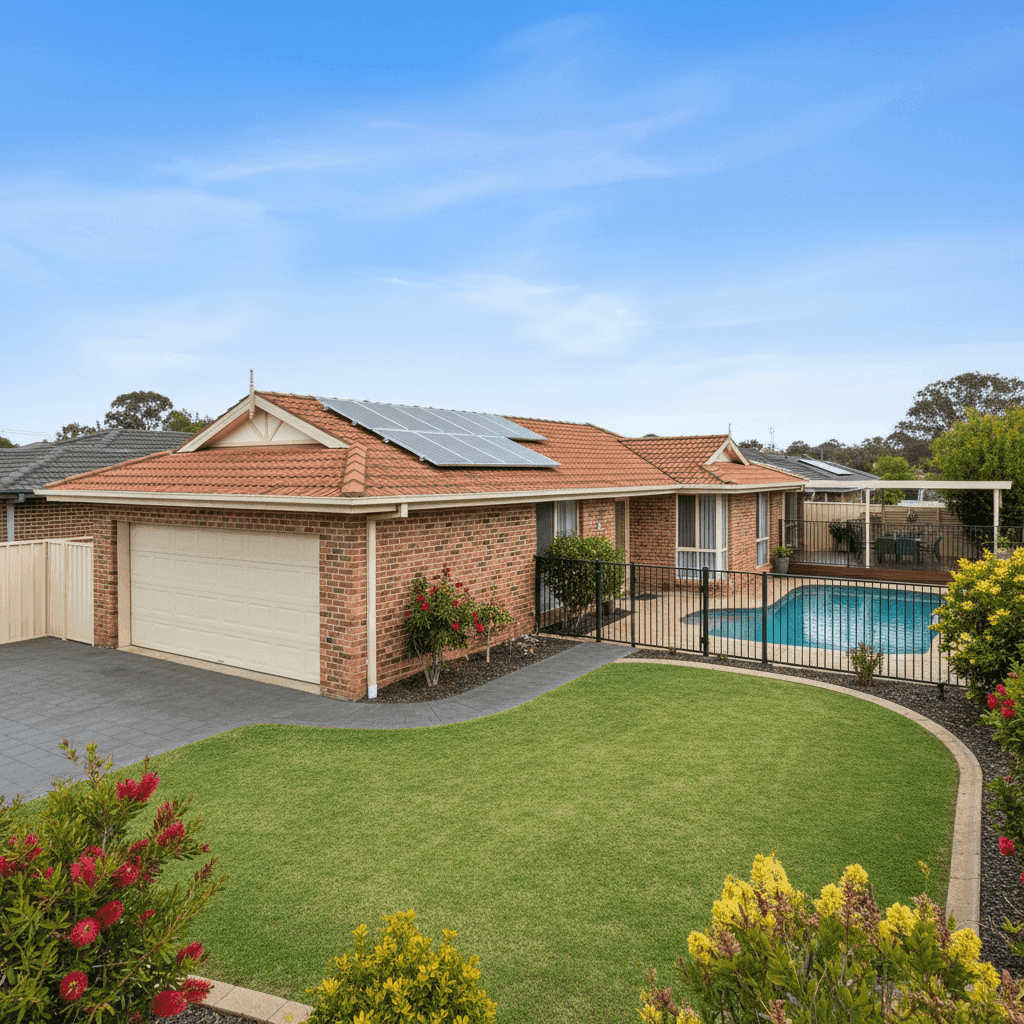
If you own a free standing home in Redbank Plains, QLD 4301, you've probably wondered whether you're paying too much — or too little — for home insurance. This article breaks down a real home and contents insurance quote for a three-bedroom brick veneer home in the suburb, and puts the numbers in context against local, state, and national benchmarks.
---
Is This Quote Fair?
The quote in question comes in at $1,697 per year (or around $165 per month) for combined home and contents cover, with a building sum insured of $480,000 and $50,000 in contents cover. Both the building and contents excess are set at $500.
Our analysis rates this quote as FAIR — around average for the area.
That might sound underwhelming, but "around average" in the context of Redbank Plains is actually a reasonably positive result. Based on data from 31 quotes collected in the suburb, the 25th percentile sits at $1,373/yr and the 75th percentile reaches $2,500/yr. At $1,697, this quote falls comfortably within the middle band — below the suburb median of $2,005 and well below the suburb average of $3,384.
In other words, this homeowner is paying less than half of what some Redbank Plains residents are being quoted, while still sitting above the cheapest quarter of the market. That's a solid position to be in.
---
How Redbank Plains Compares
To really appreciate this quote, it helps to zoom out and look at the broader picture.
| Benchmark | Average Premium | Median Premium |
|---|---|---|
| Redbank Plains (4301) | $3,384/yr | $2,005/yr |
| Ipswich LGA | $3,034/yr | — |
| Queensland | $4,547/yr | $3,931/yr |
| National | $2,965/yr | $2,716/yr |
A few things stand out here. First, Queensland is one of the most expensive states in Australia for home insurance, with an average premium of $4,547 — significantly above the national average of $2,965. This is largely driven by the state's exposure to extreme weather events, including flooding, severe storms, and hail.
Redbank Plains itself sits within the Ipswich LGA, where the average premium of $3,034 is elevated compared to the national figure, but still below the broader Queensland average. The suburb's own average is pulled upward by outliers — properties with higher risk profiles, larger sums insured, or less favourable construction types — which is why the median of $2,005 is a more representative figure for most homeowners.
At $1,697, this quote comes in $308 below the suburb median, $1,337 below the Ipswich LGA average, and a striking $2,850 below the Queensland state average. That's a meaningful saving, and it reflects both the property's characteristics and the insurer's assessment of risk.
---
Property Features That Affect Your Premium
Several features of this property work in the homeowner's favour when it comes to pricing.
Brick veneer construction is generally viewed favourably by insurers. It offers solid structural integrity and reasonable resistance to fire and storm damage compared to lightweight alternatives like weatherboard or fibre cement. Combined with a tiled roof, the property presents a relatively low-risk profile from a construction standpoint.
The 1980 build year is worth noting. Homes from this era are well past the higher-risk early decades but may not benefit from the more modern building codes introduced in the 1990s and 2000s — particularly around cyclone tie-downs and flood-resilient design. That said, Redbank Plains is not classified as a cyclone risk area, which removes one of the more significant premium drivers seen elsewhere in Queensland.
The concrete slab foundation is a neutral-to-positive factor. Slabs are generally durable, though they can be more susceptible to movement in reactive soils — something worth keeping in mind in parts of South East Queensland.
The swimming pool adds a small amount of liability exposure to the policy, which can nudge premiums upward slightly. However, the impact is typically modest for a standard residential pool.
On the flip side, the presence of solar panels is increasingly common in Queensland homes and most insurers now include them as standard under building cover — though it's always worth confirming this with your insurer, as some treat panels as a separate item or apply sub-limits.
With standard fittings quality, a modest 130 sqm floor area, and no ducted climate control system to insure, the overall contents and fixtures profile is straightforward — which helps keep the premium in check.
---
Tips for Homeowners in Redbank Plains
1. Review your sum insured regularly A building sum insured of $480,000 for a 130 sqm home may be appropriate, but construction costs have risen sharply in recent years. Make sure your sum insured reflects the actual cost to rebuild — not just the market value of the property. Underinsurance is one of the most common and costly mistakes homeowners make.
2. Confirm your solar panels are covered Solar panel systems can be worth tens of thousands of dollars. Ask your insurer whether panels are included under your building cover, what the sub-limit is (if any), and whether damage from storms or hail is included. This is especially relevant in South East Queensland, where hailstorms can be severe.
3. Check your flood cover Parts of the Ipswich region — including areas around Redbank Plains — have experienced flooding in the past. Review your policy wording carefully to confirm whether flood is included as standard or available as an optional add-on. Don't assume it's covered.
4. Compare quotes at renewal time The insurance market in Queensland is competitive, and premiums can vary significantly between providers for the same property. Even if your current quote seems reasonable, it's worth running a comparison at renewal to make sure you're not leaving money on the table.
---
Ready to Compare?
Whether you're reviewing your current policy or shopping for cover for the first time, CoverClub makes it easy to see how your quote stacks up. Get a home insurance quote today and compare your premium against real data from your suburb, your LGA, and across Australia — so you can make a confident, informed decision.