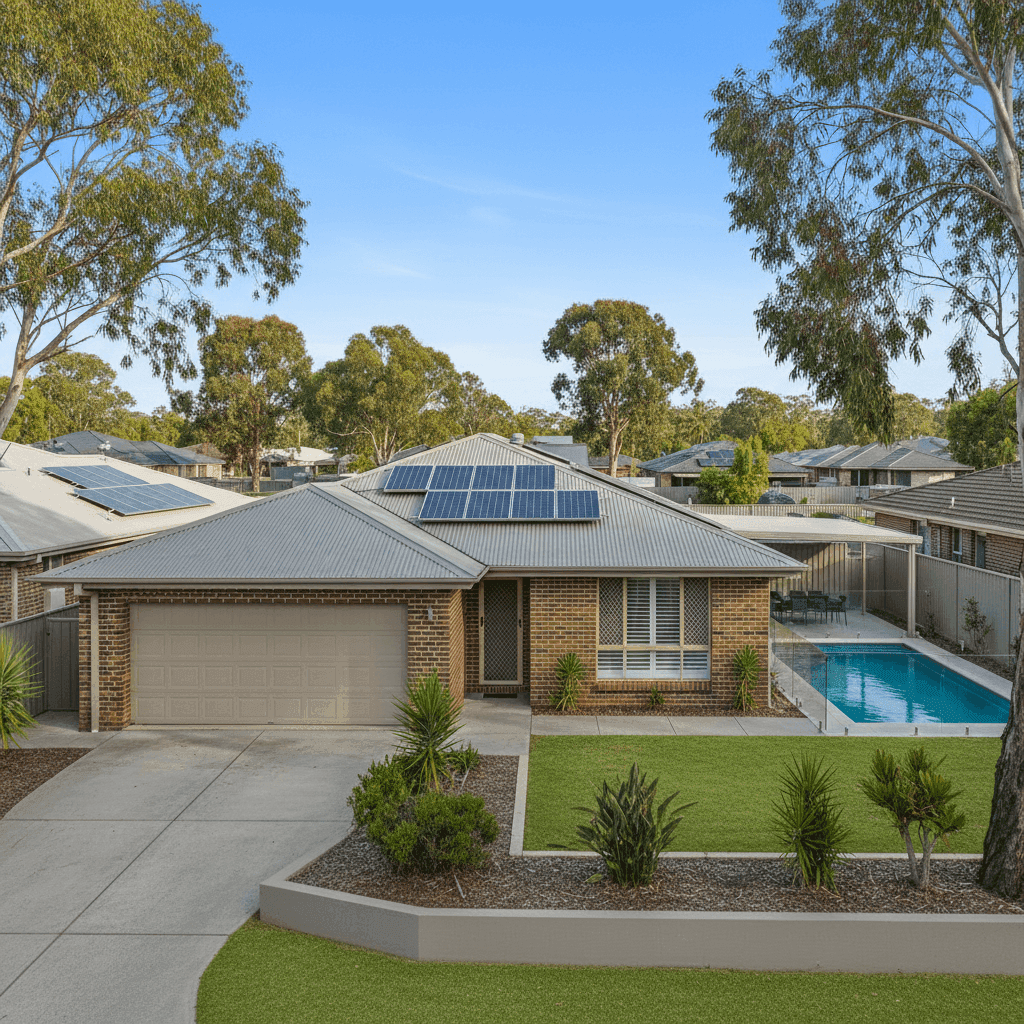
Redbank Plains, nestled in the City of Ipswich about 35 kilometres southwest of Brisbane's CBD, is a growing suburban community popular with families and first-home buyers alike. This analysis takes a close look at a real home and contents insurance quote for a free standing brick veneer home in the 4301 postcode — breaking down whether the price is competitive, how local premiums compare to the rest of Queensland and the nation, and what property features are likely driving the cost.
---
Is This Quote Fair?
The annual premium for this quote comes in at $1,281 per year (or roughly $127 per month), covering both building (insured to $520,000) and contents (valued at $15,000). Based on our pricing data, this quote has been rated Cheap — Below Average, which is genuinely good news for the homeowner.
To put that in perspective, the suburb median premium in Redbank Plains sits at $2,005 per year, meaning this quote is roughly 36% below the local median. It also falls below the suburb's 25th percentile of $1,373 — meaning it's cheaper than at least 75% of quotes we've seen in the area. That's a strong result by any measure.
The building excess is set at $2,000 and the contents excess at $1,000. These are on the higher end of what's typical, which will naturally help bring the premium down. It's worth factoring that in when assessing the overall value — a lower excess option might cost more annually, but could save money if a claim arises.
Overall, this is a very competitive quote for the area, and homeowners in a similar position would be wise to lock it in or use it as a benchmark when shopping around.
---
How Redbank Plains Compares
Understanding where your premium sits relative to local and broader benchmarks is one of the most useful tools available to homeowners. Here's how this quote stacks up:
| Benchmark | Premium |
|---|---|
| This Quote | $1,281/yr |
| Redbank Plains 25th Percentile | $1,373/yr |
| Redbank Plains Median | $2,005/yr |
| Redbank Plains Average | $3,384/yr |
| Redbank Plains 75th Percentile | $2,500/yr |
| Ipswich LGA Average | $3,034/yr |
| QLD State Average | $4,547/yr |
| QLD State Median | $3,931/yr |
| National Average | $2,965/yr |
| National Median | $2,716/yr |
Queensland is one of the most expensive states in Australia for home insurance, largely due to elevated weather risks — particularly flooding and storm damage in many parts of the state. The QLD state average of $4,547 per year is significantly above the national average of $2,965, underscoring just how much geography and climate influence what homeowners pay.
Within that context, Redbank Plains sits at a more moderate level than many Queensland postcodes, though premiums here are still above the national median. You can explore the full breakdown of local pricing trends on the Redbank Plains suburb stats page.
---
Property Features That Affect Your Premium
Several characteristics of this property are likely influencing the premium — some favourably, others adding a degree of complexity. Here's what stands out:
Brick Veneer Walls & Colorbond Roof
Brick veneer is generally viewed positively by insurers. It offers solid fire resistance and durability, which can help moderate premiums compared to timber-framed or weatherboard homes. The steel Colorbond roof is similarly well-regarded — it's lightweight, resistant to corrosion, and performs well in high-wind conditions. Together, these materials present a relatively low-risk profile from a structural standpoint.
Concrete Slab Foundation
A slab-on-ground foundation is standard in Queensland and generally considered stable. It reduces the risk of subsidence-related claims and is straightforward for insurers to assess. This is unlikely to be a negative factor in pricing.
Timber & Laminate Flooring
Timber and laminate floors can be more susceptible to water damage than tiles, which may nudge contents and building replacement costs slightly higher. However, for a home of this size and fittings quality, the impact is likely modest.
Swimming Pool
Having a pool on the property adds some liability exposure and increases the overall rebuild cost — both of which can affect premiums. Insurers will factor in the cost of repairing or replacing pool infrastructure as part of the building sum insured.
Solar Panels
Solar panels are an increasingly common feature in Queensland, but they do add to the replacement value of a home. Insurers typically include them under building cover, so it's important to ensure the $520,000 sum insured adequately accounts for the cost of reinstating the panels alongside the rest of the structure.
1985 Construction
Homes built in the mid-1980s are mature but not ancient. Building standards from that era are generally acceptable, though some insurers may apply loading for older properties due to the potential for outdated wiring, plumbing, or materials. At 160 sqm, this is a compact home, which helps keep the sum insured and replacement cost estimates manageable.
No Cyclone Risk
Redbank Plains falls outside designated cyclone risk zones, which is a meaningful factor in keeping premiums lower than coastal or far-north Queensland properties. Cyclone-rated construction requirements and associated claims history can add substantially to premiums in affected areas.
---
Tips for Homeowners in Redbank Plains
Whether you're reviewing an existing policy or shopping for the first time, here are a few practical steps worth taking:
- Review your sum insured regularly. Building costs have risen sharply across Australia in recent years. With a sum insured of $520,000 on a 160 sqm home with a pool and solar panels, it's worth verifying this figure against current construction cost estimates — particularly as labour and materials costs continue to fluctuate.
- Check your flood cover. Parts of the Ipswich region have a history of flood events. Before assuming you're covered, read your Product Disclosure Statement carefully to confirm whether flood is included or excluded. Some policies treat flood and storm surge as separate events with different conditions.
- Consider your excess trade-off. The $2,000 building excess on this policy is relatively high. If budget allows, it may be worth getting a comparison quote with a lower excess — especially given that some of the most common claims in Queensland (storm damage, hail) can fall in the $2,000–$5,000 range.
- Bundle your cover wisely. Combining home and contents insurance under one policy — as this quote does — often attracts a discount and simplifies the claims process. Just make sure your contents value of $15,000 genuinely reflects what you'd need to replace. Underinsurance is a common and costly mistake.
---
Compare Your Own Quote
Whether this quote reflects your situation or not, the best way to know if you're getting a fair deal is to compare. At CoverClub, you can enter your property details and see how your premium stacks up against real quotes from across the market — no jargon, no pressure, just clear data to help you make a more informed decision.