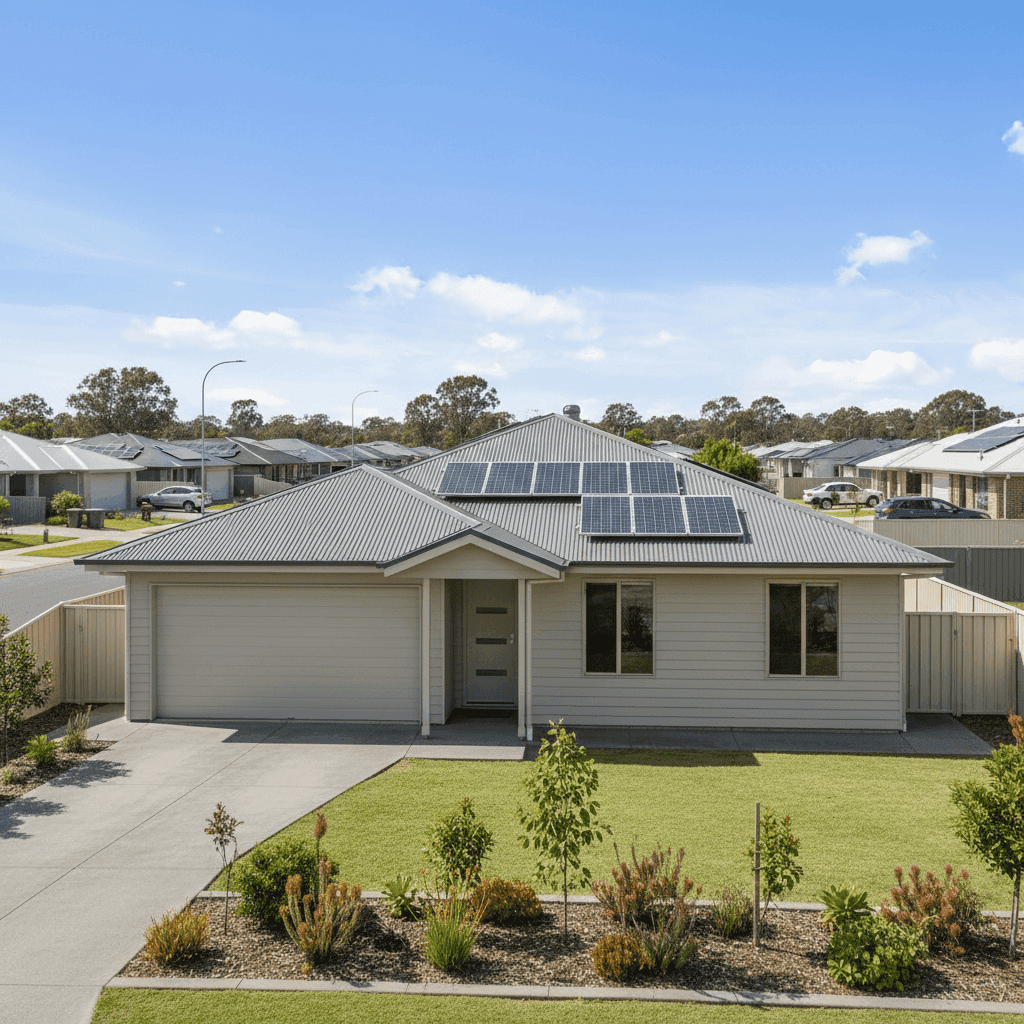
If you own a free standing home in Redbank Plains, QLD 4301, you've probably wondered whether you're paying too much — or too little — for home insurance. This suburb in the City of Ipswich has seen significant growth in recent years, and with that comes a wide range of insurance premiums depending on your property's characteristics, the insurer you choose, and the level of cover you hold.
In this article, we break down a real home and contents insurance quote for a 3-bedroom, 1-bathroom weatherboard home in Redbank Plains, comparing it against local, state, and national benchmarks so you can better understand what a fair price looks like.
---
Is This Quote Fair?
The quote in question comes in at $1,284 per year (or $126/month) for combined home and contents cover, with a building sum insured of $451,000 and contents valued at $50,000. The building excess is $3,000 and the contents excess is $1,000.
Our price rating for this quote is CHEAP — below average — and the data backs that up convincingly.
To put it in perspective:
- The suburb average for Redbank Plains is $3,384/year
- The suburb median sits at $2,005/year
- Even the 25th percentile (the cheapest quarter of quotes in the area) is $1,373/year
This quote at $1,284 falls below the cheapest quartile of quotes we've seen in the suburb — meaning it's among the most competitively priced policies available in the area. Based on a sample of 31 quotes from Redbank Plains postcode 4301, this result is genuinely exceptional value.
---
How Redbank Plains Compares
To understand just how favourable this quote is, it helps to zoom out and look at the broader picture. You can explore the full breakdown on our Redbank Plains suburb stats page.
| Benchmark | Annual Premium |
|---|---|
| This Quote | $1,284 |
| Redbank Plains 25th Percentile | $1,373 |
| Redbank Plains Median | $2,005 |
| Redbank Plains Average | $3,384 |
| Ipswich LGA Average | $3,034 |
| QLD State Average | $4,547 |
| QLD State Median | $3,931 |
| National Average | $2,965 |
| National Median | $2,716 |
Queensland is one of the most expensive states in the country for home insurance — largely due to the heightened risk of extreme weather events, including storms, flooding, and cyclones across many parts of the state. The QLD state average of $4,547/year is well above the national average of $2,965, reflecting this elevated risk profile.
Against that backdrop, a quote of $1,284 for a property in the Ipswich region is remarkably competitive. It sits 62% below the suburb average, 72% below the Queensland state average, and 57% below the national average. Even accounting for the higher building excess of $3,000 (which does reduce the insurer's risk exposure and therefore the premium), this represents strong value for a homeowner seeking comprehensive cover.
---
Property Features That Affect Your Premium
Several characteristics of this particular property influence the premium — both positively and negatively. Here's how each factor plays a role:
Weatherboard Timber Walls
Weatherboard construction is one of the more common wall types in older Queensland homes, and insurers typically view it as a moderate-to-higher risk compared to brick or rendered masonry. Timber can be more susceptible to fire, termite damage, and general wear. However, this risk appears to be well-priced into the quote.
Steel / Colorbond Roof
A Colorbond steel roof is generally viewed favourably by insurers. It's durable, low-maintenance, and performs well in high-wind and storm conditions — all relevant considerations in South East Queensland. This likely contributes positively to the premium outcome.
Concrete Slab Foundation
A slab foundation is considered one of the more stable and insurer-friendly options. It reduces the risk of subsidence and underfloor moisture issues, which can be costly to remediate.
Timber / Laminate Flooring
Timber and laminate floors can be expensive to replace after water damage events, which is worth keeping in mind when assessing your contents and building cover limits.
Solar Panels
This property has solar panels installed. Solar systems are typically covered under building insurance, but it's important to confirm with your insurer that your sum insured ($451,000 in this case) adequately accounts for the replacement cost of the system.
Ducted Climate Control
Ducted air conditioning is a significant fixed asset and is generally covered under building insurance. Again, ensuring your sum insured reflects the full replacement cost of these systems is essential.
Built in 1987
Homes built in the late 1980s can carry slightly higher risk profiles due to ageing electrical wiring, plumbing, and roofing materials — though a Colorbond roof replacement at some point likely mitigates some of that concern here.
No Pool, No Cyclone Risk Zone
The absence of a swimming pool removes a common liability risk factor, and Redbank Plains falls outside designated cyclone risk zones — both of which help keep premiums more manageable.
---
Tips for Homeowners in Redbank Plains
Whether you're reviewing your existing policy or shopping for the first time, here are a few practical steps to make the most of your home insurance.
1. Check Your Sum Insured Regularly
Construction costs have risen sharply across Australia in recent years. The $451,000 building sum insured on this quote may be appropriate today, but it's worth reassessing annually to ensure it reflects the true cost of rebuilding your home — not just its market value.
2. Understand Your Excess Trade-Off
This quote carries a $3,000 building excess, which is on the higher end. A higher excess reduces your premium but means more out-of-pocket costs if you need to make a claim. Consider whether that trade-off suits your financial situation.
3. Don't Forget to Include Solar and Ducted Systems
Make sure your insurer explicitly covers your solar panel system and ducted climate control under the building policy. Some policies have sub-limits or exclusions for these items — always read the Product Disclosure Statement (PDS) carefully.
4. Compare Quotes at Renewal Time
Even if you're happy with your current insurer, it pays to shop around each year. Premiums can shift significantly between providers, and the difference — as this quote demonstrates — can be thousands of dollars annually. Use a comparison tool like CoverClub to benchmark your renewal offer before you commit.
---
Ready to See What You Could Pay?
Whether you're in Redbank Plains or anywhere else in Australia, understanding what others are paying for similar properties is the first step to making a smarter insurance decision. CoverClub makes it easy to compare home and contents quotes side by side, so you can find the right cover at the right price.