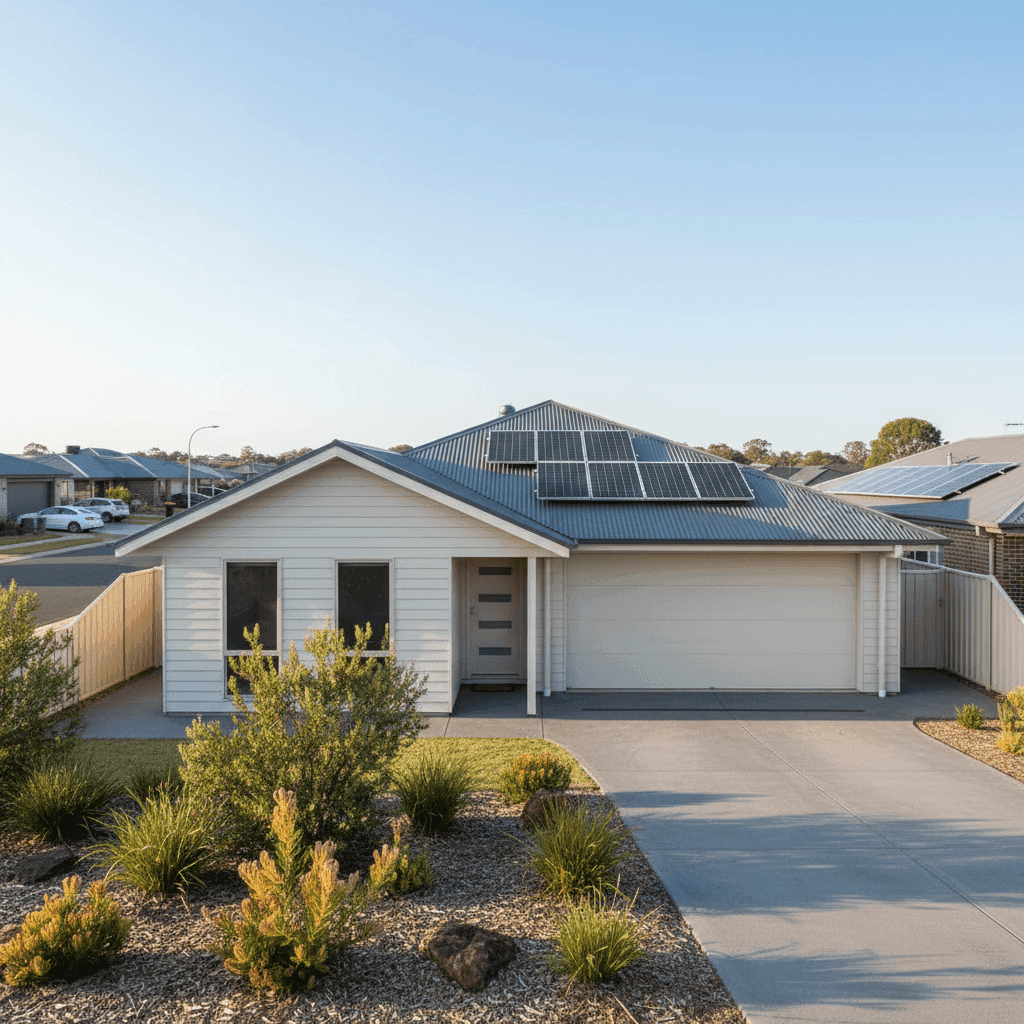
If you own a free standing home in Redbank Plains, QLD 4301, you've probably noticed that home insurance premiums in South East Queensland can vary enormously — sometimes by thousands of dollars for seemingly similar properties. This article breaks down a real home and contents insurance quote for a 3-bedroom free standing home in the suburb, benchmarks it against local, state, and national data, and offers practical tips to help you make the most of your cover.
---
Is This Quote Fair?
The quote in question comes in at $1,214 per year (or about $117 per month) for combined home and contents cover, with a building sum insured of $439,000 and contents valued at $50,000. The building excess is $2,000 and the contents excess is $1,000.
Our price rating for this quote is CHEAP — below average for the area. That's a strong result.
To put it in context: the 25th percentile for Redbank Plains premiums sits at $1,373 per year, meaning this quote actually falls below the cheapest quarter of quotes we've seen in the suburb. In other words, roughly 75% of homeowners in Redbank Plains are paying more than this for comparable cover. At less than $1,214 annually, this represents genuine value — particularly for a home and contents policy that covers both the building structure and personal belongings.
Of course, a low premium isn't the whole story. It's worth reviewing the policy's inclusions, exclusions, and claim limits carefully to ensure the cover is adequate for your needs. But from a pure price standpoint, this quote is well below what most local homeowners are paying.
---
How Redbank Plains Compares
Zooming out to look at the broader pricing landscape helps illustrate just how competitive this quote is.
| Benchmark | Annual Premium |
|---|---|
| This quote | $1,214 |
| Redbank Plains 25th percentile | $1,373 |
| Redbank Plains median | $2,005 |
| Redbank Plains average | $3,384 |
| Ipswich LGA average | $3,034 |
| QLD state average | $4,547 |
| QLD state median | $3,931 |
| National average | $2,965 |
| National median | $2,716 |
The figures above are drawn from Redbank Plains suburb insurance data (based on 31 quotes), Queensland state-wide statistics, and national benchmarks.
A few things stand out immediately. Queensland's average premium of $4,547 is significantly higher than the national average of $2,965 — a reflection of the state's elevated exposure to weather-related risks including flooding, storms, and hail. Even the Redbank Plains suburb average of $3,384 is well above the national median. Against this backdrop, securing cover at $1,214 is a notably strong outcome.
It's also worth noting that the Redbank Plains average ($3,384) is pulled upward by higher-cost outliers, while the median of $2,005 gives a better sense of what a typical homeowner pays. This quote sits well below both figures.
---
Property Features That Affect Your Premium
Several characteristics of this property are likely contributing to the competitive premium. Understanding these factors can help you anticipate how your own premium might be calculated.
Weatherboard timber walls are a common construction type in homes built during the 1980s, and while they can be more susceptible to fire and moisture damage than brick veneer, they are generally well-understood by insurers and priced accordingly. The 1985 construction year places this home in a period where building standards were established but pre-date some of the more modern cyclone-resilient requirements — though Redbank Plains is not classified as a cyclone risk area, which is a meaningful premium advantage.
Steel/Colorbond roofing is viewed favourably by insurers. It's durable, low-maintenance, and performs well in storms and hail events — a significant consideration in South East Queensland. Compared to older tile or terracotta roofs, Colorbond tends to attract lower risk ratings.
Slab foundation is generally considered a stable and low-risk foundation type, reducing concerns around subsidence or movement that can affect older stumped or pier-and-beam homes.
Timber and laminate flooring can be a consideration in water damage claims, as these materials may require full replacement if significantly affected by flooding or burst pipes. It's worth confirming your policy's sub-limits for floor coverings.
Solar panels are present on this property. Many insurers now include solar panels under standard building cover, but it's important to verify this with your specific policy. Some insurers treat panels as a separate listed item or apply specific sub-limits. Given the growing prevalence of solar in Queensland, this is a detail worth clarifying at policy renewal.
The standard fittings quality and modest 130 sqm building size also keep the sum insured and overall risk profile at a manageable level, which likely contributes to the lower premium outcome.
---
Tips for Homeowners in Redbank Plains
Whether you're reviewing an existing policy or shopping for new cover, here are four practical steps worth taking:
- Review your sum insured annually. Building costs have risen significantly in recent years. A sum insured of $439,000 for a 130 sqm home may be appropriate today, but it's worth recalculating your rebuild cost each year — especially given ongoing inflation in construction materials and labour. Underinsurance is one of the most common and costly mistakes homeowners make.
- Confirm solar panel coverage. If your home has solar panels, don't assume they're automatically covered under your building policy. Ask your insurer specifically whether panels are included, what the sub-limit is, and whether accidental damage or power surge is covered. This is particularly relevant in Queensland where storm and lightning events are frequent.
- Understand your flood and storm surge definitions. Parts of the Ipswich LGA, including areas around Redbank Plains, have experienced flooding in the past. Check whether your policy distinguishes between "storm damage" and "flood" (defined as water from a river or catchment), as these are often treated differently. Some insurers exclude flood cover by default or charge an additional premium for it.
- Compare quotes at renewal — every year. The gap between the cheapest and most expensive quotes in Redbank Plains is enormous: from around $1,373 at the 25th percentile to well above $3,000 at the top end. Loyalty doesn't always pay in insurance, and a few minutes comparing quotes could save you hundreds of dollars annually.
---
Find a Better Deal with CoverClub
Whether your current premium looks like a bargain or you suspect you're paying too much, it always pays to compare. CoverClub makes it easy to benchmark your home insurance against real quotes from across Australia. Enter your address and get started today — you might be surprised how much you could save.