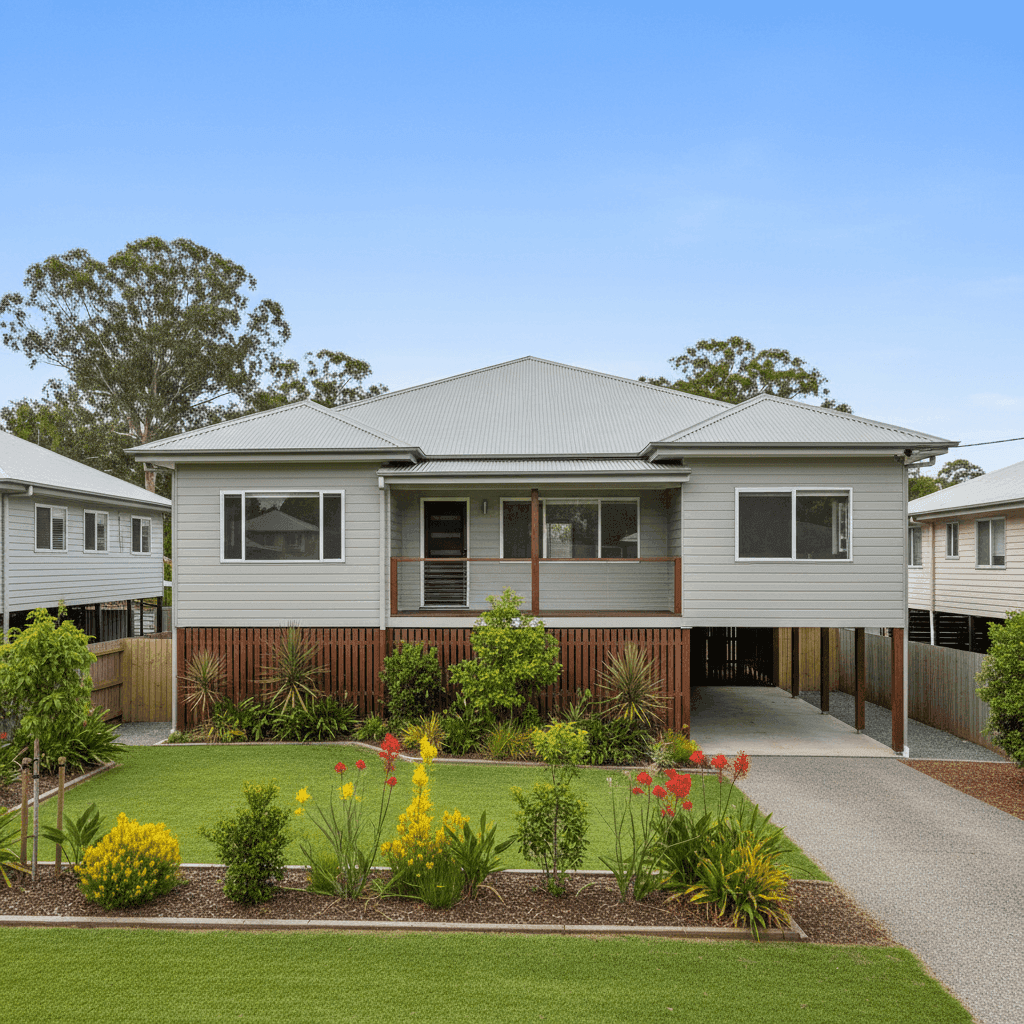
Redbank, a growing suburb in Queensland's Ipswich region, sits within one of South East Queensland's most active property markets. For owners of free standing homes in the area, understanding what drives your home insurance premium — and whether you're getting a fair deal — can make a meaningful difference to your household budget. This article breaks down a real building-only insurance quote for a 3-bedroom, 2-bathroom free standing home in Redbank (QLD 4301), and puts the numbers in context so you can make a more informed decision.
---
Is This Quote Fair?
The quote in question comes in at $5,216 per year (or $497/month) for building-only cover on a free standing home with a sum insured of $566,000 and a building excess of $4,000.
Our analysis rates this quote as Expensive — Above Average. That rating isn't arbitrary. When stacked against the data we've collected for this suburb and beyond, this premium sits noticeably above what most comparable properties in Redbank are paying. That doesn't necessarily mean the policy is bad value — coverage terms, insurer reputation, and specific property risk factors all play a role — but it does suggest there's room to shop around.
A $4,000 building excess is also on the higher end of what's typical. While a higher excess generally reduces your annual premium, the figure here hasn't brought the cost down to a competitive level, which raises questions about whether this insurer's base rate for this property profile is simply higher than the market average.
---
How Redbank Compares
To put this quote in proper context, here's how it measures up across different geographic benchmarks:
| Benchmark | Average Premium | Median Premium |
|---|---|---|
| Redbank (QLD 4301) | $4,858/yr | $4,522/yr |
| Ipswich LGA | $8,901/yr | — |
| Queensland | $9,129/yr | $3,903/yr |
| National | $5,347/yr | $2,764/yr |
A few things stand out here. First, the suburb average of $4,858 and median of $4,522 both sit below this quote's $5,216 — confirming the "above average" rating at a local level. The 25th and 75th percentile figures for Redbank are remarkably close ($4,521 and $4,524 respectively), suggesting a fairly tight cluster of quotes in the suburb, though it's worth noting the local sample size is small (5 quotes), so these figures should be treated as indicative rather than definitive.
Second, the Ipswich LGA average of $8,901 is strikingly high — nearly double the suburb average. This likely reflects a wide spread of property types and risk profiles across the broader Ipswich area, including flood-prone and higher-risk zones. Redbank itself appears to attract more moderate premiums than the LGA average would suggest.
Third, while Queensland's state average of $9,129 is heavily skewed by high-risk coastal and flood-affected regions, the state median of $3,903 tells a different story — most Queensland homeowners are actually paying less than this quote. Nationally, the median sits at just $2,764, though Queensland's elevated risk environment means direct national comparisons have limited usefulness.
You can explore more local data on the Redbank suburb stats page, compare it with the Queensland state overview, or browse national home insurance benchmarks.
---
Property Features That Affect Your Premium
Several characteristics of this property are worth examining in the context of insurance pricing.
Newly built (2024): A brand-new home generally attracts favourable treatment from insurers — modern building codes, fresh materials, and no legacy issues with wiring or plumbing. This should, in theory, work in the homeowner's favour.
Hardiplank / Hardiflex external walls: Fibre cement cladding like Hardiplank is considered a relatively resilient material. It's resistant to fire, moisture, and pests, and most insurers view it positively compared to older weatherboard or asbestos-containing materials.
Steel / Colorbond roof: Colorbond roofing is a popular and well-regarded choice across Queensland. It performs well in high winds and is resistant to corrosion, which insurers generally price favourably.
Elevated on stumps by at least 1 metre: This is a significant factor. Elevated homes — a classic Queensland design — offer natural protection against ground-level flooding and moisture. In a region like Ipswich, which has a documented flood history, being elevated can meaningfully reduce your flood risk profile. However, homes on stumps can also be more vulnerable to wind uplift, which some insurers factor into their pricing.
Vinyl flooring: A practical and water-resistant choice that's relatively inexpensive to replace, which should keep contents and building repair costs lower in the event of a claim.
No pool, no solar panels, no ducted climate control: Each of these features can add complexity and cost to a policy. Their absence here simplifies the risk profile and removes potential premium loading factors.
Building size (139 sqm) and sum insured ($566,000): The sum insured of $566,000 for a 139 sqm newly built home works out to roughly $4,072 per square metre — a figure consistent with current construction costs in South East Queensland, particularly for a new build with quality finishes.
---
Tips for Homeowners in Redbank
1. Compare at least three quotes before renewing The tight spread of premiums in Redbank (25th to 75th percentile is just $3) suggests that most insurers are quoting similarly for standard properties here — but this quote sits above that band. Getting quotes from multiple insurers through a comparison platform like CoverClub takes minutes and could reveal significantly better pricing.
2. Review your sum insured annually Construction costs have risen sharply in recent years. Make sure your sum insured reflects current rebuild costs — not the purchase price or market value of your home. Underinsurance is one of the most common and costly mistakes Queensland homeowners make.
3. Consider your excess carefully This policy carries a $4,000 building excess. While a higher excess typically lowers your premium, the savings here don't appear to be materialising. Ask your insurer what the premium would look like at a $1,000 or $2,000 excess — sometimes the difference is smaller than expected.
4. Ask about flood cover specifically Given that Redbank falls within the broader Ipswich region — an area with a well-documented flood history — it's essential to confirm whether your policy includes flood cover and under what conditions it applies. Not all policies treat riverine flooding and storm surge the same way. Read the Product Disclosure Statement carefully, or ask your insurer directly.
---
Ready to Find a Better Rate?
If this quote doesn't feel right for your property, you're not stuck with it. CoverClub makes it easy to compare home insurance quotes from a range of Australian insurers in one place. Whether you're insuring a new build in Redbank or reviewing an existing policy, get a quote today and see if you can do better than the suburb average.