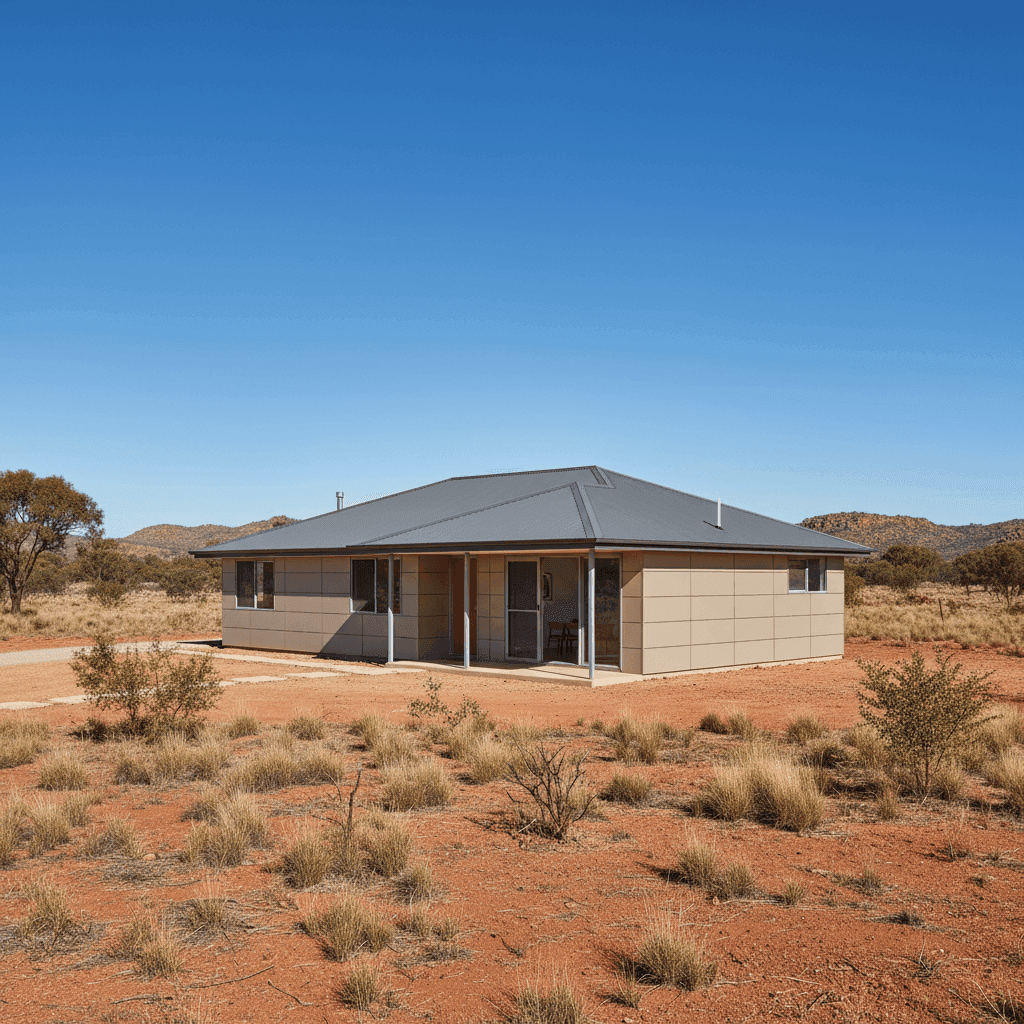
If you own a free standing home in Redbank, WA 6721, you already know that insurance in this part of Western Australia is anything but straightforward. Sitting within the Shire of Karratha in the Pilbara region, Redbank is a cyclone-risk area — and that single factor shapes nearly every aspect of what you'll pay to protect your home. This article breaks down a recent building-only insurance quote for a three-bedroom, one-bathroom free standing home in the suburb, compares it against local, state and national benchmarks, and offers practical guidance for homeowners navigating this market.
---
Is This Quote Fair?
The quote in question comes in at $5,252 per year (or around $496 per month) for building-only cover with a $1,000 excess, on a home insured for $750,000.
CoverClub's pricing engine rates this quote as CHEAP — below average for the area. That's a significant finding. When a premium is rated cheap in a cyclone-risk postcode like Redbank, it's worth understanding why — and whether the cover is genuinely competitive or simply reflects a lower-risk profile within the suburb.
In this case, several property characteristics likely contribute to the favourable pricing: the home is built on a concrete slab, clad in aluminium weatherboard, and topped with a steel Colorbond roof — all materials that tend to perform reasonably well in high-wind events and are generally viewed more favourably by underwriters than, say, timber-framed homes with tiled roofs. The standard fittings quality and modest elevation (less than 1 metre) also keep the rebuild estimate grounded, even at a $750,000 sum insured for a 214 sqm home.
At roughly $24.55 per square metre per year, this is a solid rate for a cyclone-exposed property — though homeowners should always confirm that their sum insured genuinely reflects current rebuild costs, particularly given construction cost inflation across regional WA in recent years.
---
How Redbank Compares
The numbers tell a striking story when you stack this quote against broader benchmarks. You can explore the full data on the Redbank suburb insurance stats page.
| Benchmark | Premium |
|---|---|
| This quote | $5,252/yr |
| Suburb average (Redbank) | $16,973/yr |
| Suburb median (Redbank) | $17,021/yr |
| Suburb 25th percentile | $15,769/yr |
| Suburb 75th percentile | $18,083/yr |
| LGA average (Karratha) | $10,438/yr |
| WA state average | $2,811/yr |
| WA state median | $2,127/yr |
| National average | $5,347/yr |
| National median | $2,764/yr |
A few things stand out immediately. The suburb average of $16,973 is more than three times the national average — a clear reflection of the cyclone risk baked into Pilbara postcodes. Even the 25th percentile (the cheapest quarter of quotes) sits at $15,769, meaning the vast majority of homeowners in Redbank are paying well above what most Australians pay for building insurance.
This quote, at $5,252, sits dramatically below even the cheapest suburb benchmark — suggesting that this particular property's characteristics have attracted genuinely competitive pricing from at least one insurer. It's also worth noting that the WA state average of $2,811 is itself elevated compared to the national average of $5,347 — though in this case, the national average is actually higher than the WA state figure, which reflects how heavily cyclone-exposed postcodes skew the national numbers upward.
With only 8 quotes in the suburb sample, the Redbank dataset is relatively small, so individual property characteristics can move the needle considerably. That makes comparison shopping especially important here.
---
Property Features That Affect Your Premium
Understanding what drives your premium is the first step to managing it. Here's how the key features of this property interact with insurance pricing in a cyclone-risk zone:
Aluminium cladding & Colorbond roof Both are considered durable, low-maintenance materials that hold up reasonably well in high-wind events. Insurers generally price these more favourably than brick veneer or terracotta tile roofs, which can suffer more significant cyclone damage.
Concrete slab foundation Slab-on-ground construction is typically viewed positively by underwriters in cyclone regions. It eliminates the vulnerability of elevated subfloor structures and provides a stable base that reduces movement during extreme weather.
Cyclone risk area This is the dominant pricing factor for any Redbank property. The Pilbara coast is one of Australia's most cyclone-exposed regions, and insurers apply significant loadings to reflect the heightened risk of structural damage, storm surge, and wind-driven rain. Even with favourable building materials, cyclone exposure means premiums will always be higher here than in most of WA.
214 sqm floor area, standard fittings A mid-sized home with standard-quality fittings keeps the rebuild cost estimate reasonable. Homes with premium or luxury fittings — stone benchtops, custom joinery, high-end appliances — attract higher sum insured requirements and, consequently, higher premiums.
No pool, no solar panels Both of these additions can increase premiums, so their absence helps keep costs down. Solar panels in cyclone zones are a particular concern for insurers, as panels can become projectiles or suffer significant damage in high-wind events.
---
Tips for Homeowners in Redbank
1. Don't assume your sum insured is still accurate Construction costs across regional WA have risen sharply in recent years due to labour shortages and materials inflation. A sum insured set a few years ago may no longer reflect what it would actually cost to rebuild your home today. Consider getting a professional quantity surveyor assessment or using an online rebuild calculator annually.
2. Compare quotes every renewal — especially in this postcode The spread between the cheapest and most expensive quotes in Redbank is enormous. With suburb premiums ranging from around $15,769 to $18,083 (and this quote coming in far below that range), it's clear that different insurers price this risk very differently. Getting multiple quotes through a comparison platform is one of the most effective ways to avoid overpaying.
3. Review your cyclone preparedness and document it Some insurers offer discounts or more favourable terms for homes that have undergone cyclone-resilience upgrades — things like cyclone-rated shutters, reinforced garage doors, or roof tie-down assessments. Keep records of any improvements and ask your insurer whether they're reflected in your pricing.
4. Consider contents cover separately This quote covers the building only. If you haven't separately arranged contents insurance, your furniture, appliances, and personal belongings are unprotected in the event of a cyclone or other insured event. Given the risk profile of the area, a combined building and contents policy — or a standalone contents policy — is well worth exploring.
---
Ready to Compare?
Whether you're renewing soon or just curious about what you should be paying, CoverClub makes it easy to compare home insurance quotes across Australia's leading insurers. If you're a homeowner in Redbank or anywhere in the Pilbara, don't settle for the first quote you receive — the difference between insurers in high-risk postcodes can run into thousands of dollars per year. Start your free quote comparison at CoverClub and see how your current premium stacks up.