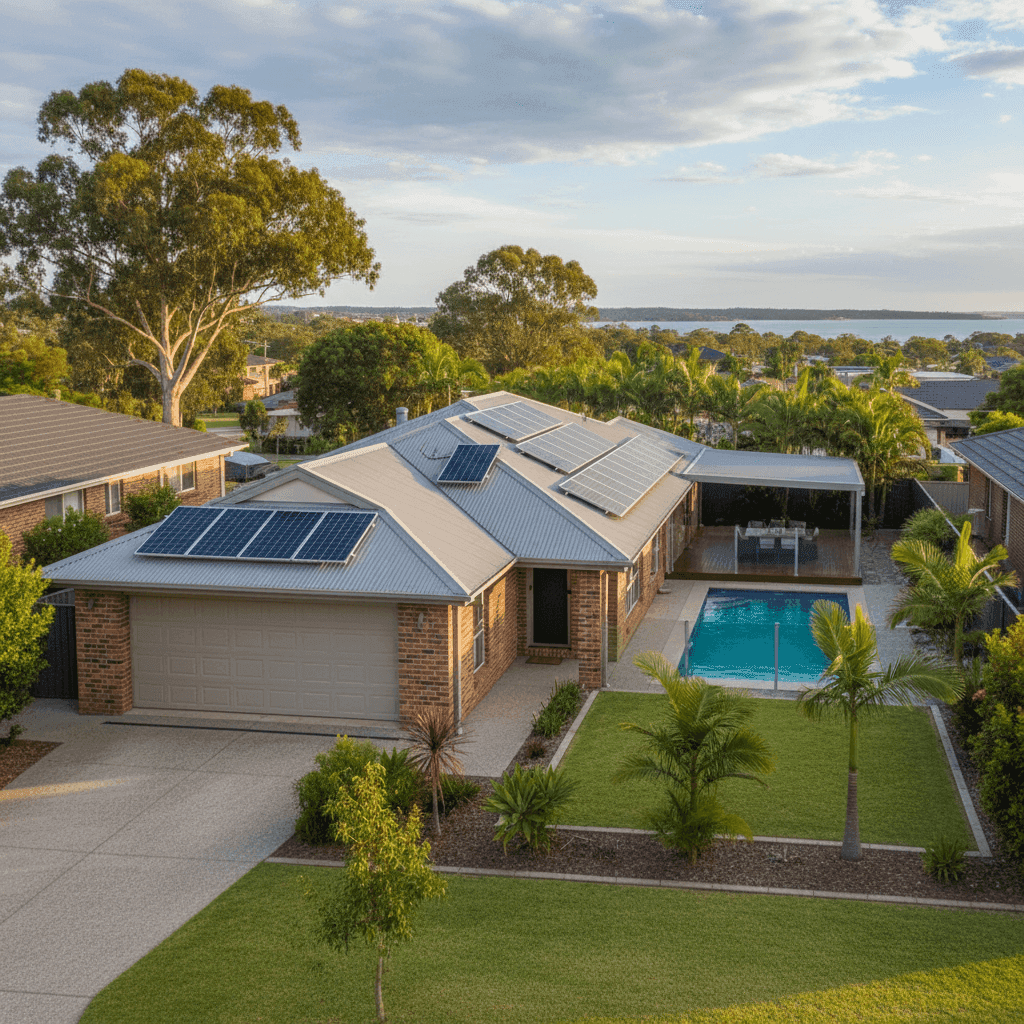
If you own a four-bedroom free standing home in Redland Bay, QLD 4165, you've probably noticed that home insurance isn't cheap — and you might be wondering whether the quote sitting in your inbox is reasonable or whether you're paying too much. This article breaks down a real quote for a property in this suburb, compares it against local, state, and national benchmarks, and offers practical tips for getting better value on your cover.
---
Is This Quote Fair?
The quote in question comes in at $3,765 per year (or $354/month) for combined home and contents insurance, covering a building sum insured of $780,000 and contents valued at $120,000. Both the building and contents excess are set at $1,000.
Our price rating for this quote is Expensive (Above Average).
To put that in context: the suburb average for Redland Bay sits at $2,324/yr, with a median of $2,662/yr. This quote lands well above both figures — and even above the 75th percentile for the suburb, which is $3,267/yr. That means this premium is higher than roughly three-quarters of comparable quotes in the area.
That said, it's worth noting that the higher sum insured ($780,000 for the building alone) and the inclusion of a pool and solar panels will naturally push premiums upward compared to a more modestly insured property. The rating reflects where this quote sits relative to others in the suburb, not necessarily that you've been given a bad deal by your insurer — it simply means there's a strong case for shopping around.
---
How Redland Bay Compares
Understanding how your suburb stacks up against broader benchmarks is a useful way to gauge whether you're in a high-cost area or not.
| Benchmark | Average Premium |
|---|---|
| Redland Bay (suburb average) | $2,324/yr |
| Redland Bay (suburb median) | $2,662/yr |
| Redland LGA average | $3,312/yr |
| Queensland state average | $4,547/yr |
| Queensland state median | $3,931/yr |
| National average | $2,965/yr |
| National median | $2,716/yr |
(Based on 91 quotes collected for postcode 4165.)
A few things stand out here. First, Redland Bay's suburb average of $2,324/yr is actually below the national average of $2,965/yr — which is somewhat surprising given Queensland's reputation for elevated insurance costs. However, the broader Queensland state average of $4,547/yr tells a different story, reflecting the significant flood, storm, and cyclone exposure that affects many parts of the state.
Redland Bay itself is not classified as a cyclone risk area, which helps keep premiums more competitive than many other Queensland postcodes. Compared to the national picture, homeowners here are generally paying close to — or slightly below — the Australian average, making it a relatively affordable suburb by Queensland standards.
The quote analysed here, at $3,765/yr, sits above the suburb median but below the Queensland state average — which is a nuanced position. It's not outlandish in a state context, but there's clearly room to find a more competitive price at the local level.
---
Property Features That Affect Your Premium
Several characteristics of this property will be influencing the premium, both positively and negatively.
Brick veneer construction is generally viewed favourably by insurers. It offers solid fire resistance and structural durability, which can help moderate premiums compared to timber-framed or clad homes.
Steel/Colorbond roofing is another plus. It's durable, low-maintenance, and performs well in storm conditions — all factors that reduce risk in the eyes of underwriters.
Slab foundation is standard for Queensland homes built in this era and doesn't typically attract loading, unlike homes on stumps or piers that may have elevated flood or subsidence risk.
Swimming pool — while a great lifestyle feature — does add to the insured value of the property and introduces additional liability considerations. Insurers typically factor in the cost of pool repair or replacement when calculating your building sum insured, which can nudge the premium upward.
Solar panels are an increasingly common feature and one that insurers are paying closer attention to. Panels add to the replacement cost of the building and can be damaged in hail or storm events. Some insurers include them automatically under building cover; others require them to be specifically noted. It's worth confirming your panels are explicitly covered under your policy.
The property's 214 sqm building size and standard fittings are fairly typical for a home of this age and bedroom count, and won't attract any significant premium loading. The 2000 construction year also means the home is relatively modern — old enough to be established, but not so old as to raise concerns about ageing infrastructure or materials like asbestos.
---
Tips for Homeowners in Redland Bay
1. Review your sum insured carefully A building sum insured of $780,000 is substantial. Make sure this figure reflects the actual cost to rebuild your home — not its market value. Overcovering can mean you're paying more premium than necessary, while undercovering can leave you exposed at claim time. Use a building cost calculator or speak to a quantity surveyor if you're unsure.
2. Confirm your solar panels and pool are correctly listed As mentioned above, both features need to be explicitly covered under your policy. Check the product disclosure statement (PDS) to confirm how your insurer treats solar panels — particularly whether damage from hail or storm events is included — and whether your pool's equipment (pump, filter, etc.) is covered under building or contents.
3. Compare quotes before renewing Given this quote sits above the 75th percentile for the suburb, there's a real chance you could find a more competitive price without sacrificing cover quality. Insurers price risk differently, and a like-for-like comparison could save you hundreds of dollars annually. Get a quote at CoverClub to see what other insurers are offering for your property.
4. Consider your excess level Both excesses are set at $1,000, which is a common default. Opting for a higher voluntary excess can reduce your annual premium — but make sure the saving is meaningful and that you're comfortable covering that amount out of pocket if you need to make a claim.
---
Compare Your Options with CoverClub
Whether you're renewing your existing policy or taking out cover for the first time, it pays to compare. CoverClub makes it easy to see how your premium stacks up against what other homeowners in Redland Bay and across Queensland are paying. Start a quote today and find out if you could be getting better value — without compromising on the cover that matters most.