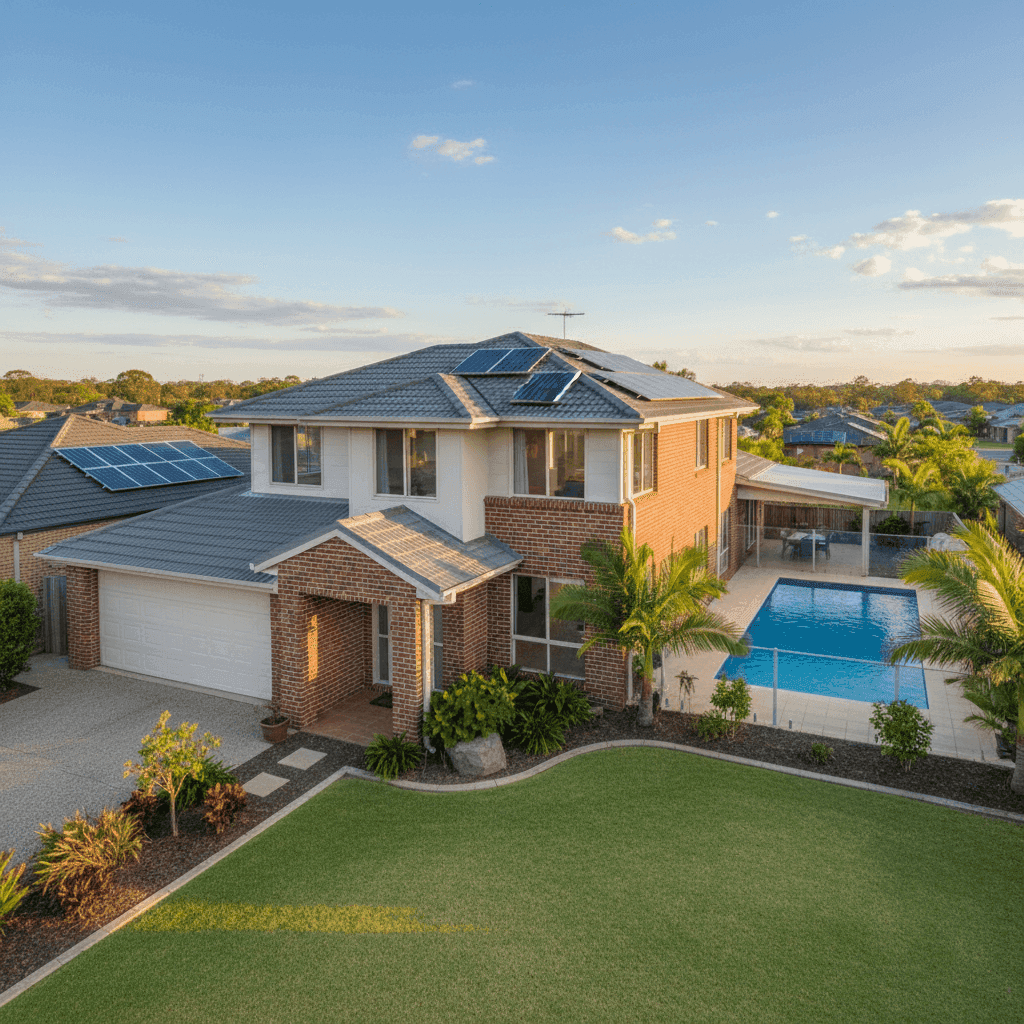
If you own a free standing home in Redland Bay, QLD 4165, you've probably wondered whether you're paying a fair price for your home and contents insurance — or whether there's a better deal out there. To help answer that question, we've analysed a real insurance quote for a four-bedroom, two-bathroom brick veneer home in this bayside suburb, and compared it against local, state, and national benchmarks.
---
Is This Quote Fair?
The quote in question comes in at $2,447 per year (or around $234 per month) for combined home and contents cover, with a building sum insured of $647,000 and contents valued at $30,000. Both the building and contents excess are set at $1,000.
Our rating for this quote is FAIR — Around Average.
That might sound underwhelming, but in the context of the broader insurance market, "around average" is actually a reasonably solid outcome. Premiums across Queensland are highly variable, and landing near the middle of the pack for your suburb means you're not being significantly overcharged. That said, there's always room to explore whether a comparable policy could be secured at a lower price point.
The 25th percentile for Redland Bay sits at $2,378 per year, meaning roughly a quarter of comparable quotes come in below that figure. At $2,447, this quote is only marginally above that threshold — suggesting it's competitive, though not the sharpest price available in the suburb.
---
How Redland Bay Compares
To put this quote in proper context, it helps to look at the insurance data for Redland Bay (QLD 4165), which is drawn from a sample of 89 quotes.
| Benchmark | Premium |
|---|---|
| This quote | $2,447/yr |
| Redland Bay suburb average | $3,184/yr |
| Redland Bay suburb median | $3,132/yr |
| Redland Bay 25th percentile | $2,378/yr |
| Redland Bay 75th percentile | $3,511/yr |
| Redland LGA average | $3,178/yr |
| QLD state median | $3,903/yr |
| National median | $2,764/yr |
A few things stand out here. First, this quote is well below the Redland Bay suburb average of $3,184 — a saving of over $730 per year compared to what many homeowners in the area are paying. It also sits comfortably beneath the suburb median of $3,132.
Second, the Queensland state median of $3,903 is notably higher than the suburb median, which reflects the enormous variation in premiums across the state. North Queensland in particular drives the QLD average upward due to cyclone risk and extreme weather exposure. Redland Bay, sitting in South East Queensland without a designated cyclone risk rating, benefits from a comparatively lower risk profile.
Third, when stacked against the national median of $2,764, this quote is actually slightly below average — a positive result for the homeowner.
---
Property Features That Affect Your Premium
Insurance premiums aren't calculated in a vacuum. The specific characteristics of a property play a significant role in determining the final price. Here's how the features of this home are likely influencing the quote:
Brick veneer construction and tiled roof are generally viewed favourably by insurers. Brick veneer offers solid fire resistance and structural durability, while tiled roofs tend to perform well in storms compared to corrugated iron. Together, these materials typically attract lower premiums than timber-framed or metal-roofed homes.
Slab foundation is standard for homes of this era and is generally considered low risk by insurers, particularly in areas without significant soil movement or flood history.
Built in 2014, this is a relatively modern home. Newer builds typically comply with more recent building codes, which means better structural standards and potentially fewer claims — a factor that can work in the owner's favour at premium time.
Swimming pool adds a degree of liability exposure, which may nudge the premium slightly upward. Pools are a common feature in South East Queensland, and most home and contents policies will factor in the associated public liability risk.
Solar panels are an increasingly common feature on Queensland rooftops, and they do add to the overall insured value of the property. It's worth confirming with your insurer that your panels are explicitly covered under the building sum insured, as some policies treat them differently.
Ducted climate control is another feature that contributes to the overall replacement cost of the home. At 214 sqm, this is a sizeable property, and the inclusion of ducted air conditioning is consistent with the $647,000 building sum insured.
Contents insured at $30,000 is on the lower end for a four-bedroom home. It's worth taking stock of your furniture, appliances, clothing, and personal items to ensure this figure genuinely reflects the cost of replacing everything — underinsurance is a common and costly mistake.
---
Tips for Homeowners in Redland Bay
1. Review your contents sum insured regularly $30,000 for a four-bedroom home may leave you underinsured. Conduct a room-by-room inventory annually and update your policy accordingly. The cost of replacing white goods, furniture, electronics, and clothing adds up quickly.
2. Confirm solar panel coverage With solar panels on the roof, make sure your policy explicitly covers them for storm damage, hail, and accidental breakage. Some insurers include them automatically under building cover; others require a separate endorsement.
3. Shop around at renewal time Even though this quote rates as fair, the insurance market is competitive. Use a comparison platform like CoverClub to benchmark your renewal premium each year — loyalty doesn't always pay in the insurance world.
4. Consider your excess settings Both building and contents excesses are set at $1,000 here. If you're comfortable absorbing a higher out-of-pocket cost in the event of a claim, increasing your excess is one of the most straightforward ways to reduce your annual premium.
---
Compare Your Home Insurance Today
Whether you're renewing your existing policy or shopping for cover for the first time, it pays to compare. CoverClub makes it easy to see real quotes for homes in Redland Bay and across Australia — so you can make an informed decision rather than simply rolling over last year's policy.