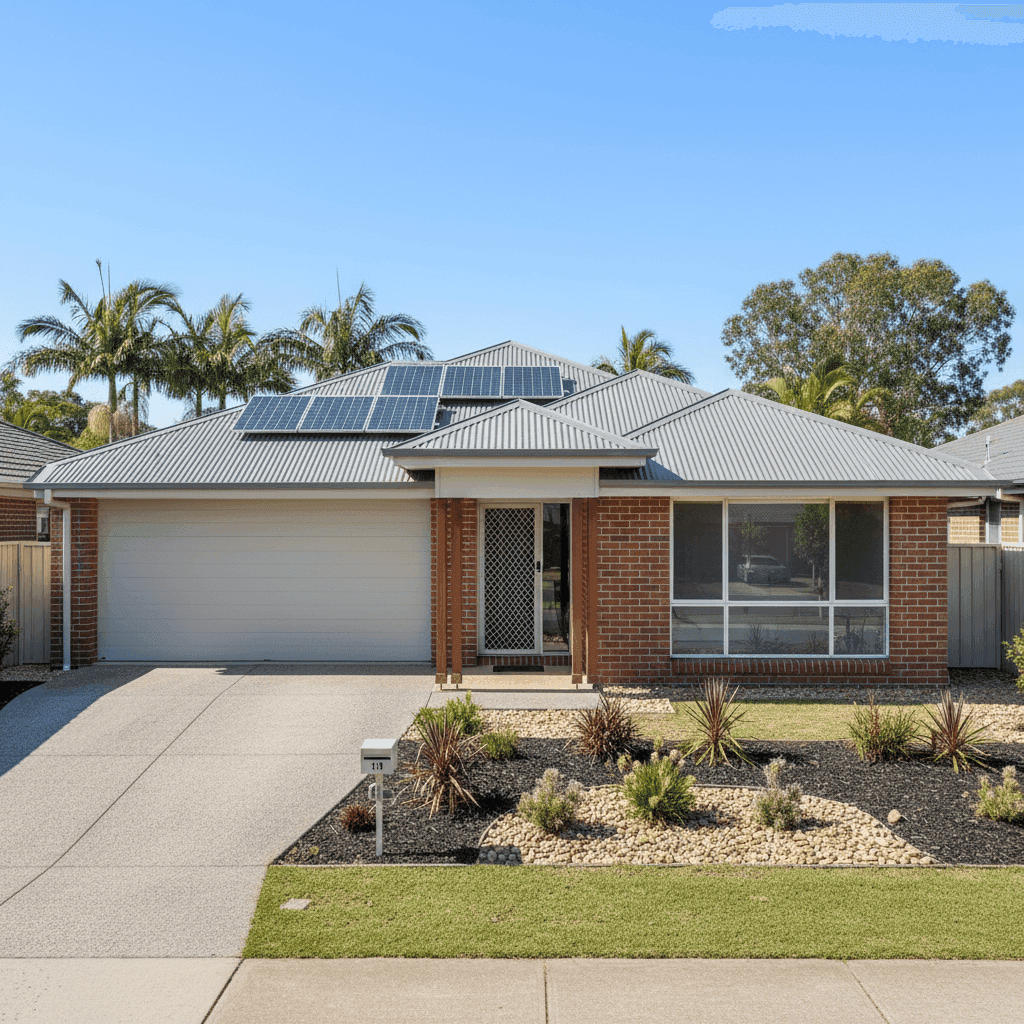
If you own a free standing home in Redridge, QLD 4660, you've probably wondered whether you're paying a fair price for home and contents insurance — or whether there's a better deal out there. In this article, we break down a real insurance quote for a four-bedroom, two-bathroom brick veneer home in Redridge, compare it against local, state, and national benchmarks, and share practical tips to help you get the most out of your cover.
---
Is This Quote Fair?
The quote in question comes in at $2,077 per year (or around $205 per month), covering both building and contents for a 214 sqm free standing home with a building sum insured of $853,000 and contents valued at $50,000. Both the building and contents excess sit at $1,000.
Our price rating for this quote? Cheap — below average. That's genuinely good news for the homeowner.
To put that in perspective, the Queensland state average premium sits at $4,547 per year, with a median of $3,931. At $2,077, this quote is less than half the state average — a remarkable saving of over $2,470 annually compared to what the typical Queensland homeowner pays. Even against the national average of $2,965 and the national median of $2,716, this quote still comes in well below the mark.
For homeowners in the Fraser Coast LGA — which encompasses Redridge — the average premium is $3,385 per year. This quote undercuts that local benchmark by more than $1,300. By any measure, this is a competitively priced policy.
---
How Redridge Compares
Queensland is one of Australia's most expensive states for home insurance, largely due to its exposure to severe weather events including cyclones, flooding, and hailstorms. Statewide premiums reflect this elevated risk, which is why the QLD average of $4,547 is so much higher than the national average of $2,965.
However, not every corner of Queensland carries the same level of risk, and Redridge is a good example of a location where premiums can be more manageable. You can explore detailed premium data for this postcode at the Redridge suburb stats page — though it's worth noting that suburb-level comparison data is still building out for this area.
What we can say with confidence is that this particular quote sits significantly below both the Fraser Coast LGA average ($3,385) and the broader Queensland benchmark. Whether that reflects the specific property's characteristics, the insurer's pricing model, or a combination of both, it represents solid value for the homeowner.
| Benchmark | Annual Premium |
|---|---|
| This Quote | $2,077 |
| Fraser Coast LGA Average | $3,385 |
| QLD Average | $4,547 |
| QLD Median | $3,931 |
| National Average | $2,965 |
| National Median | $2,716 |
---
Property Features That Affect Your Premium
Several characteristics of this property work in the homeowner's favour when it comes to insurance pricing.
Construction Materials
The home features brick veneer external walls and a steel/Colorbond roof — a combination that insurers generally view favourably. Brick veneer is resilient against fire and offers good structural durability, while Colorbond roofing is lightweight, corrosion-resistant, and performs well in Australian conditions. Compared to timber-framed homes with tiled roofs, this combination tends to attract lower premiums.
Slab Foundation
A concrete slab foundation is another plus. Slab homes are considered lower risk than homes on stumps or piers, as they're less susceptible to subsidence and underfloor moisture issues. This is particularly relevant in Queensland, where soil movement from wet and dry cycles can affect older or more vulnerable foundations.
Construction Year
Built in 2009, this home is relatively modern, which matters to insurers. Newer homes are generally built to more recent Australian Standards, including improved cyclone and wind-load ratings, fire-resistant materials, and updated electrical and plumbing systems. Older homes can attract higher premiums due to ageing infrastructure and the cost of like-for-like replacement.
Solar Panels
This property has solar panels, which are included in the building sum insured. It's important to confirm with your insurer that your solar system is explicitly covered under your policy — some policies include it automatically as a fixture of the home, while others may require you to specify it. Given the cost of solar systems, this is worth verifying.
Ducted Climate Control
Ducted air conditioning is a significant fixed asset and is typically covered as part of the building sum insured. As with solar panels, it's worth confirming your policy covers the full replacement cost of the system, particularly for larger ducted setups that can be expensive to replace.
No Pool
Without a pool, this property avoids a common liability risk factor. Pools can increase premiums slightly due to the associated public liability exposure, so their absence keeps things simple.
Tile Flooring
Tile flooring throughout the home is a practical choice in Queensland's climate and is generally straightforward to replace in the event of a claim. It's less susceptible to water damage than carpet or timber, which can be a factor in flood-prone areas.
---
Tips for Homeowners in Redridge
1. Review your building sum insured regularly At $853,000, this home's building sum insured is substantial. Construction costs have risen significantly across Australia in recent years, so it's worth reviewing your sum insured annually to ensure it reflects current rebuild costs — not just the market value of your property. Underinsurance is one of the most common and costly mistakes homeowners make.
2. Confirm your solar panels and ducted AC are covered As mentioned above, both solar panels and ducted climate control represent significant value. Check your policy documents carefully to confirm these are covered and at what replacement cost. If they're not explicitly listed, contact your insurer.
3. Compare quotes at renewal time Even though this quote is already rated as cheap, the insurance market changes constantly. Insurers adjust their pricing models, and a policy that's competitive today may not be the best value at your next renewal. Use a comparison tool like CoverClub to benchmark your renewal quote before you commit.
4. Understand your excess obligations With both building and contents excesses set at $1,000, it's important to factor this into your financial planning. If you lodged claims on both building and contents simultaneously — say, after a storm — you could be up for $2,000 out of pocket before your cover kicks in. Some insurers allow you to adjust your excess in exchange for a higher or lower premium, so it's worth modelling what works best for your situation.
---
Get a Quote for Your Redridge Home
Whether you're a first-time buyer or a long-term Redridge resident, it pays to compare your home insurance options. The quote analysed here is a strong example of what's achievable — well below state and national averages — but your own premium will depend on your specific property details, chosen insurer, and level of cover.
Compare home insurance quotes at CoverClub to see what you could be paying, and make sure you're not leaving money on the table at your next renewal.