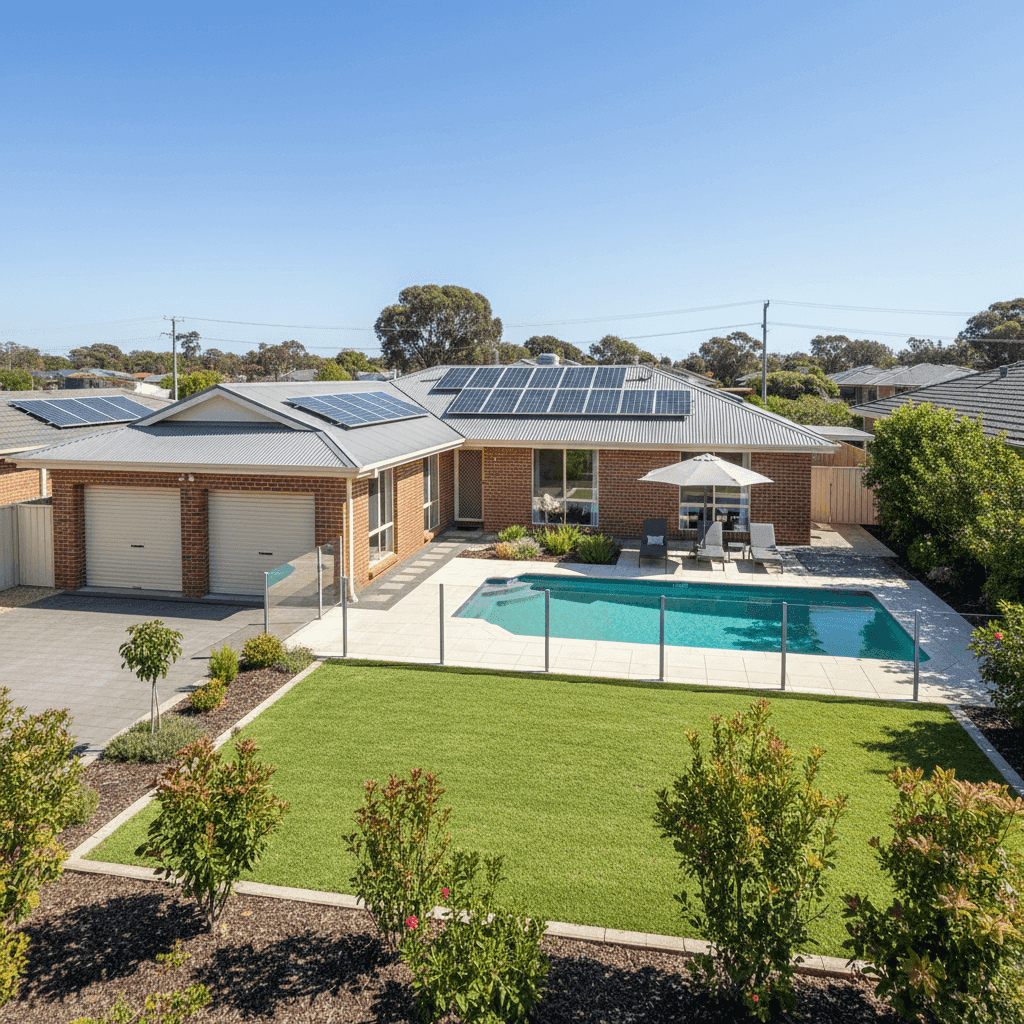
If you own a four-bedroom free standing home in Redwood Park, SA 5097, you're probably curious whether what you're paying for home and contents insurance is reasonable — or whether you're leaving money on the table. Redwood Park is a well-established suburb in the City of Tea Tree Gully, roughly 20 kilometres north-east of Adelaide's CBD. It's a predominantly residential area with a mix of brick homes built from the 1970s through to the early 2000s, and it sits comfortably within a low-to-moderate insurance risk zone. That context matters a great deal when evaluating any quote.
This article breaks down a recent home and contents insurance quote for a 214 sqm brick veneer home in Redwood Park — examining whether the price stacks up, what's driving the cost, and what homeowners in this suburb can do to bring their premiums down.
---
Is This Quote Fair?
The quote in question comes in at $2,224 per year (or $223/month) for combined home and contents cover, with a $975,000 building sum insured and $124,000 in contents cover. Both the building and contents excess are set at $1,000.
Our price rating for this quote is Expensive — above average for the area.
To understand why, it helps to look at what other homeowners in the same postcode are paying. Based on 27 quotes collected for Redwood Park (SA 5097), the suburb average sits at $1,120/year and the median is $1,086/year. The 75th percentile — meaning only one in four quotes is more expensive — is just $1,261/year. At $2,224, this quote is well above that upper band, sitting nearly double the suburb median.
That said, it's worth noting that the suburb sample reflects a range of property sizes, cover levels, and insurer pricing models. A larger home with above-average fittings, a swimming pool, solar panels, and ducted climate control will naturally attract a higher premium than a modest three-bedroom home with standard inclusions. Even so, the gap is significant enough to warrant a closer look.
---
How Redwood Park Compares
Putting this quote in a broader context helps clarify where it sits across different benchmarks:
| Benchmark | Premium |
|---|---|
| This Quote | $2,224/yr |
| Redwood Park suburb average | $1,120/yr |
| Redwood Park suburb median | $1,086/yr |
| Tea Tree Gully LGA average | $1,440/yr |
| SA state average | $2,433/yr |
| SA state median | $1,679/yr |
| National average | $5,347/yr |
| National median | $2,764/yr |
A few things stand out here. First, this quote is actually below the South Australian state average of $2,433/year — so on a state-wide basis, it's not unreasonable. Second, the national average of $5,347/year (heavily influenced by high-risk regions in Queensland and Northern Australia) makes this quote look quite modest by comparison.
The real story is at the local level. Redwood Park consistently produces lower quotes than the broader SA average, which suggests the suburb benefits from relatively benign risk conditions — no cyclone exposure, low flood risk, and a stable built environment. For a property of this size and specification, the quote is on the higher end locally, but not out of step with what you'd expect for a well-appointed home with additional features like a pool and solar system.
---
Property Features That Affect Your Premium
Several characteristics of this property directly influence the cost of insuring it. Understanding these factors can help you make sense of your quote — and potentially identify areas to adjust.
Building sum insured of $975,000 This is the single largest driver of premium cost. At 214 sqm with above-average fittings, a $975,000 rebuild value is plausible — but it's worth verifying with a quantity surveyor or using a building cost calculator to ensure you're not over-insured.
Brick veneer construction and Colorbond roof Brick veneer walls are generally viewed favourably by insurers, as they offer solid fire and weather resistance. A steel/Colorbond roof is durable and low-maintenance, and is typically rated well in SA's climate. These features tend to keep premiums lower than, say, weatherboard or fibrous cement construction.
Slab foundation A concrete slab is considered a stable, low-risk foundation type by most insurers. It reduces concerns around subsidence and underfloor moisture damage, which can be a factor with older homes on stumps or piers.
Swimming pool Pools introduce additional liability exposure and increase the replacement value of the property, both of which can nudge premiums upward. Insurers factor in the cost of pool fencing compliance, equipment, and potential third-party liability.
Solar panels Solar systems add to the insured value of the home and can be a replacement cost consideration in the event of storm or hail damage. Most insurers include solar panels under building cover, but it's worth confirming this with your insurer.
Ducted climate control Ducted systems are expensive to replace and are typically included in building cover. Their presence contributes to the overall sum insured and, by extension, the premium.
Above-average fittings Higher-quality fixtures, finishes, and appliances mean higher replacement costs. Insurers price this accordingly, and it's one of the reasons this property's premium sits above the suburb average for a standard home.
---
Tips for Homeowners in Redwood Park
If you're looking to get better value on your home insurance without sacrificing cover, here are some practical steps worth considering:
1. Review your sum insured regularly Building costs fluctuate, and many homeowners are either over-insured (paying too much) or under-insured (at risk of a shortfall at claim time). Use a professional building cost estimator or ask your insurer how they've calculated your rebuild value. Even a modest adjustment downward — if justified — can meaningfully reduce your annual premium.
2. Increase your excess Both the building and contents excess on this policy are set at $1,000. Opting for a higher voluntary excess (say, $2,000 or $2,500) can reduce your premium noticeably. Just make sure the excess level is something you could comfortably cover out of pocket if you needed to make a claim.
3. Bundle and consolidate If your home and contents insurance are with different providers, consolidating them under one policy often unlocks a multi-policy discount. Most major Australian insurers offer this, and the savings can be meaningful over time.
4. Compare the market annually Loyalty doesn't always pay in Australian insurance. Premiums tend to creep up at renewal, and the best deals are often reserved for new customers. Use a comparison service like CoverClub to benchmark your renewal quote against current market offerings — it takes only a few minutes and can save hundreds of dollars per year.
---
Find a Better Deal with CoverClub
Whether you're renewing your existing policy or shopping for cover for the first time, it pays to compare. CoverClub makes it easy for Australian homeowners to see how their quote stacks up against real data from their suburb, LGA, and state. Get a home insurance quote today and find out if you're paying more than you need to — or head to our Redwood Park insurance stats page to explore more local benchmarks.