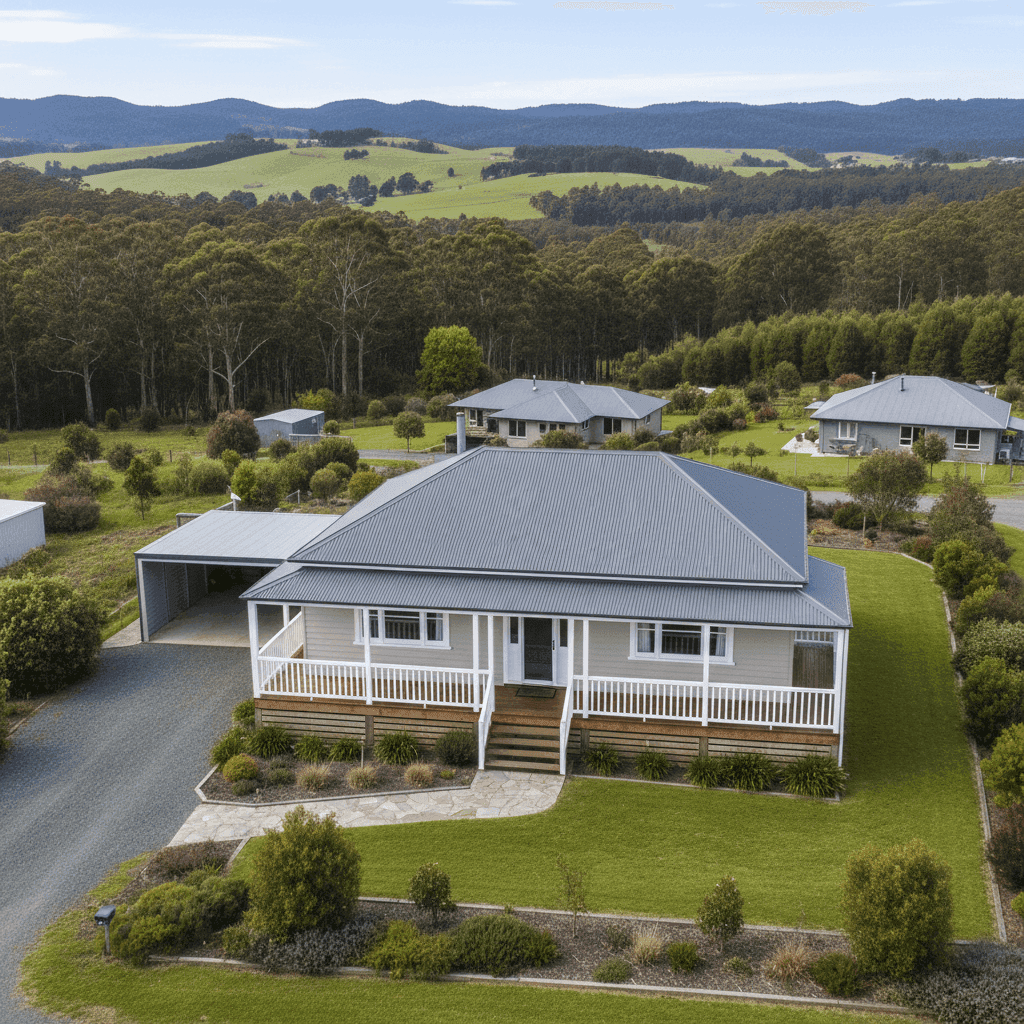
Nestled in the green hills of northern Tasmania, Reedy Marsh is a quiet rural locality that offers a peaceful lifestyle — but like any Australian property, homes here still need solid insurance cover. This article takes a close look at a real home and contents insurance quote for a three-bedroom, free-standing weatherboard home in Reedy Marsh (TAS 7304), breaking down what the premium reflects, how it stacks up against local and national benchmarks, and what homeowners in the area can do to make sure they're getting good value.
---
Is This Quote Fair?
The quoted annual premium for this property is $2,804 per year (or $270/month), covering both building and contents. The building is insured for $550,000 and contents for $40,000, with a $5,000 building excess and a $1,000 contents excess.
Our price rating for this quote is FAIR — Around Average, which is a reasonable outcome for a property of this type and age. The higher building excess of $5,000 is a key factor here: opting for a larger excess is a common way to reduce your annual premium, so it's worth keeping in mind that while the headline figure looks competitive, you'd be out of pocket by up to $5,000 before your insurer steps in on a building claim.
That said, $2,804 sits comfortably within the normal range for this suburb. It's below both the suburb average and median, which suggests this quote is performing well relative to what most Reedy Marsh homeowners are paying.
---
How Reedy Marsh Compares
Understanding how a quote sits within its local and broader context is one of the most useful things you can do when evaluating home insurance. Here's how this premium measures up:
| Benchmark | Premium |
|---|---|
| This Quote | $2,804/yr |
| Suburb Average (Reedy Marsh) | $3,464/yr |
| Suburb Median (Reedy Marsh) | $3,044/yr |
| Suburb 25th Percentile | $2,429/yr |
| Suburb 75th Percentile | $4,422/yr |
| TAS State Average | $2,814/yr |
| TAS State Median | $2,326/yr |
| National Average | $5,347/yr |
| National Median | $2,764/yr |
| LGA Average (West Tamar) | $2,006/yr |
Note: Suburb sample size is 9 quotes — a relatively small dataset, so treat suburb averages as a guide rather than a definitive benchmark.
This quote of $2,804 sits below the suburb average ($3,464) and just under the suburb median ($3,044), placing it roughly between the 25th and 50th percentile for Reedy Marsh. That's a solid result.
Compared to the Tasmanian state average of $2,814, this quote is essentially on par — just $10 below the state mean. Tasmania is generally one of the more affordable states for home insurance in Australia, and this quote reflects that.
The contrast with the national average of $5,347 is striking. Tasmanian homeowners benefit significantly compared to their counterparts in Queensland or Western Australia, where cyclone risk, flooding, and extreme weather events push premiums considerably higher. On a national median basis ($2,764), this quote is also broadly in line.
One figure worth noting is the West Tamar LGA average of $2,006/yr — this quote sits above that local government benchmark, though the LGA average likely includes a wide mix of property types, sizes, and cover levels, so direct comparison has its limits.
---
Property Features That Affect Your Premium
Several characteristics of this particular home have a meaningful influence on what insurers charge. Understanding them helps explain why the premium lands where it does.
Weatherboard timber construction is one of the most significant rating factors. Timber-framed and weatherboard homes are considered higher risk by insurers than brick veneer or double-brick homes, primarily due to greater susceptibility to fire and the higher cost of repairs. This will generally push premiums upward compared to a comparable brick home.
The steel/Colorbond roof is a positive from an insurer's perspective. Colorbond is durable, low-maintenance, and performs well in wind and hail events — it's generally viewed more favourably than terracotta or concrete tiles, which can crack or dislodge.
Stump foundations (elevated less than 1 metre) are common in older Tasmanian homes and can be a double-edged sword for insurance. On one hand, elevation can reduce flood risk; on the other, the sub-floor space requires ongoing maintenance and can be vulnerable to structural issues if stumps deteriorate. Insurers assess this carefully.
Timber and laminate flooring can be costly to replace or repair if water damage occurs, which is factored into contents and building valuations.
Construction year of 1989 means the home is over 35 years old. Older homes can attract slightly higher premiums due to aging electrical systems, plumbing, and building materials that may not meet current standards. It's worth ensuring your sum insured ($550,000) accurately reflects the cost to rebuild — not just the market value of the land and dwelling.
The absence of a pool, solar panels, and ducted climate control keeps the risk profile relatively straightforward, which helps moderate the premium.
---
Tips for Homeowners in Reedy Marsh
1. Review your sum insured regularly Building costs have risen sharply across Australia in recent years. A home built in 1989 with a 139 sqm footprint should have its rebuild cost reviewed at least annually. Being underinsured is one of the most common — and costly — mistakes homeowners make. Use a building cost calculator or speak with a quantity surveyor to validate your $550,000 figure.
2. Consider whether your excess is right for you The $5,000 building excess on this policy is on the higher side. While it reduces your premium, it means you'll cover the first $5,000 of any building claim yourself. If you have strong emergency savings, this trade-off makes sense. If not, it may be worth modelling a lower excess to see how much more it would cost annually.
3. Maintain your stumps and sub-floor Stump foundations require periodic inspection and maintenance. Rotting or deteriorating stumps can lead to structural movement, which may not be covered if insurers determine it's a maintenance issue rather than a sudden event. A regular inspection every few years is a sound investment.
4. Compare quotes before renewal With only 9 quotes in our Reedy Marsh dataset, the local market is thin — but that doesn't mean your options are limited. Insurers price risk differently, and the spread between the 25th percentile ($2,429) and the 75th percentile ($4,422) in this suburb is wide. Shopping around at renewal could save you hundreds of dollars a year without sacrificing cover quality.
---
Compare Your Home Insurance Options
Whether you're reviewing an existing policy or shopping for the first time, comparing quotes is the single best thing you can do to ensure you're not overpaying. CoverClub makes it easy to see how your premium stacks up and explore alternatives — all in one place.
Get a home insurance quote today at CoverClub →
For more data on premiums in your area, explore the Reedy Marsh insurance stats page or browse Tasmania-wide home insurance benchmarks.